

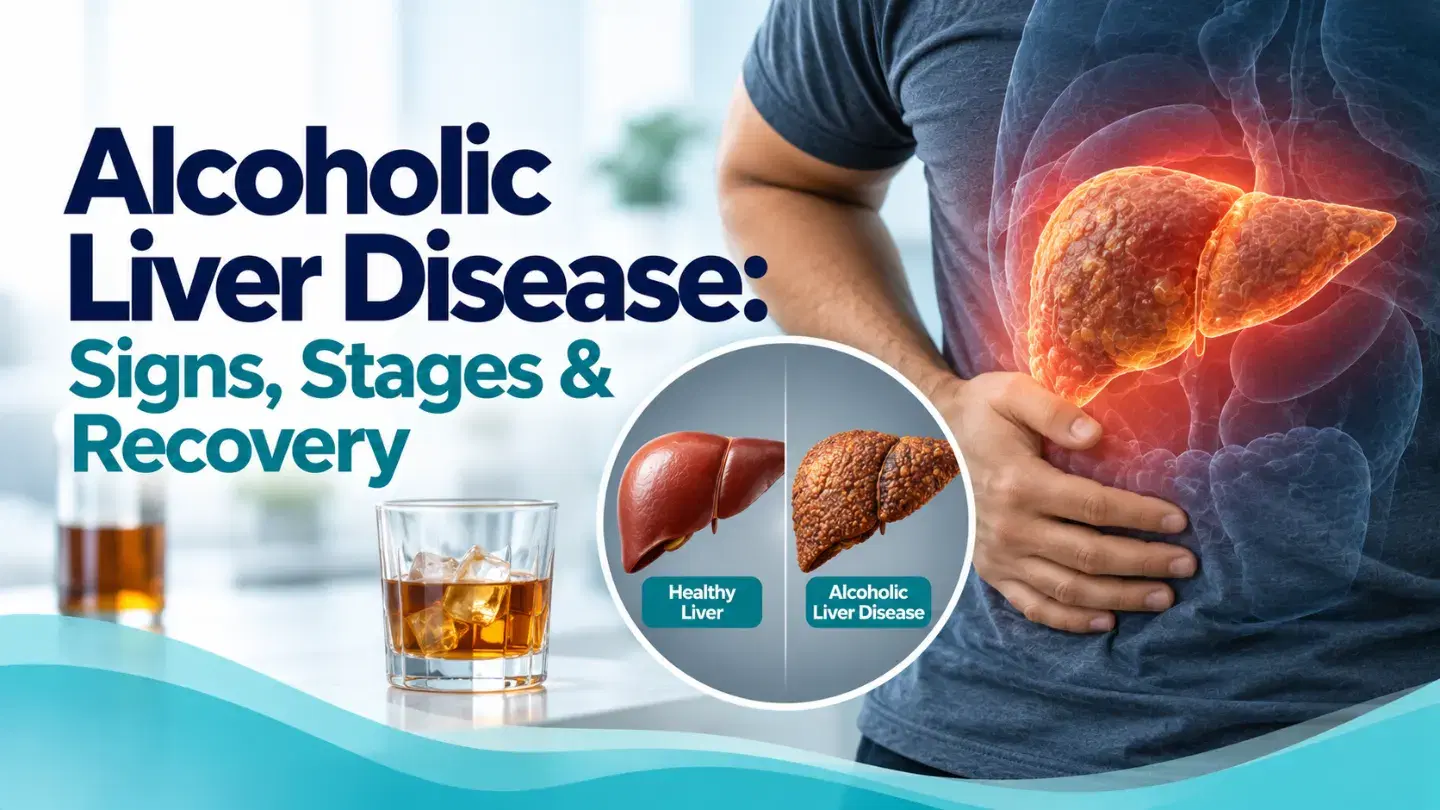
Alcoholic Liver Disease: Signs, Stages & Recovery
Alcoholic Liver Disease: Early Signs, Stages & Recovery
Most people know that heavy drinking is bad for the liver. What far fewer realise is how quietly the damage begins, how far it can progress before any symptom appears, and, most importantly, how much of it can be reversed if caught in time. Alcoholic liver disease is one of the most preventable serious liver conditions there is, and understanding it clearly can be the difference between full recovery and permanent harm.
This guide explains what alcoholic liver disease is, the three stages it moves through, the early warning signs to watch for, how much alcohol it actually takes to cause damage, and the single most powerful fact of all: what happens when you stop drinking. The picture is more hopeful than many people fear, but only if action comes early.
What Is Alcoholic Liver Disease?
Your liver is the body’s main processing plant for alcohol. Every drink you take is broken down there, and in the process, toxic by-products are produced. When alcohol arrives regularly and in larger quantities, the plant is forced to work overtime on a harmful raw material, and the by-products begin to injure the liver’s own cells.
Alcoholic liver disease is the umbrella term for the range of damage this causes, from the earliest, reversible fat build-up through to severe, permanent scarring. Picture a factory running non-stop on a corrosive material: for a while it copes, then parts start to wear, and eventually, without repair, the machinery breaks down. The liver follows a similar path, and it does so in recognisable stages.
The encouraging part is that the liver is also one of the body’s most regenerative organs. In its early stages, the damage of alcohol can be undone remarkably well, which is why recognising the condition before it reaches the point of no return matters so much.
The Three Stages of Alcoholic Liver Disease
Alcohol-related liver damage typically progresses through three overlapping stages. Knowing them helps you understand where recovery is still possible and where it becomes difficult.
Stage 1: Alcoholic Fatty Liver
The earliest stage is the build-up of fat inside the liver cells, known as alcoholic fatty liver or steatosis. It develops in most people who drink heavily, often within weeks, and it usually causes no symptoms at all. This stage is the loud warning bell that is almost never heard, because it is silent. The good news is enormous: alcoholic fatty liver is largely reversible, and the liver can return to normal if drinking stops at this point.
Stage 2: Alcoholic Hepatitis
If heavy drinking continues, the fat-laden liver can become inflamed, a stage called alcoholic hepatitis. This can range from mild to severe. Mild alcoholic hepatitis may cause few symptoms and can improve with abstinence. Severe alcoholic hepatitis, however, is a serious, sometimes life-threatening illness that can cause jaundice, abdominal pain, fever, and liver failure, and needs urgent medical care. This stage marks genuine damage, though even here, stopping alcohol can allow significant recovery in many people.
Stage 3: Alcoholic Cirrhosis
With ongoing injury, the liver lays down scar tissue to heal, and when that scarring becomes widespread, it is called cirrhosis. This is the most advanced stage, where healthy liver tissue is replaced by scar that cannot be undone. Cirrhosis can lead to serious complications such as fluid in the abdomen, internal bleeding, confusion, and an increased risk of liver cancer. While the scarring itself is largely permanent, stopping alcohol even at this stage can halt further damage, stabilise the liver, and dramatically improve survival.
The through-line across all three stages is clear: the earlier drinking stops, the more the liver can recover. For a deeper look at how liver fat can be reversed, this related guide is useful reading: Is Fatty Liver Reversible? Complete Recovery Guide.
The Early Signs of Alcohol Liver Damage
One of the cruellest features of alcoholic liver disease is that it is often silent until it is advanced. In the early stages, there may be no symptoms whatsoever. When liver damage from alcohol symptoms do appear, they are often vague at first and easy to dismiss:
- Persistent tiredness and weakness.
- Loss of appetite and unintended weight loss.
- Nausea and a general sense of being unwell.
- Discomfort or a dull ache over the liver, on the upper right quadrant of the abdomen.
As damage progresses, more definite and serious signs can emerge, and these should never be ignored:
- Jaundice, a yellowing of the skin and the whites of the eyes.
- Swelling of the abdomen (from fluid) or the legs.
- Easy bruising or bleeding.
- Confusion, drowsiness, or changes in behaviour.
- Vomiting blood or passing black, tarry stools.
Because the early signs are so quiet, alcoholic liver disease is frequently discovered only on a routine blood test showing abnormal liver enzymes. Understanding what those results mean is genuinely helpful, and this companion guide explains them clearly: SGOT & SGPT Explained: What High Liver Enzymes Really Mean.
How Much Alcohol Causes Liver Damage?
This is one of the most common questions, and the honest answer is that NO AMOUNT OF ALCOHOL IS SAFE and metabolism of alcohol, susceptibility to it, varies from person to person. In general, the more you drink and the longer you drink, the higher the risk, with sustained heavy drinking over years carrying the greatest danger.
Several factors influence how much harm alcohol does beyond the quantity alone. Women tend to develop liver damage at lower levels of drinking than men. Being overweight, having fatty liver from metabolic causes, or carrying hepatitis B or C all compound the damage. Drinking patterns matter too, with regular heavy or binge drinking being especially harmful. The key message is that liver damage is not limited to people who consider themselves alcoholics; regular heavy drinking over time can harm the liver even in someone who functions normally day to day. If you are drinking at a level that worries you, that concern itself is worth acting on.
Can the Liver Heal After Stopping Alcohol?
Yes, and this is the single most important and hopeful fact in this entire article. The liver has a remarkable capacity to recover, and stopping alcohol is the most powerful treatment there is at every stage of the disease.
At the fatty liver stage, the liver can return to normal, often within weeks to months of stopping. At the stage of alcoholic hepatitis, abstinence allows much of the inflammation to settle and significant recovery to occur. Even at the cirrhosis stage, where the existing scarring cannot be reversed, stopping alcohol halts further damage, allows the liver to stabilise, reduces complications, and significantly improves life expectancy [Source: Reputable Medical Journal - Cohort Study].
In other words, it is almost never too late to benefit from stopping. The earlier you stop, the more complete the recovery, but at any stage, stopping changes the trajectory for the better. This is why the focus of treatment is always, first and foremost, on stopping drinking, with proper support to do so.
How Is Alcoholic Liver Disease Diagnosed?
Diagnosis usually combines several strands. Blood tests check liver enzymes and how well the liver is functioning, and a particular pattern, where one enzyme (AST) is notably higher than another (ALT), can point toward alcohol as the cause. An ultrasound or other scans show fat, changes in liver texture, or signs of scarring. A FibroScan can measure liver stiffness painlessly to estimate the degree of fibrosis, and in some cases a liver biopsy is used to assess the damage precisely. An honest conversation about drinking is a vital part of the picture, because the diagnosis and the right support depend on it. At specialised centres like Bangalore Gastro Centre, this assessment is done thoughtfully and without judgement, because the goal is to help the liver recover, not to assign blame.
Treatment and Recovery
The cornerstone of treatment is complete abstinence from alcohol, supported properly, since stopping suddenly after heavy, long-term use can itself be dangerous and sometimes needs medical supervision. Beyond that, treatment focuses on supporting the liver and the whole person: good nutrition, since many people with alcoholic liver disease are malnourished, vitamin supplementation where needed, managing any complications of advanced disease, and treating the underlying dependence with counselling and support. For severe alcoholic hepatitis, specific hospital treatments may be used, and for end-stage cirrhosis, liver transplantation may be considered in carefully selected people who have stopped drinking. Throughout, addressing the relationship with alcohol, with compassion and practical help, is central to lasting recovery.
Alcoholic Liver Disease in the Indian Context
Alcohol-related liver disease is a growing concern in India, and some local realities make it particularly important to address openly. Patterns of heavy and binge drinking, often hidden by stigma, mean many people do not disclose their drinking to family or even to doctors, which delays diagnosis until the disease is advanced. The frequent combination of alcohol with the metabolic fatty liver that is now so common, driven by refined-carbohydrate-heavy diets and rising obesity, creates a double hit on the liver, each worsening the other. Hepatitis B and C, both relevant in India, compound the harm further when they coexist with drinking.
There is also a dangerous tendency to turn to unregulated “liver tonics,” home remedies, or untested herbal products in the hope of undoing the damage while continuing to drink. These not only fail to help but can sometimes injure the liver further, and they waste precious time during which stopping alcohol could have made a real difference. The only proven treatment remains stopping drinking, supported properly, alongside good nutrition and medical care.
Perhaps the most important cultural shift needed is to treat alcohol-related liver concerns without shame, so that people seek help early rather than hiding the problem until a crisis forces it into the open. A liver assessment is a medical check, not a judgement, and the earlier it happens, the more of the liver can be saved.
When to See a Doctor
You should see a doctor if you drink regularly and heavily, even without symptoms, so your liver can be checked before damage advances, and certainly if you have persistent tiredness, loss of appetite, nausea, or discomfort over the liver. Seek urgent care for the warning signs of serious disease: jaundice, a swollen abdomen, vomiting blood or black stools, easy bruising, or new confusion and drowsiness. A hepatologist or gastroenterologist can assess the health of your liver, tell you what stage of damage, if any, is present, and support you in protecting and recovering it.
Alcoholic Liver Disease: Patient Questions Answered
What are the first signs of alcohol liver damage?
In the early stages there are often no symptoms at all, which is why alcohol liver damage is so often caught only on a routine blood test. When early signs do appear, they tend to be vague: persistent tiredness and weakness, loss of appetite, unintended weight loss, nausea, and a dull discomfort over the liver on the upper right side of the abdomen. More serious, later signs include jaundice, a swelling abdomen, easy bruising, and confusion. Because the early stage is silent, anyone drinking heavily should have their liver checked rather than waiting for symptoms.
Can the liver heal after stopping alcohol?
Yes, often remarkably well, and stopping alcohol is the most powerful treatment at every stage. Alcoholic fatty liver can return to normal within weeks to months of stopping. Alcoholic hepatitis can settle significantly with abstinence. Even at the cirrhosis stage, where existing scarring cannot be reversed, stopping alcohol halts further damage, allows the liver to stabilise, reduces complications, and improves life expectancy. The earlier you stop, the more complete the recovery, but it is almost never too late to benefit. This is why abstinence is the cornerstone of treatment.
How much alcohol causes liver damage?
NO AMOUNT OF ALCOHOL IS SAFE, and susceptibility varies from person to person. In general, the risk rises with the quantity consumed and the number of years of drinking, with sustained heavy drinking being most dangerous. Women tend to be affected at lower levels than men, and being overweight, having fatty liver, or carrying hepatitis B or C increases the harm. Importantly, liver damage is not limited to people labelled as alcoholics; regular heavy drinking over time can damage the liver even in someone who functions normally. If your drinking worries you, that is reason enough to act.
Is alcoholic liver disease reversible?
It depends on the stage. The earliest stage, alcoholic fatty liver, is largely reversible, and the liver can return to normal with abstinence. Alcoholic hepatitis can improve substantially when drinking stops, though severe cases are serious. Cirrhosis, the advanced stage, involves permanent scarring that cannot be fully reversed, but even then, stopping alcohol halts progression and improves outcomes. The consistent theme is that earlier action means more recovery, so the condition should prompt stopping drinking as soon as possible rather than waiting until symptoms force the issue.
What happens if alcoholic liver disease is left untreated?
If drinking continues, alcoholic liver disease tends to progress through its stages: from reversible fatty liver, to inflammation (alcoholic hepatitis), to permanent scarring (cirrhosis). Advanced cirrhosis can cause life-threatening complications, including fluid in the abdomen, internal bleeding, confusion from toxins the liver cannot clear, and a raised risk of liver cancer. Severe alcoholic hepatitis can also be fatal. The progression is driven by continued drinking, which means it is also largely preventable. Stopping alcohol at any stage changes the outlook, which is why early assessment and support matter so much.
The Bottom Line
Alcoholic liver disease is a serious but largely preventable condition, and its most important feature is also its most dangerous: it is silent in the early stages, when it is most reversible. By the time symptoms appear, significant damage may already be present. The disease moves through three stages, fatty liver, alcoholic hepatitis, and cirrhosis, and recovery is most complete when action comes early.
The single most powerful thing anyone can do, at any stage, is to stop drinking, with proper support. The liver’s capacity to heal is extraordinary, and stopping alcohol changes the course of the disease for the better even when scarring has begun. If you drink heavily, or have any signs of liver trouble, do not wait for symptoms to force your hand. The specialists at Bangalore Gastro Centre can assess your liver, tell you exactly where you stand, and help you protect and recover one of your body’s most forgiving organs.
This article is for general education and is not a substitute for personalised medical advice. Stopping heavy drinking suddenly can be dangerous; please seek medical guidance. Consult a hepatologist or gastroenterologist about your liver health.