
Understanding Malabsorption Syndrome: A Complete Guide to Diagnosis, Symptoms, and Treatment
Why Am I Still Tired and Weak?
Have you ever felt like you're doing everything right—eating balanced meals, getting enough sleep—but you still feel drained, weak, or unwell? It’s a frustrating experience. You're putting high-quality fuel into your body, but the "engine" just isn't performing. For many people, this isn't just in their heads; it's a real medical issue rooted in the digestive system.
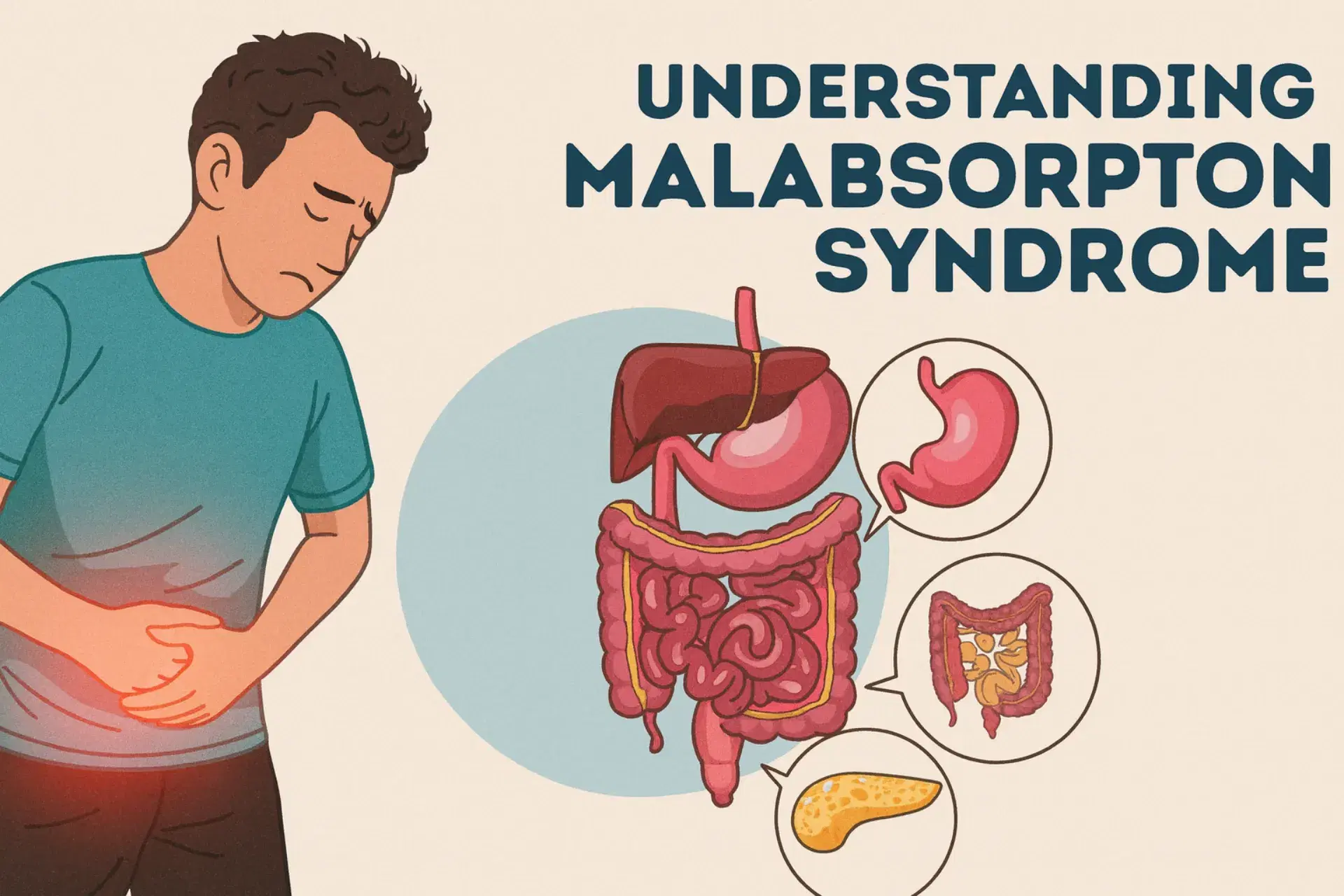
Imagine your digestive system as a highly advanced processing plant. Food comes in, it's broken down (digestion), and then the valuable nutrients—vitamins, minerals, proteins—are moved into the bloodstream to fuel every part of your body (absorption). Malabsorption syndrome occurs when this crucial second step, absorption, fails. Your body might be digesting food perfectly, but the "supply line" to your bloodstream is broken. This condition of poor nutrient absorption can lead to a cascade of health symptoms, from simple fatigue and bloating to more serious issues like anemia, bone weakness, and unexplained weight loss.
This guide is designed to walk you through this complex topic in simple, patient-friendly terms. We'll explore what malabsorption syndrome is, what causes it, the common symptoms to watch for, and the advanced methods used to diagnose and treat it. This is an educational resource, aimed at empowering you with knowledge, and aligns with the best practices you'd find at leading gastroenterology centers.
What is Malabsorption Syndrome?
At its core, malabsorption syndrome is not a single disease. Instead, it's a broad term for a collection of disorders that prevent the small intestine from properly absorbing nutrients from your food.
Many people confuse indigestion or poor digestion with malabsorption. Indigestion (dyspepsia) often refers to pain or discomfort in the stomach, perhaps after a heavy or spicy meal. Malabsorption is different. The food might be broken down, but the intestinal lining, which acts as the gateway to your body, isn't doing its job.
Why is this so important? Because every single part of your body relies on the nutrients you eat:
- Energy: Carbohydrates and fats are your primary fuel.
- Repair: Proteins are the building blocks for muscles, skin, and organs.
- Function: Vitamins and minerals run everything, from your immune system (Vitamin C, Zinc) and eyesight (Vitamin A) to your bone strength (Calcium, Vitamin D) and blood production (Iron, B12).
When nutrient malabsorption happens, your body enters a state of deficiency, even if your diet is perfect. Over time, this can affect your energy levels, your immune response, your neurological health, and your bone density. Think of it as a form of "internal starvation," where the food is present but the body can't access it. This is why understanding the specific type of malabsorption is the first step toward fixing it.
Types of Malabsorption: Understanding What’s Not Being Absorbed
Malabsorption isn't an all-or-nothing problem. Sometimes, the body struggles with one specific nutrient, while other times it's a more general issue. A specialist will work to identify what's being left behind.
A. Fat Malabsorption
This is one of the most common and significant types. Your body needs to absorb fats to store energy and, crucially, to absorb the fat-soluble vitamins: A, D, E, and K.
Normally, your liver produces bile (stored in the gallbladder) and your pancreas produces enzymes (like lipase) that break down fats into tiny, absorbable particles. If your pancreas isn't producing enough enzymes or if bile flow is blocked, fat malabsorption (steatorrhea) occurs. The most telling sign is in the toilet: stools that are pale, bulky, greasy, foul-smelling, and tend to float.
B. Carbohydrate Malabsorption
The most famous example of carbohydrate malabsorption is lactose intolerance. This happens when the body doesn't produce enough lactase, the enzyme needed to break down lactose, the sugar found in milk and dairy products (like paneer, dahi, or lassi).
When these sugars aren't absorbed in the small intestine, they travel to the large intestine, where bacteria ferment them. This fermentation process is what causes the classic symptoms of bloating, painful gas, and watery diarrhea shortly after consuming dairy. Similar issues can happen with other sugars, like fructose.
C. Protein Malabsorption
This is less common but can be very serious. It's often linked to severe pancreatic disorders or conditions that extensively damage the small intestine. When your body can't absorb the building blocks of protein (amino acids), it can lead to muscle wasting, weakness, and fluid retention (edema), which you might notice as swelling in your legs and ankles.
D. Vitamin & Mineral Malabsorption
This category is vast and incredibly common, especially in the Indian population.
- Iron: Malabsorption of iron leads directly to iron-deficiency anemia, causing severe fatigue, weakness, and shortness of breath.
- Vitamin B12: This is a major concern, particularly for vegetarians and vegans, as B12 is mostly found in animal products. But even in meat-eaters, conditions affecting the stomach (like gastritis) or the end of the small intestine can block its absorption, leading to anemia and serious neurological problems (like tingling, memory fog, and balance issues).
- Vitamin D & Calcium: Vitamin D (which many in India are deficient in despite the sunlight) is essential for absorbing calcium. Poor absorption of either can lead to osteopenia and osteoporosis, making bones brittle and weak.
- Fat-Soluble Vitamins (A, D, E, K): As mentioned with fat malabsorption, if you aren't absorbing fat, you aren't absorbing these vitamins. This can lead to night blindness (Vitamin A), easy bruising or bleeding (Vitamin K), and other systemic problems.
Patient Question: What Causes Malabsorption?
This is the central question for every patient. A gastroenterologist's job is to be a detective and find the root cause. Here is a breakdown of the most common culprits.
Patient Question: “What causes malabsorption?”
Answer: It’s helpful to think of the causes in a few main categories. Malabsorption isn't the primary problem; it's a symptom of something else that has gone wrong in your digestive tract.
1. Damage to the Small Intestine Lining The inner wall of your small intestine is covered in tiny, finger-like projections called villi. These are the "gates" that absorb nutrients. If they get damaged or flattened, absorption stops. The most common causes are:
- Celiac Disease: An autoimmune reaction to gluten (a protein in wheat, barley, and rye—found in roti, naan, atta, etc.). This attacks and flattens the villi.
- Crohn’s Disease: This inflammatory bowel disease causes patches of severe inflammation that damage the intestinal wall.
- Infections: Certain parasites (like Giardia) or bacteria can inflame and damage the gut lining.
- Tropical Sprue: An ill-defined condition, more common in tropical regions, that causes long-term inflammation and villi damage, leading to nutrient malabsorption.
2. Digestive Enzyme or Bile Deficiencies You can have a perfectly healthy intestine, but if the food isn't broken down properly before it reaches the villi, it can't be absorbed.
- Chronic Pancreatitis: Long-term inflammation of the pancreas (often linked to alcohol or gallstones) can destroy its ability to produce digestive enzymes. This is a primary cause of fat malabsorption.
- Cystic Fibrosis: A genetic condition that creates thick mucus, blocking pancreatic enzymes.
- Liver or Gallbladder Issues: Liver disease (like cirrhosis) or a blocked bile duct (from gallstones) prevents bile from reaching the intestine to digest fat.
3. Small Intestinal Bacterial Overgrowth (SIBO) Your small intestine is supposed to be relatively "clean," with most gut bacteria residing in the large intestine. In SIBO, large numbers of bacteria set up camp in the small intestine. These bacteria "steal" your nutrients, particularly B12 and carbohydrates, before you can absorb them. They also produce gas and substances that can damage the gut lining.
4. Other Factors
- Short Bowel Syndrome: This can occur after surgery to remove a large part of the small intestine, (perhaps due to complications from Crohn's or an injury). There simply isn't enough surface area left to absorb nutrients.
- Medications: Some medications can interfere with nutrient absorption as a side effect.
Your lifestyle and diet might worsen symptoms, but the root cause of malabsorption syndrome is almost always a medical condition that requires a proper diagnosis from a specialist.
Common Malabsorption Symptoms: How to Recognize the Signs
Because nutrient malabsorption can affect the whole body, the symptoms can be widespread and seem unrelated. Many people dismiss them as "just stress" or "a sensitive stomach" for years.
Here are the most common malabsorption symptoms to watch for:
- Persistent Digestive Upset: This is the most direct sign. It includes chronic diarrhea (loose, watery stools), significant bloating, and excessive gas that isn't just from a single meal.
- Unexplained Weight Loss: This is a major red flag. You are eating a normal or even increased amount of food, but you are still losing weight. This means the calories are passing right through you.
- Fatigue and Weakness: This isn't just feeling tired at the end of the day. It’s a deep, persistent exhaustion that doesn't go away with rest. This is often the first sign of anemia (from iron or B12 deficiency) or general poor nutrient absorption.
- Pale, Greasy, Foul-Smelling Stools (Steatorrhea): This is the classic sign of fat malabsorption. The unabsorbed fat is what makes the stool greasy and pale.
- Swelling (Edema): You might notice swelling in your legs, ankles, and feet. This can be caused by a lack of protein (albumin) in your blood, which normally helps keep fluid in your blood vessels.
- Skin, Hair, and Nail Problems: Your body prioritizes vital organs. When nutrients are scarce, skin, hair, and nails are the first to suffer. You might experience:
- Dry, "chicken skin" (keratosis pilaris) from Vitamin A deficiency.
- Brittle, spoon-shaped nails from iron deficiency.
- Significant hair loss.
- Easy bruising from Vitamin K deficiency.
- Neurological Issues: A lack of B12 can cause tingling or numbness in your hands and feet (peripheral neuropathy), "brain fog," memory problems, and difficulty with balance.
- Low Immunity: If you feel like you're catching every cold and flu that goes around, it could be a sign that your immune system is compromised from a lack of essential vitamins and minerals.
If these malabsorption symptoms sound familiar and have been lasting for more than a few weeks, it is crucial to see a doctor rather than trying to self-treat with over-the-counter remedies.
Patient Question: How to Test for Malabsorption?
If you present with the symptoms above, a gastroenterologist will begin a systematic investigation. There is no single "malabsorption test"; the goal is to find the why.
Patient Question: “How to test for malabsorption?”
Answer: Diagnosing malabsorption is a step-by-step process. A specialist acts like a detective, starting with the most likely clues and moving to more advanced tests as needed. Here’s what you can expect:
A. Medical History & Symptom Discussion This is the most important step. Your doctor will ask detailed questions:
- What are your exact symptoms?
- When did they start?
- What does your stool look like? (Don't be shy; this is critical information!)
- What is your typical diet? (Do symptoms flare up after eating roti or drinking milk?)
- Do you have a family history of Celiac or Crohn's disease?
B. Blood Tests (The "Report Card") A simple blood draw is the best way to see what's missing.
- Complete Blood Count (CBC): Checks for anemia (low red blood cells), which points to iron or B12 malabsorption.
- Vitamin & Mineral Levels: Specific tests for Vitamin D, Vitamin B12, and iron (ferritin) are very common.
- Protein Levels: Checking albumin levels can reveal protein malabsorption.
- Antibody Tests: A specific blood test (like tTG-IgA) can screen for Celiac disease.
C. Stool Tests (The "Direct Evidence")
- Fecal Fat Test: This is the gold standard for diagnosing fat malabsorption. You may be asked to collect stool samples over 1-3 days to measure exactly how much fat your body is not absorbing.
- Fecal Elastase: This test measures the amount of elastase, a pancreatic enzyme, in your stool. A low level strongly suggests your pancreas isn't producing enough enzymes (Exocrine Pancreatic Insufficiency).
D. Hydrogen Breath Tests These are non-invasive tests used to diagnose carbohydrate malabsorption. You'll drink a specific sugar solution (like lactose or fructose), and then breathe into a device every 20-30 minutes. If the sugar isn't absorbed, it gets fermented by bacteria, producing hydrogen gas, which the device detects in your breath. This is also the primary method for diagnosing SIBO.
E. Endoscopy & Biopsy (The "Direct Look") If tests suggest damage to the intestinal lining (like in Celiac disease or Crohn's), your doctor will perform an upper endoscopy.
- A thin, flexible tube with a camera is passed through your mouth into your small intestine. The doctor can see the inflammation or flattening of the villi.
- During the procedure, tiny tissue samples (biopsies) are taken. Looking at these under a microscope is the only way to definitively diagnose Celiac disease.
F. Imaging (Checking the Organs) When a problem with the pancreas or liver is suspected, imaging tests like an Ultrasound, CT scan, or MRI are used to get a clear picture of these organs and check for inflammation, scarring, or blockages.
At specialized centers like Bangalore Gastro Centre, these tests are combined to build a complete picture, ensuring the diagnosis is accurate and tailored to you, not a one-size-fits-all guess.
Patient Question: Can Malabsorption Be Cured?
After a diagnosis, this is naturally the next and most hopeful question. The answer is optimistic but requires nuance.
Patient Question: “Can malabsorption be cured?”
Answer: This is an excellent question, and the answer is: Yes, in many cases, the symptoms of malabsorption can be fully resolved, and in almost all cases, they can be effectively managed.
The "cure" depends entirely on the root cause we just discussed.
- If the Cause is "Curable": * Infections: If your malabsorption is caused by a parasite like Giardia, a course of antibiotics will clear the infection, allowing the gut to heal and absorption to return to normal. * SIBO: This is also treated with a specific course of antibiotics. Once the bacterial overgrowth is cleared, nutrient malabsorption often resolves. * Lactose Intolerance: While you can't "cure" the enzyme deficiency, you can "cure" the symptoms 100% by avoiding lactose or using lactase enzyme tablets.
- If the Cause is "Manageable": * Celiac Disease: There is no "pill" for Celiac disease, but it is 100% managed by a strict, lifelong gluten-free diet. Once gluten is removed, the intestinal villi heal and regrow, and nutrient absorption normalizes completely. * Pancreatic Insufficiency: If your pancreas is the problem, you can't "cure" the underlying damage. But you can perfectly manage the fat malabsorption by taking Pancreatic Enzyme Replacement Therapy (PERT) capsules with every meal. These capsules provide the enzymes your body is missing.
- If the Cause is "Chronic": * Crohn's Disease: As a chronic inflammatory disease, Crohn's doesn't have a simple "cure." However, modern treatments (like biologics and immunosuppressants) are incredibly effective at putting the disease into remission. When the inflammation is controlled, the gut lining is healthy, and poor nutrient absorption is no longer an issue.
So, while the pathway is different for everyone, the end goal is the same: to stop the malabsorption syndrome, heal the gut, and restore your body's nutritional health. It is a very treatable condition.
Treatment Options for Malabsorption Syndrome
Once the "why" is established, your gastroenterologist will create a multi-step plan. This plan almost always involves more than just medicine.
A. Dietary Modifications
This is the cornerstone of all treatment.
- Remove the Trigger: This is the most obvious step. If you have Celiac disease, all gluten must be eliminated. If you have lactose intolerance, dairy must be removed (or enzyme-aided).
- Eat Easily Digestible Foods: During the healing phase, your gut is sensitive. You may be advised to eat simple, cooked foods (like khichdi, steamed idli, soups, bananas) and avoid very oily, spicy, or high-fiber foods that are hard to process.
- Low FODMAP Diet: For some people with SIBO or IBS-like symptoms, a temporary diet low in certain fermentable carbs (FODMAPs) can dramatically reduce bloating and gas.
B. Enzyme Replacement Therapy (PERT)
For anyone with proven pancreatic insufficiency, PERT is life-changing. These are prescription capsules containing the lipase, protease, and amylase your pancreas should be making. You take them with your food, and they digest the fat, protein, and carbs right in your stomach, allowing your healthy intestine to absorb them.
C. Nutritional Supplements (Refilling the Tank)
Treating the cause is step one, but you also have to fix the deficiencies the malabsorption caused.
- Oral Supplements: High-dose Vitamin D, Iron tablets, Vitamin B complex, and calcium are commonly prescribed.
- Injections or IV Infusions: If the deficiency is severe, or if your gut can't absorb the supplements either, your doctor will bypass the gut entirely. Vitamin B12 is very commonly given as an injection. Severe iron-deficiency anemia is often treated with an IV Iron infusion, which can raise your levels and resolve fatigue in a matter of days.
D. Treating the Underlying Disease
This is the medical part of the plan.
- SIBO: A targeted antibiotic (like Rifaximin) is used to clear the bacterial overgrowth in the small intestine.
- Crohn's Disease: This involves a long-term management plan with anti-inflammatory drugs and often biologics to keep the inflammation down. For inflammatory conditions like Crohn's, managing the underlying inflammation is key. You can read more about Crohn's Disease: Symptoms, Treatment & Management Strategies to understand this complex condition better.
Lifestyle & Diet Support to Improve Gut Healing
While your doctor treats the medical cause, there is so much you can do to support your body's recovery.
- Focus on Gut-Friendly Foods: Once your doctor gives the all-clear, focus on rebuilding your gut health. Simple, whole foods are best. Think of rebuilding your "gut garden."
- Probiotics and Prebiotics: Probiotics are the "good bacteria" (found in dahi or supplements) that help restore balance. Prebiotics are the "food" for these bacteria (found in bananas, onions, garlic, and whole grains). Ask your doctor if these are right for you, as they can sometimes worsen SIBO.
- Hydration is Key: This is non-negotiable, especially if you have diarrhea. You are losing water and electrolytes. Drink plenty of water, and if diarrhea is severe, use an Oral Rehydration Solution (ORS) to replenish lost salts and sugars.
- Meal Spacing & Mindful Eating: Instead of three large, heavy meals, you might find it easier to eat five or six smaller, simpler meals throughout the day. This puts less stress on your digestive system. Eat slowly and chew your food thoroughly.
For more practical tips on what to eat to support your gut, the team at Bangalore Gastro Centre has a helpful video. We recommend watching "Eat These Fantastic Foods for a Healthy Small Intestine!" for some great, easy-to-follow advice.
When to Seek Medical Help: The Red Flags
It is essential to distinguish between a temporary "upset stomach" and the persistent signs of malabsorption syndrome. Please do not ignore these red flags. See a doctor, preferably a gastroenterologist, if you experience:
- Rapid or Unexplained Weight Loss
- Chronic Diarrhea that lasts for more than two weeks
- Persistent, Severe Abdominal Pain or Bloating
- Blood in Your Stool (which can be bright red or black and tarry)
- Overwhelming Fatigue that interferes with your daily life
- Signs of Severe Dehydration (dizziness, very dark urine, dry mouth)
Ignoring these symptoms allows poor nutrient absorption to continue, leading to more severe complications like osteoporosis or nerve damage. Early diagnosis is the key to a fast and full recovery.
Summary: Your Path to Recovery
Malabsorption syndrome can be a confusing and draining condition, but it is not a mystery. It is a clear signal from your body that one part of the digestive process is broken. It might be the intestinal lining, the enzyme supply, or the balance of bacteria.
The malabsorption symptoms you feel—the fatigue, bloating, and weight loss—are the direct result of poor nutrient absorption. The most important takeaway is that this is treatable.
Through a careful, step-by-step investigation, a specialist can identify the root cause. Whether the solution is a strict diet, enzyme supplements, or medication to heal the gut, recovery is the expected outcome. You don't have to "just live with" feeling tired and unwell.
Take Charge of Your Digestive Health
Your digestive health is the foundation of your total body wellness. Being informed and proactive is your greatest asset. We hope this guide has armed you with the knowledge to have a confident and productive conversation with your healthcare provider.
For more educational content on digestive health, you can follow credible resources, including the Bangalore Gastro Centre YouTube channel. By staying informed, you can take charge of your health and get back to feeling your best.