
SIBO: Complete Guide to Symptoms, Causes & Treatment Options
Have you ever felt like your stomach is a balloon ready to pop, even after a relatively light meal of dal and chawal? Or perhaps you’ve been diagnosed with Irritable Bowel Syndrome (IBS), but the medications just don’t seem to work? If you are struggling with chronic bloating, gas, and unpredictable bathroom trips, you might be dealing with a condition that is gaining significant attention in Indian gastroenterology: Small Intestinal Bacterial Overgrowth, or SIBO.
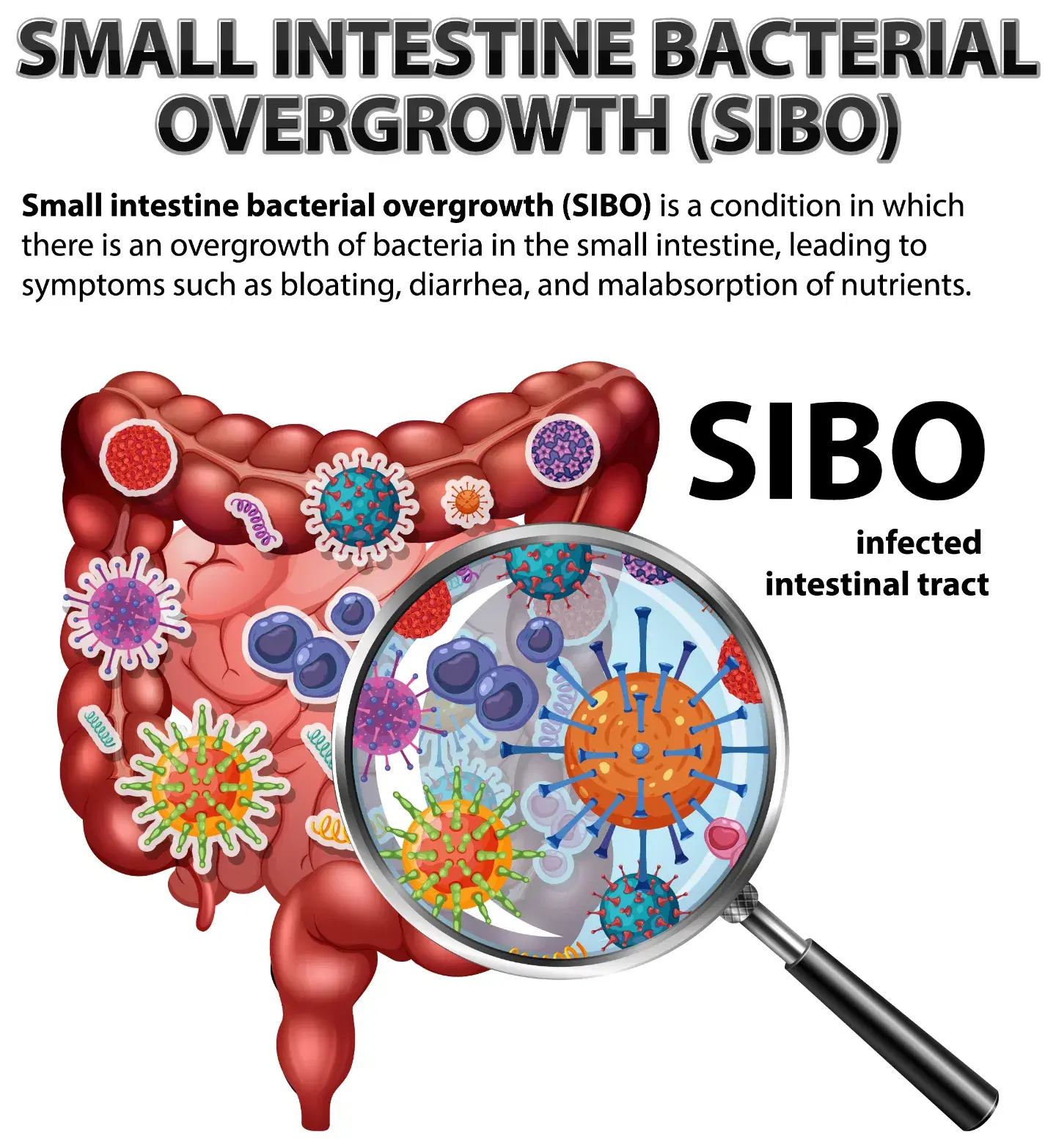
In simple patient language, SIBO is exactly what it sounds like—too many bacteria in the wrong place. While our large intestine (the colon) is supposed to be teeming with trillions of bacteria, the small intestine should be relatively quiet. When bacteria from the colon migrate upward or when local bacteria multiply excessively in the small intestine, they begin to ferment the food you eat before you can even digest it. This results in the hallmark SIBO symptoms that can make daily life quite miserable.
In India, where diets are often rich in fermentable carbohydrates and spices, SIBO is frequently mistaken for general "acidity," food intolerances, or "heat" in the body. However, understanding SIBO is the first step toward reclaiming your gut health. This guide will take you through everything you need to know: from identifying common SIBO symptoms to understanding the nuances of SIBO treatment, the likelihood of a permanent cure, and how to manage the condition naturally.
What Is SIBO (Small Intestinal Bacterial Overgrowth)?
To understand SIBO, we need to look at the "geography" of your gut. Think of your digestive system as a long transit highway. The small intestine is the section responsible for absorbing nutrients. Under normal circumstances, it has a "cleaning crew" (the Migrating Motor Complex) that sweeps leftover food and bacteria down into the large intestine.
What happens in the gut during SIBO?
When this cleaning mechanism fails, or when there is a structural "speed bump," bacteria stay back. They find a warm, moist environment filled with the carbohydrates you just ate. They start to feast, and as a byproduct, they produce gases like hydrogen or methane.
Why does bacterial overgrowth occur in the small intestine?
It isn’t that these bacteria are "bad" or "infectious" in the traditional sense; they are simply in the wrong neighborhood. In the colon, they help us; in the small intestine, they interfere with our nutrient absorption and irritate the delicate lining of the gut.
Difference between normal gut bacteria vs bacterial overgrowth:
Healthy digestion relies on a delicate balance. Your stomach acid, bile from the liver, and the constant movement (motility) of the small intestine act as natural disinfectants. When your stomach acid is low (perhaps due to long-term use of antacids) or your motility is slow (due to stress or diabetes), the bacteria seize the opportunity to settle down and multiply.
Understanding SIBO Symptoms: Early, Common & Severe Signs
Identifying SIBO symptoms can be tricky because they overlap with so many other digestive issues. However, the timing of these symptoms is often a major clue.
What Are the Most Common SIBO Symptoms?
Most patients report that their stomach is flat in the morning but grows progressively larger throughout the day.
- Bloating after meals: This isn't just a "full" feeling; it is an often painful distension that occurs within 30 to 90 minutes of eating.
- Gas and abdominal discomfort: Excessive flatulence that doesn't seem to correlate with "heavy" foods.
- Changes in bowel habits: You might experience chronic diarrhea, stubborn constipation, or a frustrating mix of both.
- Excess burping and nausea: Since the overgrowth is high up in the digestive tract, gas often escapes upward.
Can SIBO Symptoms Vary from Person to Person?
Yes, and the variation often depends on the type of gas being produced.
- Hydrogen-dominant SIBO typically leads to loose stools or urgent diarrhea.
- Methane-dominant SIBO (now often called IMO - Intestinal Methanogen Overgrowth) is almost always linked to chronic constipation because methane gas literally slows down the transit time of the gut.
Advanced or Long-Standing SIBO Symptoms
If left unaddressed, SIBO can lead to more than just a "bad stomach." It can affect your entire body:
- Unexplained weight loss: Because the bacteria are "stealing" your calories and nutrients.
- Fatigue and brain fog: The byproduct of bacterial fermentation can enter the bloodstream, leading to a "cloudy" feeling in the head.
- Vitamin B12 and Iron deficiencies: Bacteria particularly love B12, often leaving the host (you) deficient, leading to anemia or weakness.
- Skin issues: Rosacea or acne-like flares are sometimes linked to the systemic inflammation caused by a leaky gut.
Recognizing these SIBO symptoms early is vital. At specialized centers like Bangalore Gastro Centre, advanced diagnostic tools are used to distinguish SIBO from similar conditions like Crohn's Disease: Symptoms, Treatment & Management Strategies.
Types of SIBO: Hydrogen vs Methane (and Why It Matters)
Not all SIBO is created equal. The treatment path depends heavily on which "critter" has moved into your small intestine.
What Is Hydrogen-Dominant SIBO?
This is the most "classic" form of SIBO. Bacteria produce hydrogen gas, which irritates the bowel lining and causes it to secrete water, leading to diarrhea. When considering Hydrogen SIBO treatment, the goal is usually to reduce these specific bacteria using targeted antibiotics like Rifaximin.
What Is Methane-Dominant SIBO?
In this version, organisms called methanogens (which aren't technically bacteria, but "archaea") consume the hydrogen produced by other bacteria and turn it into methane. Methane is a paralytic to the gut; it stops things from moving. Therefore, Methane SIBO treatment usually requires a "double-barrel" approach, often combining Rifaximin with another agent like Neomycin or Metronidazole to tackle the tougher methanogens.
What Causes SIBO?
SIBO is rarely the "primary" problem; it is usually a symptom of an underlying issue. In the Indian context, several factors are common:
- Poor Gut Motility: If the "waves" of your gut are weak, the bacteria aren't cleared out.
- Long-term Acid-Suppressing Medicines: Many Indians take "gas tablets" (PPIs like Omeprazole or Pantoprazole) daily for years. By neutralizing stomach acid, you remove the first line of defense against bacterial entry.
- Chronic Conditions: Diabetes and Hypothyroidism are incredibly common in India and both significantly slow down gut motility.
- Post-Surgery Changes: Any abdominal surgery can create adhesions (internal scar tissue) that trap bacteria.
- Stress and the Gut-Brain Axis: Living in high-pressure urban environments like Bangalore or Mumbai can put the body in a constant "fight or flight" mode, which shuts down effective digestion.
How Is SIBO Diagnosed?
How do doctors test for SIBO?
The gold standard is the Lactulose or Glucose Breath Test. You drink a sugary solution, and then blow into a series of tubes over 2-3 hours.
- The Logic: Humans don't produce hydrogen or methane gas; only bacteria do. If these gases appear in your breath within the first 90 minutes, it means the bacteria are sitting high up in the small intestine, fermenting the sugar.
- The Result: The test will show if you need Hydrogen SIBO treatment or Methane SIBO treatment.
Understanding these results is crucial before starting any SIBO treatment, as "guessing" can lead to antibiotic resistance or failed therapy.
🔹 PATIENT Q&A: How to Treat SIBO?
This is the most common question patients ask: How to treat SIBO effectively without it coming back every month?
Medical SIBO Treatment Options
The primary approach is usually a course of specialized antibiotics. Unlike systemic antibiotics that affect your whole body, Rifaximin is "non-systemic," meaning it stays in the gut where it is needed.
Is medication enough?
While antibiotics kill the overgrowth, they don't necessarily fix why it happened. A comprehensive SIBO treatment plan at Bangalore Gastro Centre usually involves:
- Kill Phase: Antibiotics or herbal antimicrobials.
- Support Phase: Prokinetics (medicines that help the gut move).
- Dietary Phase: Temporary reduction in fermentable sugars (Low FODMAP diet).
Dietary Changes During SIBO Treatment
During the "kill phase," your doctor might suggest a diet that doesn't feed the bacteria excessively. However, it’s a myth that you can "starve" SIBO away with diet alone. Bacteria can go into a dormant state and wait you out. Use diet to manage symptoms, but use medical intervention to clear the overgrowth.
🔹 PATIENT Q&A: How Long Does Rifaximin Take to Work for SIBO?
If you've been prescribed Rifaximin, you’re likely wondering about the timeline.
Typical response timeline:
Most patients begin to feel a noticeable reduction in bloating and gas within 7 to 10 days. However, a standard course is usually 14 days. It is essential to complete the full course even if you feel better on day 5.
When symptom improvement usually begins:
Don't expect an overnight miracle. In the first few days, some patients actually feel worse—a phenomenon sometimes called "die-off." As bacteria die, they release toxins that can cause temporary fatigue or increased gas.
Factors affecting response:
- Severity: Higher gas levels on your breath test might require multiple rounds.
- Type of SIBO: Methane cases often take longer to respond than hydrogen cases.
- Gut Motility: If your gut isn't moving, the "dead" bacteria sit there and cause issues. This is why motility support is a key part of the broader SIBO treatment strategy.
🔹 PATIENT Q&A: Is SIBO Curable? Can SIBO Be Cured Permanently?
The million-dollar question: Is SIBO curable?
The honest answer:
Yes, SIBO is curable, but it is also highly prone to recurrence if the "root cause" isn't addressed. Statistics suggest that without addressing motility or underlying health issues, SIBO can return in up to 40% of patients within six months [Source: Reputable Medical Journal].
What improves long-term recovery?
To ensure SIBO is cured permanently, you must look beyond just killing bacteria. You need to:
- Address the "Why": If it was caused by Hypothyroidism, manage your thyroid. If it was stress, manage your nervous system.
- Motility Support: Using "prokinetics" (natural or pharmaceutical) to keep the "cleaning crew" active at night.
- Meal Spacing: Giving your gut 4-5 hours between meals allows the Migrating Motor Complex to do its job. Constant snacking is a SIBO trigger!
So, is SIBO curable? Absolutely. But it requires a partnership between the patient and a gastro specialist to identify the unique triggers of each individual.
SIBO Natural Treatment: What Helps & What Doesn’t
Many patients prefer a SIBO natural treatment path, either because they want to avoid antibiotics or because they have "recalcitrant" SIBO that hasn't responded to Rifaximin.
Can SIBO be treated naturally?
Yes, several herbal antimicrobials (like Oregano oil, Berberine, and Neem) have been shown in some studies to be as effective as Rifaximin. However, these are potent compounds and should not be "self-prescribed."
Role of Diet and Lifestyle:
A SIBO natural treatment approach often focuses heavily on the "terrain."
- Ginger and Artichoke: These act as natural prokinetics, helping the small intestine move.
- Stress Management: Yoga and deep breathing can stimulate the Vagus nerve, which is the "on switch" for digestion.
- Apple Cider Vinegar: While controversial, for some, it helps by increasing stomach acidity (but avoid this if you have active gastritis).
Foods That Support a Healthy Small Intestine
While you are in the middle of your journey, choosing the right foods is paramount. Gut specialists often discuss the importance of choosing foods that support small intestine health rather than just "suppressing" symptoms.
For a deep dive into what you should be eating, we highly recommend watching this resource:
📺 BGC YouTube Video: Eat These Fantastic Foods for a Healthy Small Intestine!
Methane SIBO Treatment: Special Considerations
Because methane-producing organisms are not actually bacteria, they are tougher to kill. If your breath test shows methane, your Methane SIBO treatment will likely look different.
- Combination Therapy: Doctors often pair Rifaximin with Neomycin or Metronidazole.
- Biofilm Disruptors: These "armored" organisms often hide behind a slimy layer called a biofilm. Natural supplements like bismuth or specific enzymes can help break these down.
- Constipation Management: You cannot clear SIBO if you are constipated. Using magnesium or specific fibers (like PHGG) is often necessary during Methane SIBO treatment.
Hydrogen SIBO Treatment: What Patients Should Know
For those with the hydrogen variety, the focus is on calming the "irritable" nature of the gut. Hydrogen SIBO treatment is generally more straightforward, but patients must be careful not to stay on restrictive diets (like the Low FODMAP diet) for too long. Prolonged restriction can starve the good bacteria in your large intestine, leading to other issues like dysbiosis.
Can Diet Alone Cure SIBO?
It's a common myth. "If I just stop eating sugar, the SIBO will go away."
Unfortunately, diet alone rarely provides a permanent cure. It is excellent for managing SIBO symptoms—reducing the bloating and the pain—but it doesn't address the underlying motility failure. If you go back to a normal diet without fixing the "cleaning crew," the bacteria will simply multiply again.
Preventing SIBO Recurrence
Once you have completed your SIBO treatment, the goal is prevention.
- Meal Spacing: Stop the "grazing" habit. Allow your gut to rest between meals.
- Hydration: Water is essential for mucosal health.
- Movement: Walking after meals (the traditional Indian Vajrasana or a simple stroll) can aid motility.
- Manage PPI use: Work with your doctor at Bangalore Gastro Centre to see if you can reduce your dependency on strong antacids.
When Should You See a Gastroenterologist for SIBO Symptoms?
Don't ignore the "red flags." While bloating is common, you should seek professional help at a specialized center if you experience:
- Persistent or worsening SIBO symptoms despite dietary changes.
- Rapid, unintended weight loss.
- Severe abdominal pain that wakes you up at night.
- Evidence of nutritional deficiencies (pale skin, extreme fatigue, brittle nails).
At Bangalore Gastro Centre, the approach is holistic. We don't just look at the breath test; we look at the patient’s lifestyle, history, and the "why" behind the overgrowth.
Key Takeaways: Living Well After SIBO
SIBO can be a frustrating, "invisible" illness. It makes you look six months pregnant when you aren't, and it makes you afraid of the very food that should nourish you. But with the right identification of SIBO symptoms, a targeted SIBO treatment plan, and a focus on long-term gut motility, it is entirely manageable.
Remember:
- SIBO is about location, not just "bad" bacteria.
- Is SIBO curable? Yes, but only if you treat the root cause.
- Whether you choose a medical or a SIBO natural treatment, professional guidance is key to avoiding recurrence.
Don't let your gut dictate your life. Armed with the right information and specialist care, you can return to enjoying your favorite Indian meals with confidence and comfort.