


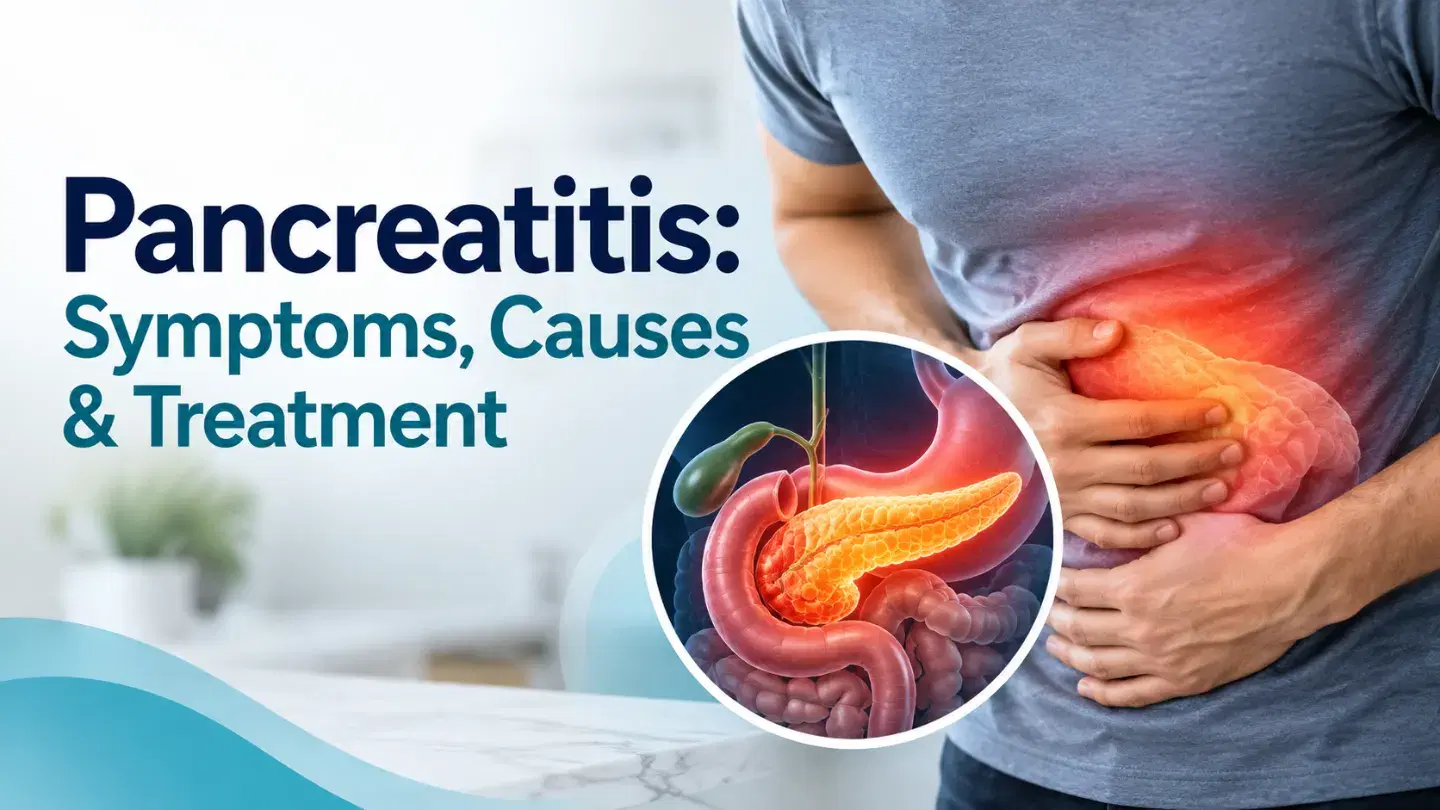
Pancreatitis: Symptoms, Causes & Treatment
Pancreatitis: Symptoms, Causes & Treatment of an Inflamed Pancreas
It often begins as a severe, boring pain high in the abdomen, the kind that makes a person sit up, lean forward, and know that something is seriously wrong. Within hours there may be nausea, vomiting, and a fever. This is the typical opening of acute pancreatitis, and it is one of the digestive conditions that should never be waited out at home.
The pancreas is a quiet, hardworking organ that most people never think about until it becomes inflamed. This guide explains the pancreatitis symptoms to recognise, what causes the pancreas to become inflamed, how serious the condition can be, and how it is treated. Understanding it matters, because acute pancreatitis can range from a mild, self-limiting illness to a genuine medical emergency, and knowing the difference can save a life.
What Is the Pancreas, and What Is Pancreatitis?
The pancreas is a leaf-shaped organ tucked behind the stomach. It has two big jobs. It produces powerful digestive enzymes that break down the food you eat, and it makes hormones, including insulin, that control blood sugar. It is, in effect, both a chemical factory and a control room for metabolism.
Pancreatitis simply means inflammation of the pancreas. To understand why it hurts so much, picture what those digestive enzymes are designed to do: break down food. Normally they stay safely inactive until they reach the intestine. In pancreatitis, they activate too early, while still inside the pancreas, and begin to digest the organ itself. The pancreas, in a sense, starts to consume its own tissue, which triggers intense inflammation and pain.
There are two main forms. Acute pancreatitis is a sudden episode of inflammation that comes on quickly and, in most cases, settles with treatment. Chronic pancreatitis is long-standing inflammation that gradually and permanently damages the organ over months and years. They share a name and some causes, but they behave differently and are worth understanding separately.
Pancreatitis Symptoms
The hallmark of acute pancreatitis is pain, and its character is fairly distinctive. Recognising it can prompt the urgent care that matters.
- Severe upper abdominal pain, usually in the centre or upper left, often described as a deep, boring ache.
- Pain that radiates straight through to the back, a classic and telling feature.
- Pain that worsens after eating, particularly fatty meals, and when lying flat, and often eases a little when leaning forward.
- Nausea and vomiting, which do not relieve the pain.
- A swollen, tender abdomen.
- Fever and a rapid heartbeat.
Chronic pancreatitis can present differently. Its pain may be more persistent or recurrent, and over time it brings the symptoms of a pancreas that can no longer do its job: greasy, foul-smelling, floating stools (from poor fat digestion), unintended weight loss, and eventually diabetes, as the insulin-producing cells are damaged. Because these pancreatitis symptoms overlap with several other abdominal conditions, they should always be assessed by a doctor rather than guessed at. Not every bout of belly pain is the same, and distinguishing serious causes from functional ones matters; this guide on a very different kind of gut trouble is a useful contrast: IBS vs IBD: Key Differences You Need to Understand.
What Causes Pancreatitis?
Two causes account for the large majority of acute cases, and they are worth knowing well.
- Gallstones. A gallstone can slip out of the gallbladder and lodge where the bile duct and pancreatic duct meet, blocking the outflow and causing enzymes to back up into the pancreas. This is called gallstone pancreatitis and is one of the most common causes, particularly in women and in people with gallstones.
- Alcohol. Heavy alcohol use, either a single heavy binge or sustained drinking over years, is the other leading cause and a major driver of chronic pancreatitis.
Other causes include:
- Very high triglycerides (a type of blood fat), an increasingly recognised cause.
- High blood calcium.
- Certain medications.
- Abdominal injury or trauma.
- A complication of ERCP, an endoscopic procedure on the bile ducts.
- Infections, and sometimes no identifiable cause at all (idiopathic).
In gallstone-related cases, doctors often check liver function tests alongside pancreatic enzymes, because a stone blocking the shared duct affects both organs. Understanding those liver numbers can be helpful background, and this guide explains them: SGOT & SGPT Explained: What High Liver Enzymes Really Mean.
Is Pancreatitis Life Threatening?
This is where honesty matters most. The answer is: it can be, which is exactly why it must be taken seriously and treated promptly.
Most cases of acute pancreatitis are mild. With prompt hospital care, the inflammation settles over a few days and the pancreas recovers fully. But a minority of cases, roughly one in five, become severe [Source: Reputable Medical Journal - Guideline]. In severe acute pancreatitis, the inflammation can cause parts of the pancreas to die (necrosis), trigger widespread inflammation across the body, and lead to failure of the lungs, kidneys, or circulation. This form is genuinely life-threatening and needs intensive care.
Because there is no reliable way for a person at home to tell a mild attack from the start of a severe one, the safe rule is simple: severe, persistent upper abdominal pain, especially with vomiting or fever, is a medical emergency. Do not wait, and do not try to manage it with home remedies. Getting to a hospital quickly is what allows doctors to provide the fluids and monitoring that can prevent a mild attack from becoming a dangerous one.
Chronic pancreatitis carries its own long-term risks, including persistent pain, malnutrition from poor digestion, diabetes, and an increased risk of pancreatic cancer over time, which is why ongoing specialist care is important.
How Is Pancreatitis Treated?
Treatment depends on whether the pancreatitis is acute or chronic, and on its cause and severity.
For acute pancreatitis, care is centred on the hospital. The mainstays are giving the pancreas a rest, generous intravenous fluids to support the circulation, and effective pain relief. Modern guidelines favour resuming feeding early once it is tolerated, rather than prolonged starvation [Source: Reputable Medical Journal - Guideline]. Just as important is treating the underlying cause: if gallstones are responsible, the gallbladder is usually removed, often during the same admission or soon after, to prevent a repeat attack, and a blocked duct may be cleared with an endoscopic procedure. If alcohol is the cause, stopping completely is essential.
For chronic pancreatitis, treatment focuses on managing pain, replacing the digestive enzymes the pancreas can no longer make (to improve digestion and nutrition), managing the diabetes that often develops, and, above all, complete avoidance of alcohol and smoking, both of which accelerate the damage.
At specialised centres like Bangalore Gastro Centre, the cause of pancreatitis is investigated thoroughly, because preventing the next attack is as important as treating the current one. Identifying and removing gallstones, or addressing high triglycerides or alcohol, is what breaks the cycle.
Preventing Pancreatitis
While not every case is preventable, several sensible steps meaningfully lower the risk. Moderating or avoiding alcohol is the single most effective measure for many people. Keeping triglycerides and cholesterol in a healthy range through diet, exercise, and medication where needed removes another important trigger. Managing gallstones, especially if they have already caused symptoms, prevents gallstone pancreatitis. And a balanced diet that is not overloaded with fatty, fried food supports the pancreas and the gallbladder alike. These measures also protect your wider digestive and metabolic health, so there is no downside to adopting them.
One more point deserves emphasis, because it is so often the deciding factor. After a first attack of gallstone pancreatitis, having the gallbladder removed is one of the most effective preventive steps there is, and yet it is sometimes delayed or declined once the pain has passed and life returns to normal. That delay is a gamble, because a second attack can be more severe than the first. Similarly, with alcohol-related pancreatitis, the temptation to return to drinking once recovered is strong, but even moderate amounts can reignite the inflammation. The single biggest predictor of whether pancreatitis becomes a one-time event or a recurring, damaging problem is often whether the underlying cause is dealt with decisively rather than half-heartedly.
How Doctors Diagnose Pancreatitis
Diagnosing pancreatitis is usually quick once a person reaches hospital, which is another reason not to delay. Doctors combine three things: the story, blood tests, and imaging.
The history and examination come first. The classic pattern of severe, back-radiating upper abdominal pain, along with pancreatitis symptoms such as vomiting and a tender abdomen, points strongly toward the diagnosis. Blood tests then confirm it: levels of pancreatic enzymes called amylase and, more specifically, lipase rise sharply, often to several times the normal level, when the pancreas is inflamed. Lipase is particularly useful because it stays elevated longer and is more specific to the pancreas.
Imaging completes the picture and, importantly, hunts for the cause and gauges severity. An ultrasound of the abdomen looks for gallstones, the most common trigger. A CT scan may be used in more severe or uncertain cases to assess how much of the pancreas is inflamed or damaged and to spot complications such as tissue death. Specialised scans of the bile and pancreatic ducts help when a blockage is suspected. Blood tests for triglycerides and calcium check for other causes. Together, these answer the two questions that guide treatment: how severe is this attack, and what caused it?
Life After Pancreatitis
Recovering from acute pancreatitis is not only about surviving the attack; it is about preventing the next one. After a mild episode, most people return to normal life once the pancreas has settled, but the cause must be dealt with. If gallstones were responsible, removing the gallbladder is strongly advised, because leaving it dramatically raises the chance of another, possibly worse, attack. If alcohol was the cause, complete and lasting avoidance is essential.
Diet plays a supporting role in recovery. In the early weeks, smaller, lower-fat meals are gentler on a recovering pancreas, and alcohol should be avoided entirely. People with chronic pancreatitis often need to take digestive enzyme supplements with meals to absorb food properly, along with careful management of the diabetes that can develop as the organ is damaged.
There is an emotional side too. A frightening attack of severe pain can leave people anxious about eating or about a recurrence. Clear guidance from a specialist, and a concrete prevention plan, does a great deal to restore confidence. Knowing exactly what caused your attack and how to stop it happening again turns a distressing experience into a manageable one.
Pancreatitis: Patient Questions Answered
What are the symptoms of pancreatitis?
The main symptom of acute pancreatitis is severe upper abdominal pain, often centred or on the upper left, that typically radiates straight through to the back, worsens after eating and when lying flat, and may ease slightly when leaning forward. It is usually accompanied by nausea, vomiting that does not relieve the pain, a tender or swollen abdomen, fever, and a fast heartbeat. Chronic pancreatitis may cause recurring pain plus greasy stools, weight loss, and diabetes over time. Severe, persistent abdominal pain should always be treated as an emergency.
What causes pancreatitis?
The two most common causes of acute pancreatitis are gallstones, which can block the duct shared by the pancreas and bile system, and heavy alcohol use. Other causes include very high triglycerides, high blood calcium, certain medications, abdominal injury, complications of the ERCP procedure, and infections, while some cases have no identifiable cause. Chronic pancreatitis is most often linked to prolonged alcohol use. Identifying the specific cause is a central part of treatment, because it guides how to prevent future attacks.
Is pancreatitis life threatening?
It can be. Most cases of acute pancreatitis are mild and settle with prompt hospital treatment, but around one in five become severe, with the risk of tissue death, body-wide inflammation, and failure of organs such as the lungs and kidneys. This severe form is life-threatening and needs intensive care. Because there is no reliable way to tell at home whether an attack will stay mild, severe or persistent upper abdominal pain, particularly with vomiting or fever, must be treated as a medical emergency requiring immediate hospital care.
How long does it take to recover from pancreatitis?
Mild acute pancreatitis often improves within a few days to a week of hospital treatment, and the pancreas usually recovers fully. Severe acute pancreatitis can require weeks of care, sometimes in intensive care, and a longer recovery. Chronic pancreatitis does not fully resolve, since it involves permanent damage, but its symptoms can be managed effectively with treatment. Recovery also depends on addressing the cause, such as removing gallstones or stopping alcohol, which prevents repeat attacks and further damage.
Can pancreatitis come back?
Yes, particularly if the underlying cause is not addressed. Gallstone pancreatitis is likely to recur unless the gallbladder is removed, and alcohol-related pancreatitis will typically return, and progress toward chronic damage, if drinking continues. Repeated attacks of acute pancreatitis can eventually lead to chronic pancreatitis. This is why treatment always includes finding and removing the cause, whether that means gallbladder surgery, complete alcohol avoidance, or controlling high triglycerides, so that a single episode does not become a recurring or lifelong problem.
The Bottom Line
Pancreatitis is the painful result of a normally quiet organ becoming inflamed, as its own digestive enzymes turn on the tissue that makes them. Most acute attacks are mild and recover fully with prompt hospital care, but a significant minority become severe and life-threatening, which is why that severe, boring, back-radiating abdominal pain should never be ignored or self-treated. Gallstones and alcohol cause most cases, and both are addressable.
The two goals are always the same: treat the current attack safely, and remove the cause so there is not a next one. If you or someone near you develops severe, persistent upper abdominal pain, seek emergency care immediately. And for proper investigation of the cause and prevention of future attacks, the specialists at Bangalore Gastro Centre can provide the expert assessment an inflamed pancreas demands.
This article is for general education and is not a substitute for personalised medical advice. Severe abdominal pain is a medical emergency, seek immediate care. Consult a gastroenterologist for diagnosis and treatment of pancreatitis.