


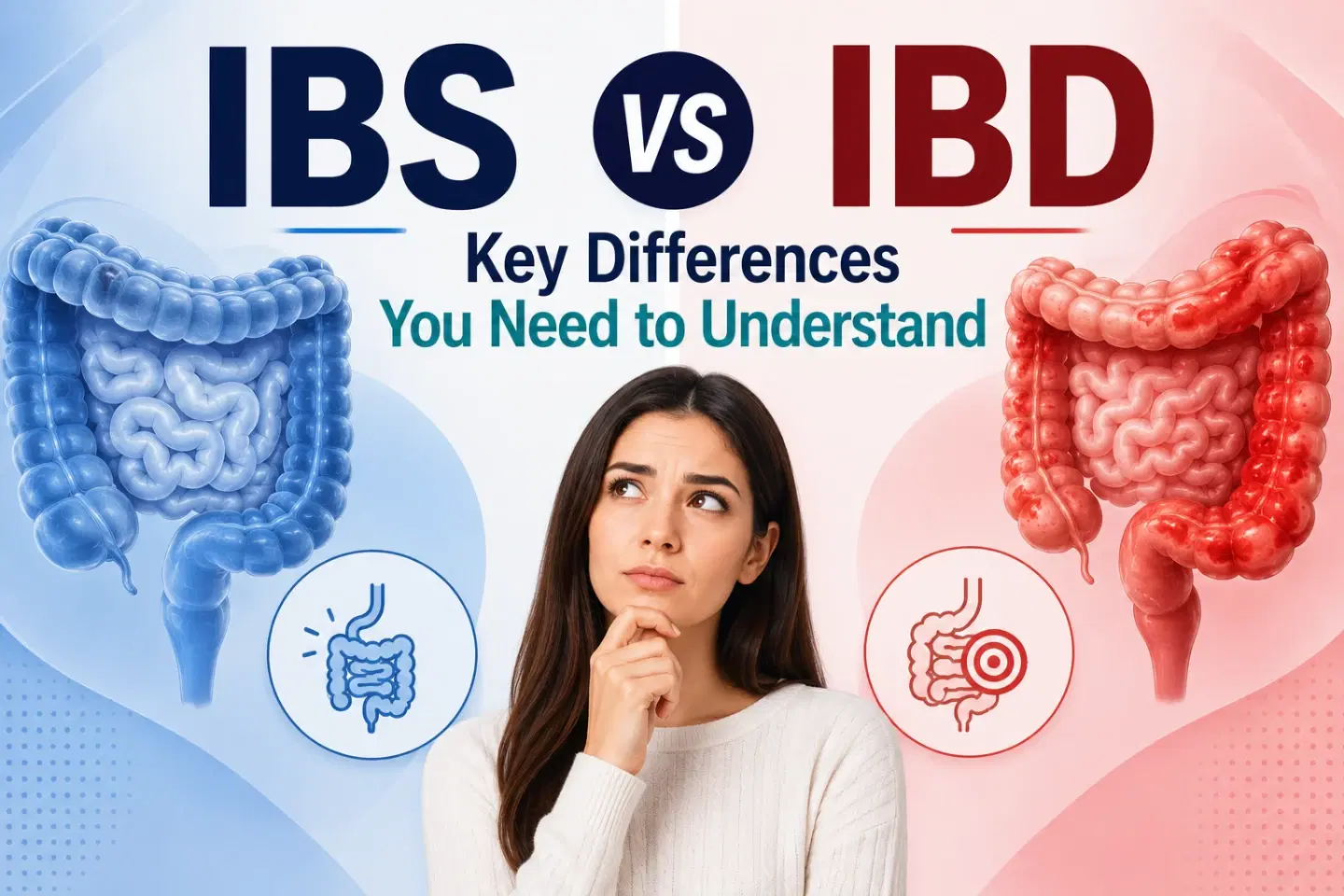
IBS vs IBD: Key Differences You Need to Understand
IBS vs IBD: Key Differences You Need to Understand
Two conditions, three-letter names that differ by a single letter, and a world of difference between them. IBS and IBD are among the most commonly confused terms in digestive health, and the mix-up causes real harm, some people panic that ordinary IBS is a dangerous disease, while others dismiss the serious symptoms of IBD as “just a sensitive stomach.”
Getting the distinction right matters. This guide lays out the ibs vs ibd comparison in plain language: what each one is, how they differ in cause, symptoms, and consequences, the red flags that separate them, and how doctors tell them apart. By the end, you will understand why these two conditions, despite their similar names, sit in genuinely different territory.
The One-Line Difference
If you remember nothing else, remember this. IBS, irritable bowel syndrome, is a problem with how the gut functions. IBD, inflammatory bowel disease, is a problem of actual inflammation and damage to the gut.
A useful way to picture it is software versus hardware. IBS is like a software glitch: the machinery of the bowel is physically intact, but the signals between the gut and the brain are oversensitive and misfiring, producing very real discomfort without structural damage. IBD is a hardware problem: there is genuine, visible injury to the bowel wall, inflammation, ulcers, and harm that can be seen and measured.
Both cause suffering, and neither should be dismissed. But because one damages the gut and the other does not, they are investigated and treated in very different ways.
What Is IBS?
Irritable bowel syndrome is a functional bowel disorder, one of the most common conditions gastroenterologists see. “Functional” means the gut does not work as it should even though it looks structurally normal when examined. There is no inflammation, no ulcers, and no lasting damage.
Typical features of IBS include:
- Abdominal pain or cramping, often eased after passing stool.
- Bloating and a sense of distension.
- Altered bowel habits, which may be diarrhoea, constipation, or an alternating mix.
- A feeling of incomplete emptying and sometimes mucus in the stool.
Crucially, IBS does not cause bleeding, weight loss, fever, or anaemia, and it does not raise the risk of bowel cancer. It is driven by a combination of gut-brain signalling problems, oversensitive intestinal nerves, altered gut movement, stress, and diet. In the Indian context, irregular meal timings, high stress, late dinners, and certain trigger foods often play a large role. IBS can seriously affect quality of life, but it does not shorten it or scar the bowel.
What Is IBD?
Inflammatory bowel disease is a different animal altogether. It is a group of chronic conditions in which the immune system drives ongoing inflammation of the digestive tract, causing real, physical damage. The two main types are:
- Crohn’s disease, which can affect any part of the digestive tract, from mouth to anus, often in patches, and can involve the full thickness of the bowel wall.
- Ulcerative colitis, which affects the large intestine (colon and rectum) in a continuous stretch, inflaming the inner lining.
Because IBD involves genuine inflammation and damage, its symptoms are more alarming and often include:
- Blood in the stool or bloody diarrhoea.
- Persistent diarrhoea, sometimes waking a person from sleep at night.
- Unintended weight loss and loss of appetite.
- Fever and marked fatigue.
- Urgency and cramping, sometimes with mouth ulcers, joint pains, or skin and eye problems, since IBD can affect the body beyond the gut.
Left untreated, IBD can lead to complications such as narrowing of the bowel, abscesses, fistulas, and, in long-standing cases, a raised risk of colon cancer [Source: Reputable Medical Journal - Guideline]. It is a lifelong condition that needs proper medical management, but with modern treatment, many people with IBD live full and active lives.
IBS vs IBD: The Key Differences at a Glance
Putting the difference between ibs and ibd side by side makes the contrast clear.
- Nature: IBS is functional (how the gut works); IBD is inflammatory (physical damage to the gut).
- The gut on examination: IBS looks structurally normal; IBD shows visible inflammation, ulcers, and damage.
- Bleeding: IBS does not cause blood in the stool; IBD often does.
- Weight loss and fever: Not features of IBS; common in active IBD.
- Night-time symptoms: IBS symptoms rarely wake you from sleep; IBD often does.
- Blood tests: Usually normal in IBS; may show anaemia and raised inflammation markers in IBD.
- Long-term risk: IBS does not damage the bowel or raise cancer risk; long-standing IBD can cause complications and, in some cases, increased cancer risk.
- Treatment: IBS is managed with diet, lifestyle, stress control, and symptom-targeted medicines; IBD needs anti-inflammatory and immune-modulating treatment.
This is the heart of the ibd vs ibs distinction, and it explains why an accurate diagnosis is so important.
Can IBS Turn Into IBD?
This is one of the most common and understandable worries, so let us answer it directly. No, IBS does not turn into IBD. They are separate conditions with different underlying mechanisms. Having IBS does not damage your bowel or set you on a path toward inflammatory disease.
There are two nuances worth knowing. First, a single person can have both conditions at once, and some people with well-controlled IBD continue to have IBS-type symptoms even when their inflammation is settled. Second, an episode of severe gut infection can sometimes trigger ongoing IBS afterwards, known as post-infectious IBS. But neither of these means one disease transforms into the other. If you have been clearly diagnosed with IBS, you can set aside the fear that it is quietly becoming something worse.
How Do You Know Which One You Have?
You cannot reliably tell IBS from IBD on symptoms alone, because they overlap, particularly the cramping and altered bowel habits. This is exactly why self-diagnosis is risky and why doctors rely on specific clues and tests. Certain features act as red flags that push toward IBD rather than IBS, and these always deserve prompt evaluation:
- Blood in the stool.
- Unintended weight loss.
- Symptoms that wake you from sleep at night.
- Fever, or signs of anaemia such as fatigue and pallor.
- A family history of inflammatory bowel disease.
- New bowel symptoms appearing for the first time later in life.
If your symptoms are limited to pain, bloating, and changeable bowel habits without any of these red flags, IBS is more likely, though it is still worth a proper assessment. Understanding how diet and the gut interact can help you manage functional symptoms and recognise what is normal; this clear, honest video is a good starting point: Mucus in Stool EXPOSED - The Surprising Truth About Digestion.
How Doctors Tell Them Apart
Distinguishing the two is a core job of a gastroenterologist, and the process is logical. It starts with a careful history and examination, paying close attention to red-flag symptoms. Blood tests can reveal anaemia and markers of inflammation, and a stool test called faecal calprotectin is particularly useful, since it is typically normal in IBS but raised when there is genuine bowel inflammation, as in IBD. When IBD is suspected, a colonoscopy allows the doctor to look directly at the bowel lining and take small tissue samples (biopsies), which confirm inflammation and damage. IBS, by contrast, is diagnosed clinically based on the pattern of symptoms once serious causes have been reasonably excluded.
At specialised centres like Bangalore Gastro Centre, these tests are used judiciously to reach a confident diagnosis, so that people with IBS are reassured and managed appropriately, while those with IBD begin the treatment they need without delay. If bleeding or stool changes are part of your picture, this related guide is a helpful companion: Mucus in Stool: Causes, When to Worry & Treatment.
Living With Each Condition
The treatments diverge sharply, which is the practical reason the diagnosis matters. IBS is managed by identifying and moderating trigger foods (the low-FODMAP approach has strong evidence for many people), managing stress, regular meals and exercise, adequate fibre and fluids, and medicines aimed at specific symptoms such as cramps or constipation. IBD, being an inflammatory disease, needs medicines that reduce inflammation and calm the overactive immune response, regular monitoring, and sometimes surgery in more advanced cases. With the right care, both conditions can be brought under good control, and people can lead normal, active lives.
Common Myths About IBS and IBD
A lot of confusion around these two conditions comes from persistent myths. Clearing them up is part of understanding the real ibs vs ibd picture.
Myth: IBS is “all in your head.” This old idea is both wrong and hurtful. IBS involves genuine, measurable changes in gut sensitivity and movement, and real gut-brain signalling. Stress can worsen it, as stress worsens many physical conditions, but that does not make the pain imaginary. IBS is a real disorder that deserves real treatment.
Myth: IBD is just a bad version of IBS. They are not points on the same scale. IBD is a distinct inflammatory disease driven by the immune system, with visible damage to the bowel. IBS never causes that damage. One is not a milder or stronger form of the other.
Myth: Diet causes IBD. While diet can trigger symptoms in both conditions, IBD is not caused by eating the wrong foods. It arises from a complex interaction of genetics, the immune system, and environmental factors. People with IBD sometimes carry unfair guilt that they brought it on themselves through diet, which is not the case.
Myth: Both are rare in India. In fact, IBS is very common, and IBD, once thought uncommon in India, has been rising steadily, particularly in urban areas [Source: Reputable Medical Journal - Epidemiological Study]. Awareness has not kept pace with this rise, which is part of why symptoms are so often misread.
Myth: You just have to live with it. Both conditions are treatable. IBS can be well controlled with the right combination of diet, stress management, and targeted medicines, and IBD has been transformed by modern treatments that can calm inflammation and keep the disease in remission. Neither is a life sentence of unmanaged suffering.
Dispelling these myths matters, because they are exactly what keep people from seeking the accurate diagnosis that leads to effective care.
IBS vs IBD: Patient Questions Answered
What is the difference between IBS and IBD?
IBS is a functional problem: the gut works abnormally and causes real pain, bloating, and altered bowel habits, but with no inflammation, no physical damage, and no raised cancer risk. IBD, which covers Crohn’s disease and ulcerative colitis, is an inflammatory disease that genuinely damages the bowel and often causes bleeding, weight loss, and fever. In short, IBS is a problem of function; IBD is a problem of inflammation.
Can IBS turn into IBD?
No. They are separate conditions, and having IBS does not damage your bowel or lead to IBD. A person can have both at once, and a severe gut infection can sometimes trigger lasting IBS, but one never turns into the other. A clear IBS diagnosis is not a warning sign of future IBD.
How do I know if I have IBS or IBD?
You cannot be sure from symptoms alone, because they overlap. The red flags that point to IBD are blood in the stool, weight loss, symptoms that wake you at night, fever, anaemia, and a family history of IBD. If any are present, see a doctor. Simple tests, faecal calprotectin, blood work, and a colonoscopy where needed, reliably tell the two apart.
The Bottom Line
IBS and IBD may look like near-identical acronyms, but they describe very different realities. IBS is a functional disorder, a gut that works imperfectly without being damaged, while IBD is an inflammatory disease that physically harms the bowel. One is a software glitch; the other is hardware damage. Both are real, both deserve care, and neither should be brushed aside, but they call for entirely different treatment.
The single most important step is an accurate diagnosis, because the red flags that separate them, bleeding, weight loss, fever, night-time symptoms, are exactly the ones you should never ignore. Reaching that diagnosis is not about labelling yourself from an article or a symptom-checker, but about giving a doctor the full picture so the right, and very different, treatment can begin. A person confidently told they have IBS can stop fearing hidden damage and focus on managing triggers; a person found to have IBD can start calming the inflammation before it causes harm. Both outcomes are far better than living in uncertainty. If your gut symptoms are persistent, or if any warning sign is present, the specialists at Bangalore Gastro Centre can pinpoint whether you are dealing with IBS, IBD, or something else, and set you on the right path with confidence.
This article is for general education and is not a substitute for personalised medical advice. Please consult a qualified gastroenterologist for diagnosis of persistent digestive symptoms.