
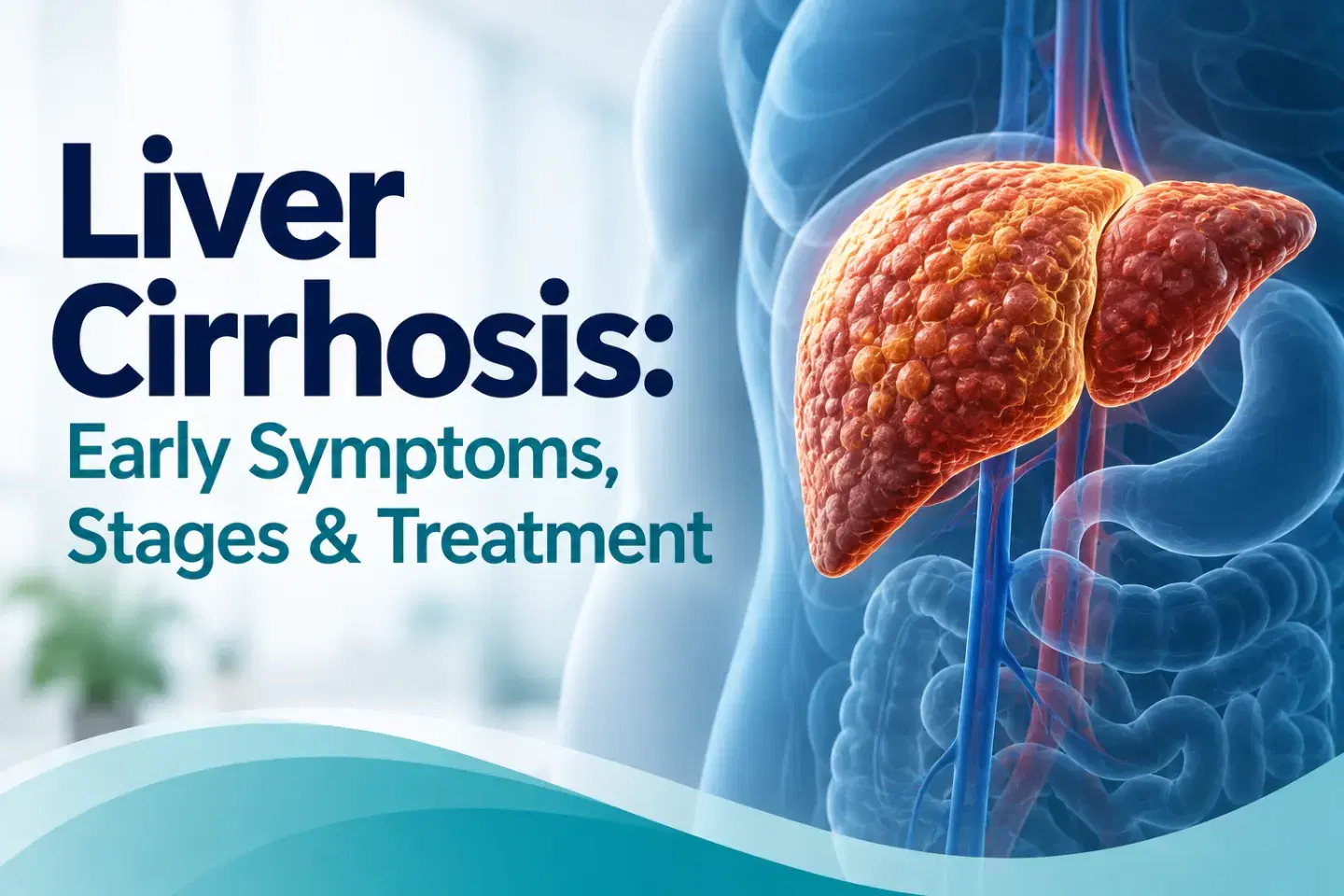
Liver Cirrhosis: Early Symptoms, Stages & Treatment
Liver Cirrhosis: Early Symptoms, Stages & Treatment Options
The word cirrhosis carries a heavy weight. For many people it sounds like a final verdict, a point of no return. That fear is understandable, but it is only partly accurate, and the parts it gets wrong matter enormously. Caught early and managed well, many people with liver cirrhosis live for years in good health, and the slide toward serious illness can often be slowed or stopped.
This guide separates fear from fact. It explains what liver cirrhosis actually is, the early signs that are easy to miss, the stages the condition moves through, whether it can be reversed, and the treatment options available today. Understanding it clearly is the first step toward protecting the liver you still have.
What Is Liver Cirrhosis?
Your liver is one of the body’s great workhorses, filtering blood, processing nutrients and medicines, storing energy, and making proteins that keep you alive. It is also remarkably tough, able to take a great deal of punishment and repair itself. But there is a limit.
When the liver is injured repeatedly over many years, whether by fat, alcohol, or a virus, it heals the only way it knows how: by forming scar tissue. A little scarring is called fibrosis. When that scarring becomes widespread and severe, replacing so much healthy tissue that the liver’s structure and function are disrupted, it is called cirrhosis.
Picture a field of soft, fertile soil where crops grow easily. Now imagine patches of it turning to hard, rocky ground, year after year, until much of the field is stone. Less and less can grow. That is what cirrhosis does to the liver: healthy, working tissue is gradually replaced by stiff scar, and the organ struggles to do its many jobs. The scarring also squeezes the blood vessels running through the liver, raising the pressure in them, a serious knock-on effect called portal hypertension.
The most common causes of cirrhosis today are fatty liver disease (MASLD), long-term heavy alcohol use, and chronic viral hepatitis B and C. Because fatty liver is now so widespread, it has become a leading route to cirrhosis, which is why acting on it early matters so much. This guide to reversing earlier-stage disease is a valuable companion read: Is Fatty Liver Reversible? Complete Recovery Guide.
The Early Signs of Cirrhosis
One of the most challenging things about cirrhosis is how quietly it begins. In its early phase, the liver, even scarred, often keeps working well enough that a person feels more or less normal. This is called compensated cirrhosis, and it can last for years with few or no symptoms.
When early signs of cirrhosis do appear, they are frequently vague and easy to attribute to a busy, tiring life:
- Persistent fatigue and weakness, often the very first complaint.
- Loss of appetite and unintended weight loss.
- Nausea and a general sense of being unwell.
- Mild discomfort in the upper right abdomen.
- Easy bruising or bleeding, as the liver makes fewer clotting proteins.
Because these cirrhosis symptoms are so non-specific, cirrhosis is often not suspected until a routine blood test shows abnormal liver enzymes or a scan reveals a changed liver. Understanding what those enzyme results mean is genuinely helpful, and this companion guide explains them clearly: SGOT & SGPT Explained: What High Liver Enzymes Really Mean.
The Stages of Liver Cirrhosis
People often ask about the “4 stages” of cirrhosis, and it helps to understand what that means. Doctors think about the journey to and through cirrhosis in a couple of overlapping ways.
First, there is the degree of scarring, often described in stages from F1 to F4. F1 is mild fibrosis, F2 and F3 represent increasing scarring, and F4 is cirrhosis itself, where scarring is extensive. In other words, cirrhosis is the final stage of a fibrosis process that builds up over years.
Second, and more important for how a patient actually feels and fares, cirrhosis is divided into two broad phases:
- Compensated cirrhosis. The liver is scarred but still coping. Many people have no symptoms and feel well. The goal here is to keep it this way for as long as possible.
- Decompensated cirrhosis. The liver can no longer keep up, and complications appear. These are the more serious signs: yellowing of the skin and eyes (jaundice), fluid building up in the abdomen (ascites) causing swelling, confusion or drowsiness from toxins the liver cannot clear (hepatic encephalopathy), and bleeding from swollen veins in the food pipe (varices) caused by portal hypertension.
Understanding these liver cirrhosis stages matters because the difference between compensated and decompensated is the difference between a stable condition and one that needs urgent, intensive care. Much of treatment is aimed at preventing the crossing from one to the other.
Can Cirrhosis Be Reversed?
This is the question everyone asks, and it deserves an honest, layered answer.
The scarring of established cirrhosis, the hard, rocky ground, is largely permanent and cannot simply be undone. In that sense, true cirrhosis is not fully reversible. But that is far from the whole story, and the rest is genuinely hopeful.
The progression of cirrhosis can very often be halted, and in some cases the liver can partially recover, if the underlying cause is removed early enough. When someone with alcohol-related cirrhosis stops drinking completely, when hepatitis C is cured with modern medicines, when hepatitis B is suppressed, or when fatty liver is reversed, the ongoing injury stops, and the liver, freed from constant attack, can stabilise and sometimes regain some ground [Source: Reputable Medical Journal - RCT Study]. Compensated cirrhosis, well managed, can remain stable for many years.
So the accurate message is this: the earlier you act, the more the liver can recover, and even when scarring cannot be reversed, its progression can be stopped. Doing nothing guarantees the worst outcome; acting decisively changes the trajectory. This is why cirrhosis should prompt determined action rather than despair.
Treatment Options for Liver Cirrhosis
Treatment has three broad goals: stop the cause, manage the complications, and monitor for danger. At specialised centres like Bangalore Gastro Centre, care is built around all three.
Treat the underlying cause. This is the single most important step. Complete abstinence from alcohol, antiviral treatment for hepatitis B or C, and reversing fatty liver through weight loss and metabolic control all remove the ongoing injury that drives cirrhosis forward.
Manage complications. If decompensation occurs, specific treatments help: medicines and dietary salt reduction for ascites, treatments to prevent and control variceal bleeding, and medicines that clear the toxins behind confusion. These interventions can dramatically improve quality of life and safety.
Monitor closely. People with cirrhosis need regular surveillance, because cirrhosis raises the risk of liver cancer, and catching it early makes it far more treatable. Regular scans and blood tests are a core part of care.
Consider transplantation. For advanced, decompensated cirrhosis that no longer responds to other measures, a liver transplant can be life-saving. It is a major undertaking, but for the right person it offers a genuine new beginning.
Alongside all of this, general liver care matters: avoiding alcohol entirely, being cautious with medicines and herbal products that can stress the liver, eating a balanced diet, and staying up to date with vaccinations that protect the liver.
How Cirrhosis Is Diagnosed
Because cirrhosis is so often silent, it is frequently picked up during tests done for another reason, and knowing how it is confirmed removes some of the fear of the unknown. Diagnosis usually combines several strands of information rather than resting on any single test.
Blood tests come first. Liver enzymes may be abnormal, though they can also be near-normal even in established cirrhosis, which surprises many people. More telling are tests of how well the liver is working, such as albumin, bilirubin, and clotting, along with the platelet count, which often falls as portal pressure rises. Imaging then adds a picture: an ultrasound can show a shrunken, irregular, or coarse-textured liver and signs of raised pressure such as an enlarged spleen or fluid in the abdomen.
The most useful modern tool is a FibroScan, a quick, painless scan that measures how stiff the liver has become, since a stiffer liver reflects more scarring. In some cases a liver biopsy, taking a tiny tissue sample, is still used to confirm the diagnosis and gauge its severity. Doctors also use simple scoring systems that combine several results to estimate how advanced the disease is and to guide decisions. Together, these tests answer the key questions: how much scarring is present, how well is the liver coping, and what is driving the damage.
Living Well With Cirrhosis
A diagnosis of cirrhosis is life-changing, but it is not the end of a good life. Many people, especially those in the compensated phase who address the cause, continue to work, travel, and enjoy their families for years. The keys are consistency and vigilance: taking the cause seriously, keeping every monitoring appointment, following dietary advice, and reporting new symptoms promptly rather than waiting.
Diet often needs attention. Adequate protein is important to prevent muscle loss, salt is usually restricted to control fluid, and alcohol is off the table entirely. A specialist or dietitian can tailor this to your stage. Emotional support matters too, because the fear that surrounds the word cirrhosis can weigh heavily, and understanding that the condition is manageable does a great deal to lift it.
Practical daily habits reinforce all of this. Taking medicines exactly as prescribed, avoiding over-the-counter painkillers and herbal products that can stress the liver, staying up to date with vaccinations that protect against further liver infections, and reporting new symptoms early rather than waiting all help keep a compensated liver stable. Gentle, regular activity preserves muscle and general fitness, which matters more in liver disease than many people realise. None of these steps is dramatic on its own, but together they form the routine that keeps many people with cirrhosis living well, and stable, for years.
When to See a Specialist
You should see a gastroenterologist or hepatologist promptly if you have been told you have cirrhosis or significant liver scarring, if your liver enzymes are persistently abnormal, or if you have risk factors such as heavy alcohol use, hepatitis B or C, or significant fatty liver. Seek urgent care for the warning signs of decompensation: yellowing of the eyes or skin, a swelling abdomen, vomiting blood or black stools, or new confusion and drowsiness. These need immediate attention.
A hepatologist can assess how much scarring is present, identify and treat the cause, manage any complications, and set up the monitoring that keeps you safe over the long term.
Liver Cirrhosis: Patient Questions Answered
What are the first signs of liver cirrhosis?
The earliest signs are often vague and easy to miss, because a scarred but compensated liver can keep working well. They include persistent fatigue and weakness, loss of appetite, unintended weight loss, nausea, mild discomfort in the upper right abdomen, and easy bruising or bleeding. Many people have no symptoms at all in the early phase, and cirrhosis is first suspected from abnormal blood tests or a scan. More obvious signs like jaundice, abdominal swelling, and confusion appear only later, when the liver begins to struggle.
Can cirrhosis be reversed?
The established scarring of cirrhosis is largely permanent and cannot be fully undone. However, its progression can very often be halted, and the liver can sometimes partially recover, if the underlying cause is removed early enough, for example by stopping alcohol completely, curing hepatitis C, suppressing hepatitis B, or reversing fatty liver. Compensated cirrhosis, well managed, can stay stable for many years. So while true reversal is limited, decisive early action changes the outlook dramatically, which is why cirrhosis should prompt action rather than despair.
What are the 4 stages of liver cirrhosis?
Cirrhosis can be understood through the degree of scarring, described from F1 (mild fibrosis) through F2 and F3 to F4, which is cirrhosis itself. More practically, cirrhosis is divided into compensated cirrhosis, where the scarred liver still copes and there are often no symptoms, and decompensated cirrhosis, where complications such as jaundice, fluid in the abdomen, internal bleeding, and confusion appear. Moving from compensated to decompensated marks a serious step, and much of treatment aims to prevent that transition and keep the liver stable.
How long can you live with cirrhosis?
There is no single answer, because it depends heavily on the stage and whether the cause is addressed. Many people with compensated cirrhosis who stop the underlying injury, such as alcohol or a virus, live for many years in good health. Decompensated cirrhosis is more serious and reduces life expectancy, though treatment of complications and, where suitable, liver transplantation can extend and improve life significantly. The most powerful factor within your control is removing the cause and keeping every monitoring appointment.
Is cirrhosis always caused by alcohol?
No. While heavy alcohol use is a major cause, it is far from the only one. Today, fatty liver disease linked to weight and metabolism is a leading cause of cirrhosis, as are chronic hepatitis B and C infections. Less common causes include autoimmune liver diseases and certain inherited conditions. Many people with cirrhosis have never been heavy drinkers, so the condition should never be assumed to reflect alcohol use. Identifying the true cause is essential, because treating it is what protects the liver.
The Bottom Line
Liver cirrhosis is serious, but it is not the automatic death sentence its reputation suggests. It is advanced scarring that builds quietly over years, often without symptoms until it is well established, which is exactly why the vague early signs and abnormal blood tests deserve attention rather than dismissal. While the scarring itself cannot be fully reversed, its progression can very often be stopped, and the liver can stabilise, when the cause is treated early.
The path forward is clear: find and remove the cause, manage any complications, and monitor closely. If you have cirrhosis, significant liver scarring, or risk factors for it, do not let fear keep you from care. The specialists at Bangalore Gastro Centre can assess your liver, treat the cause, and build a plan that protects the healthy liver you still have for as long as possible.
This article is for general education and is not a substitute for personalised medical advice. Please consult a qualified hepatologist or gastroenterologist about your specific liver health.