


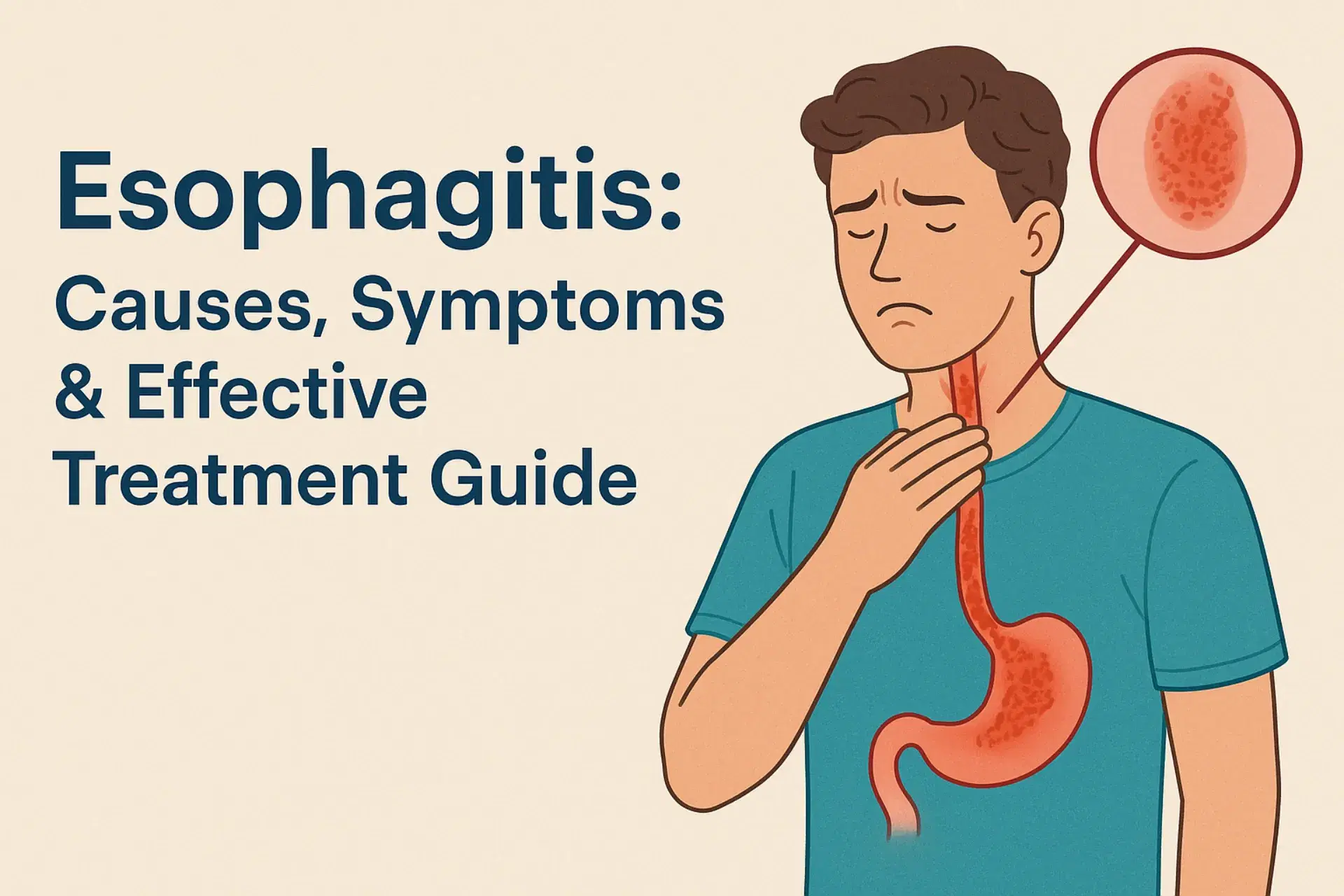
Esophagitis: Causes, Symptoms & Effective Treatment Guide
Do you ever feel a persistent lump in your throat? Or perhaps a discomforting, burning pain in your chest right after a meal that just doesn't feel like normal heartburn? We often dismiss these signals, blaming them on a spicy lunch or a stressful day. But what if your body is trying to tell you something more? What if it's pointing to esophagitis?
Esophagitis is the medical term for inflammation of the esophagus, the muscular tube that carries food and liquid from your mouth to your stomach. Understanding this condition is more important now than ever, especially in India, where changing lifestyles, high-stress environments, processed foods, and an increase in allergies are contributing to a rise in digestive health issues. Gastroenterologists commonly see patients dealing with this uncomfortable esophagus inflammation, which can stem from diet, infections, chronic acid reflux, or even allergy-related causes.
When your esophagus is inflamed, it hurts. It can make eating, drinking, and even just getting through the day difficult. The good news is that it's highly treatable. Ignoring it, however, can lead to more serious problems down the line, such as esophageal narrowing (strictures), ulcers, or chronic pain.
We know that medical topics can be confusing. That's why we've structured this comprehensive guide in a simple question-and-answer format. We want to demystify esophagitis, answer your most pressing questions, and empower you with the knowledge to seek the right help.
What Is Esophagitis, Exactly?
Let's start with the basics. As mentioned, esophagitis is an inflammation or injury to the lining of the esophagus.
Think of your esophagus as a vital, one-way street for food. It has a tough but sensitive lining. Through a series of coordinated muscle contractions (called peristalsis), it efficiently moves everything you swallow down into your stomach. At the bottom, a muscular "gate" called the lower esophageal sphincter (LES) opens to let food into the stomach and then snaps shut to keep powerful stomach acid out.
Esophagus inflammation occurs when this lining gets irritated, swollen, and damaged. This disruption throws the whole system off. Instead of a smooth passage, swallowing can become painful. You might feel like food is getting stuck, or experience a burning sensation as the inflamed tissue is further irritated.
This inflammation isn't just one-size-fits-all. The cause of the inflammation determines the type of esophagitis you have.
The Different Types of Esophagitis
Understanding the type is the most critical step toward finding the right esophagitis treatment. The main types include:
- Reflux Esophagitis (or Acid Reflux Esophagitis): This is the most common type. It happens when the lower esophageal sphincter (LES) weakens or relaxes when it shouldn't. This allows stomach acid to repeatedly flow back up (reflux) into the esophagus. Stomach acid is incredibly strong—it's meant to digest tough foods, not to sit against the delicate esophageal lining. This constant acid exposure burns the lining, leading to inflammation. This is clinically known as Gastroesophageal Reflux Disease (GERD), and reflux esophagitis is what happens when GERD becomes chronic and causes visible damage.
- Eosinophilic Esophagitis (EoE): This is a more recently recognized and increasingly diagnosed type. Eosinophilic esophagitis is an immune system or allergic reaction. It's triggered when a specific type of white blood cell, the eosinophil, builds up in the esophagus in large numbers. This is usually in response to an allergen, most often found in food. Common triggers include milk, soy, eggs, wheat, nuts, and seafood. The body mistakenly sees a food protein as a threat and attacks the esophagus, causing chronic inflammation.
- Infectious Esophagitis: This type is less common in people with healthy immune systems. It’s caused by a fungal, viral, or bacterial infection. The most frequent culprit is Candida (a type of yeast), but viruses like herpes or cytomegalovirus (CMV) can also be responsible, particularly in individuals who are immunocompromised (e.g., from diabetes, HIV, or certain medications).
- Drug-Induced Esophagitis: Ever dry-swallowed a pill or taken one right before lying down? Some medications can get stuck in the esophagus and dissolve there, releasing high concentrations of medicine that can "burn" the lining. Common culprits include certain antibiotics (like doxycycline), potassium supplements, and some NSAIDs (pain relievers).
What Causes Esophagitis?
The cause is directly linked to the type. This esophagus inflammation can happen due to a variety of factors, some of which are within our control and some that are not.
Let's break down the common culprits:
- Chronic Acid Reflux (GERD): As discussed, this is the number one cause of acid reflux esophagitis. The root issue is the faulty esophageal sphincter (LES) that fails to keep stomach acid where it belongs.
- Food Allergies: This is the direct cause of eosinophilic esophagitis. The immune system's overreaction to specific food allergens triggers the inflammation.
- Medications: This leads to drug-induced esophagitis. The risk is highest when pills are taken with little or no water, or when you lie down immediately after swallowing them, allowing them to rest against the esophageal wall.
- Infections: Viruses, fungi (yeast), or bacteria can invade the esophageal tissue. This is most common in individuals with weakened immune systems.
- Lifestyle Factors: These often contribute to or worsen reflux esophagitis:
- Smoking and Alcohol: Both can relax the LES, making acid reflux more likely. They also directly irritate the esophageal lining.
- Diet: Consuming large amounts of fatty, fried, or very spicy foods, as well as chocolate, caffeine, and acidic foods (like citrus and tomatoes), can trigger reflux.
- Obesity: Excess abdominal weight puts physical pressure on the stomach, which can force acid up into the esophagus.
- Hiatal Hernia: A condition where the top part of the stomach bulges up through the diaphragm, which can weaken the LES and promote reflux.
What Are the Symptoms of Esophagitis?
Symptoms can range from mildly annoying to severely debilitating. The most common signs that something is wrong with your esophagus include:
- Painful Swallowing (Odynophagia): This is a sharp, burning pain felt in the chest or throat as you swallow.
- Difficulty Swallowing (Dysphagia): This feels different from pain. It's a sensation of food moving slowly, "sticking," or getting "stuck" in your chest or throat.
- Chest Pain: This is often a burning sensation (heartburn) located behind the breastbone. It can sometimes be sharp and severe, and may be confused with heart-related chest pain. (Note: Any new or severe chest pain should always be evaluated by a doctor immediately to rule out a cardiac cause).
- Persistent Acid Reflux: Frequent heartburn, an acidic taste in the mouth (regurgitation), or a chronic cough, especially at night.
- Sore Throat and Hoarseness: Stomach acid or other irritants can splash up and inflame the vocal cords.
- Nausea or Vomiting: In some cases, the inflammation can be severe enough to cause nausea or even vomiting.
If you experience these symptoms, especially difficulty swallowing or pain that makes you avoid eating, it's crucial to seek a medical evaluation. Prompt diagnosis is the first step toward effective swallowing pain treatment and preventing long-term complications.
How Do Doctors Diagnose Esophagitis?
A gastroenterologist can't just guess based on symptoms, as many digestive issues overlap. To find the right esophagitis treatment, they must first find the cause.
Here’s the typical diagnostic process:
- Patient History: Your doctor will start with a detailed conversation. They'll ask about your symptoms (what they feel like, when they happen), your diet, your lifestyle (smoking, alcohol), and any medications you're taking. This history is vital and often points them in the right direction.
- Endoscopy (EGD): This is the gold standard for diagnosing esophagitis. In specialized centres like Bangalore Gastro Centre, an upper endoscopy (EGD) is a routine, safe, and painless procedure (done with sedation). A doctor guides a thin, flexible tube with a high-definition camera on the end (an endoscope) down your throat. This allows them to see the entire lining of your esophagus, stomach, and the first part of your small intestine. They can directly see inflammation, redness, swelling, ulcers, or narrowing.
- Biopsy: During the endoscopy, the doctor can take tiny tissue samples (biopsies) from the esophageal lining. This is completely painless. The samples are then sent to a lab. A biopsy is the only way to confirm a diagnosis of eosinophilic esophagitis (by counting the number of eosinophils in the tissue) or to identify an infectious cause.
- pH Monitoring: If acid reflux esophagitis is suspected but not obvious on the scope, your doctor might order a 24-hour pH test. A very thin, spaghetti-sized tube is passed through the nose into the esophagus to measure how often and for how long acid splashes up from the stomach.
Esophagitis Treatment: How Doctors Manage and Treat the Condition
Finally, let's talk about the solution. The primary goal of any esophagitis treatment is to reduce the inflammation, relieve the symptoms, treat the underlying cause, and prevent future complications. The treatment plan depends entirely on the type of esophagitis you have.
- For Reflux Esophagitis:
- Acid-Blocking Medications: This is the cornerstone of treatment.
- Proton Pump Inhibitors (PPIs): These are strong acid blockers (e.g., omeprazole, pantoprazole) that give the inflamed esophagus time to heal.
- H2 Blockers: These also reduce acid production, though they are generally less potent than PPIs (e.g., ranitidine, famotidine).
- Lifestyle & Diet Changes: Medication alone is often not enough. Long-term management of reflux esophagitis requires significant lifestyle adjustments, which we'll cover in our Q&A section.
- For Eosinophilic Esophagitis (EoE):
- Elimination Diets: The doctor may recommend removing common allergens from your diet (like the "six-food elimination diet" - cutting milk, soy, egg, wheat, nuts, and fish/seafood). If symptoms improve, foods are slowly reintroduced one by one to pinpoint the trigger.
- Topical Steroids: These are not the same as body-building steroids. These are anti-inflammatory medications (e.g., fluticasone, budesonide) that are swallowed (often from an inhaler) to coat the esophagus and reduce the allergic inflammation directly.
- Allergy Evaluation: A referral to an allergist may be needed to help identify food or environmental triggers.
- For Infectious Esophagitis:
- This treatment targets the specific bug.
- Antifungals are prescribed for yeast (Candida) infections.
- Antivirals are used for viral infections.
- Antibiotics are used for the (much rarer) bacterial infections.
- For Drug-Induced Esophagitis:
- This is the most straightforward esophagitis treatment.
- The doctor will likely have you stop the offending medication (if possible) or switch to a liquid version.
- They will teach you proper pill-taking habits: always take tablets with a full glass of water and remain upright (sitting or standing) for at least 30 minutes afterward.
Effective esophagitis treatment is a partnership between you and your doctor. Sticking to the plan is what heals the inflammation and prevents long-term damage like scarring.
Q&A Focus Area: Your Top Questions Answered
We know you have specific questions. This section is designed to answer them clearly and directly, optimizing for the information you're searching for.
Q1. How to Heal Esophagitis Naturally?
This is one of the most common and important questions we hear. When you're in discomfort, you want to know what you can do right now to start the healing process.
First, a crucial disclaimer: "Natural" healing should always be seen as a complement to, not a replacement for, medical diagnosis and treatment. This is especially true if your symptoms are severe. However, for mild esophagitis, particularly acid reflux esophagitis, these lifestyle and dietary changes are the single most powerful tool you have.
Here is a practical guide to healing esophagitis naturally:
1. Master Your Diet (The "Soothe and Avoid" Plan):
- Eat Soft, Warm, Non-Irritating Foods: Think of your esophagus as a wounded arm. You wouldn't rub sandpaper on it.
- Good choices: Oatmeal (daliya), porridge, steamed rice, khichdi, boiled potatoes, steamed vegetables (like bottle gourd/lauki or zucchini/tori), bananas, and clear soups.
- Avoid the "Big Irritants": These foods can either directly irritate the inflamed lining or relax the LES, promoting acid reflux.
- Acidic Foods: Tomatoes (and tomato-based curries), citrus fruits (oranges, lemons, amla), and vinegar.
- Spicy Foods: Chillies, garam masala, and excessive black pepper.
- Fried & Fatty Foods: Samosas, pakoras, vadas, chips, and rich, creamy curries.
- Common Triggers: Chocolate, caffeine (coffee, strong tea, colas), carbonated drinks, and peppermint.
- Alcohol & Smoking: These are non-negotiable. They must be stopped, as they are direct irritants and severely hamper healing.
2. Change Your Eating Behaviors:
- Eat Smaller, More Frequent Meals: Instead of three large meals, try five or six small ones. A full stomach puts pressure on the LES, forcing acid up.
- Eat Slowly and Chew Thoroughly: Digestion begins in the mouth. Chewing well makes your stomach's job easier and reduces the time food sits there.
- Don't Lie Down After Eating: This is critical. Stay upright for at least 2 to 3 hours after your last meal or snack. Let gravity help keep acid in your stomach.
3. Optimize Your Sleep:
- Elevate the Head of Your Bed: If your symptoms are worse at night, acid is likely refluxing while you sleep. Place wooden blocks or sturdy books under the head of your bed frame (not just your pillows) to raise it by 6 to 8 inches. This creates a slope that makes it harder for acid to travel uphill.
4. Manage Stress:
- The Gut-Brain Connection: Stress doesn't cause esophagitis, but it can absolutely make reflux esophagitis worse. Stress can increase acid production and make your esophagus more sensitive to pain.
- Find Your Calm: Incorporate stress-reducing activities into your day. This is highly personal but very relevant in our fast-paced Indian lives. Try deep breathing exercises, meditation, yoga, or even just a quiet 20-minute walk.
5. Hydrate Smartly:
- Drink plenty of water between meals, not with meals. Drinking too much during a meal can distend the stomach.
These steps are the foundation of natural swallowing pain treatment and can significantly reduce esophagus inflammation.
Finally, while these tips focus on the esophagus, remember that your entire digestive system is connected. A healthy gut biome can improve digestion and reduce reflux. For more on this, the Bangalore Gastro Centre channel has a helpful video.
Watch: Eat These Fantastic Foods for a Healthy Small Intestine!
Q2. Is Esophagitis Serious?
Here is the direct answer: Yes, if left untreated, esophagitis can become very serious.
While a mild, acute case (like from a stuck pill) might heal on its own, chronic esophagitis is a different story. When the esophageal lining is constantly inflamed, the body tries to repair itself, but this constant cycle of damage and repair can lead to severe complications:
- Esophageal Strictures: This is a narrowing of the esophagus caused by the buildup of scar tissue. A stricture can make it difficult, or even impossible, for solid food to pass through. This is a primary cause of food getting "stuck" (food impaction), which is a medical emergency.
- Esophageal Ulcers: The inflammation can become so severe that it erodes the lining, creating open sores (ulcers). These ulcers can bleed and be very painful.
- Barrett's Esophagus: This is the most serious complication of chronic acid reflux esophagitis. In Barrett's, the normal, pale-pink lining of the esophagus is replaced by a different type of tissue, similar to the lining of the intestine (a process called metaplasia). This new tissue is more resistant to acid, but it also has a significantly higher risk of developing into esophageal cancer. [Source: National Cancer Institute]
- Chronic Pain and Malnutrition: If swallowing is always painful, people naturally start to eat less. This can lead to unintentional weight loss and nutritional deficiencies.
This is why you must never ignore persistent symptoms. Seeking a proper diagnosis and starting an effective esophagitis treatment plan is not just about feeling better now—it's about protecting your long-term health.
Q3. What Foods Soothe Esophagitis?
When your throat is on fire, you want immediate relief. While the "avoid" list is long, the "soothe" list is gentle, comforting, and effective. These foods are generally non-acidic, soft, and easy to swallow.
Your Go-To Soothing Foods List:
- Oatmeal / Porridge / Daliya: A classic for a reason. Oats are a great source of fiber, are non-acidic, and absorb excess stomach acid. Their soft texture is non-abrasive.
- Bananas: This low-acid fruit is soft, easy to digest, and can coat the esophageal lining, providing a soothing effect. It's a natural antacid.
- Yogurt (Dahi): Cool, smooth yogurt can be very soothing. It also contains probiotics, which are beneficial for overall gut health. (Choose plain, low-fat yogurt that isn't overly sour).
- Steamed Vegetables: Think of the mildest, softest vegetables. Bottle gourd (lauki), zucchini (tori), pumpkin (kaddu), and carrots, when steamed or boiled until very soft, are excellent. They are alkaline and nutritious.
- Soups: Clear broths and light, non-creamy vegetable soups (avoiding tomato) are hydrating and easy to get down.
- Melons (like Cantaloupe and Honeydew): These are low-acid fruits that are generally well-tolerated and hydrating. Watermelon is also good, but can be a trigger for some, so be cautious.
- Ginger: In moderation, ginger is a powerful natural anti-inflammatory. A mild, warm ginger tea (without caffeine) can help calm the stomach and reduce reflux.
- Lean Proteins: Boiled or steamed chicken, fish, and well-cooked lentils (dal) are important for repair, but avoid frying them or cooking them in heavy, spicy curries.
A Note on Eosinophilic Esophagitis (EoE):
It's important to repeat that for eosinophilic esophagitis, the "soothing" foods are simply any foods that are not your specific trigger. A banana might be soothing for reflux, but if you have an undiagnosed allergy to bananas, it will make your EoE worse. This is why working with a doctor to identify your triggers is essential.
An individualized diet plan, perhaps created with your gastroenterologist or a nutritionist, is the best long-term strategy. Start a food diary to track what you eat and how you feel—it will become your best tool for identifying your personal soothing foods and trigger foods.
Lifestyle Tips for Faster Esophagitis Recovery
Beyond the specific Q&A, here are a few more critical lifestyle adjustments to speed up your recovery and prevent a relapse.
- Manage Your Meal Timings: This is a big one in our culture of late-night work and late dinners. Try to eat your last meal of the day at least 3 hours before you lie down. This gives your stomach time to empty.
- Watch Your Posture: Don't slouch or recline in a chair right after eating. Sit upright to let gravity do its job.
- Stop Smoking and Limit Alcohol: We can't say this enough. Both are direct irritants and relax the LES. You cannot heal your esophagus while continuing to expose it to these substances.
- Manage Your Weight: If you are carrying extra weight, especially around your abdomen, even a small amount of weight loss (5-10% of your body weight) can dramatically reduce pressure on your stomach and decrease acid reflux.
- Review Your Medications: Ask your doctor if any of your current medications (prescription or over-the-counter) could be contributing to your symptoms.
- Manage Other Conditions: Chronic inflammation can be a body-wide issue. Managing inflammatory conditions, which can include things like Crohn's Disease, which also requires careful management, is key to overall digestive health.
When Should You See a Doctor?
Do not wait for your symptoms to become severe. Please see a doctor, preferably a gastroenterologist, if you experience any of the following:
- "Red Flag" Symptoms (Seek help immediately):
- Vomiting blood (it may be bright red or look like "coffee grounds").
- Black, tarry stools (which can indicate digested blood).
- Sudden, severe, or crushing chest pain (to rule out a heart attack).
- Inability to swallow food or liquid.
- Symptoms that Need Prompt Evaluation:
- Persistent swallowing pain or difficulty swallowing.
- A constant feeling of food getting stuck.
- Unintentional weight loss.
- Symptoms that persist for more than a few days despite over-the-counter antacids and diet changes.
- Hoarseness or a chronic cough that won't go away.
If your symptoms are interfering with your quality of life, it's time to get answers. A gastroenterology consultation at a center like Bangalore Gastro Centre can help pinpoint the exact cause of your discomfort and create the most effective esophagitis treatment plan for you.
Conclusion
Esophagitis, in all its forms, can be a painful and disruptive condition. But it is also a condition that we have effective treatments for. The burning, the pain, and the fear of swallowing do not have to be your "new normal."
The key is to listen to your body's warning signals. That discomfort is not something to be "pushed through" with another antacid; it's a clear message that something needs to change.
Whether the solution is a course of medication, a targeted diet to manage eosinophilic esophagitis, or lifestyle changes to control reflux esophagitis, healing is absolutely possible. By seeking a proper diagnosis and committing to your personalized esophagitis treatment plan, you can soothe the inflammation, heal your esophagus, and get back to enjoying your meals and your life without fear or pain.