


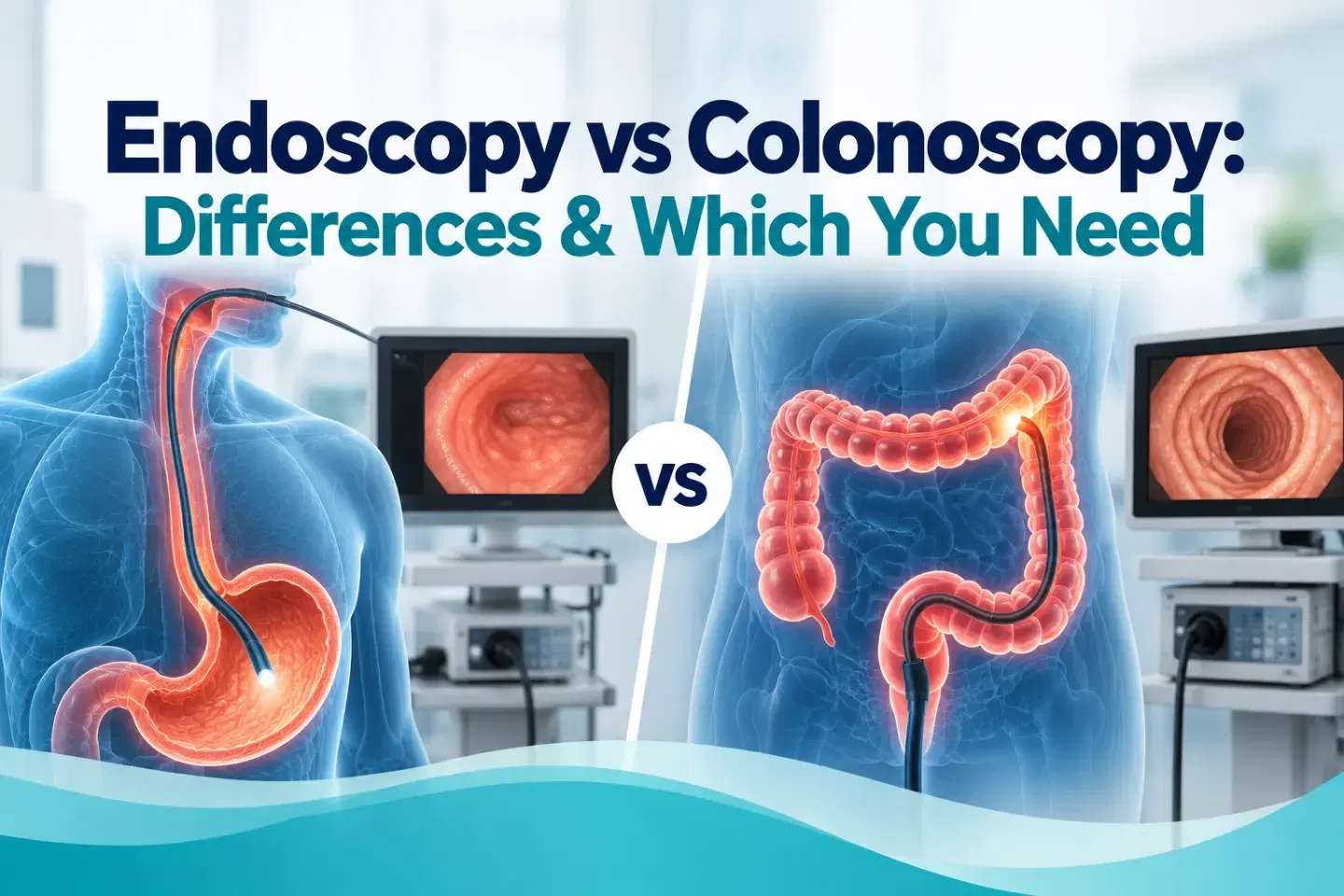
Endoscopy vs Colonoscopy: Differences & Which You Need
Endoscopy vs Colonoscopy: What’s the Difference & Which Do You Need?
Your doctor has recommended a “scope test,” and suddenly you are faced with unfamiliar words: endoscopy, colonoscopy, gastroscopy. Are they the same thing? Different things? Which one do you actually need, and what is the difference anyway? For a lot of people, this confusion adds worry to an already anxious moment.
The good news is that the distinction is genuinely simple once explained. This guide clears up the endoscopy vs colonoscopy question in plain language: what each test looks at, how they are done, how they differ, whether they can be performed together, and how to know which one your symptoms call for. By the end, the mystery, and much of the anxiety, should be gone.
The Simple Difference
Here is the whole thing in one picture. Imagine your digestive system as a long tunnel with two entrances: your mouth at the top and your bottom at the other end. Both of these tests use a thin, flexible tube with a tiny camera on the end to look inside that tunnel. The difference is simply which end they enter from and which stretch of tunnel they examine.
- An endoscopy (more precisely, an upper GI endoscopy or gastroscopy) enters through the mouth and examines the upper digestive tract: the food pipe (oesophagus), the stomach, and the first part of the small intestine (duodenum).
- A colonoscopy enters through the anus and examines the lower digestive tract: the large intestine (colon), rectum and last 10 cms of small bowel (terminal ileum).
A quick note on terminology, because it causes confusion. “Endoscopy” is a broad word that technically means looking inside the body with a scope, so a colonoscopy is itself a type of endoscopy. In everyday use, however, when doctors say “endoscopy” they usually mean the upper test through the mouth, also called a gastroscopy. This guide uses “endoscopy” in that common sense.
What an Endoscopy Looks At
An upper GI endoscopy examines the oesophagus, stomach, and duodenum. It is the test of choice for symptoms coming from the upper digestive tract. Doctors recommend it for:
- Persistent indigestion, heartburn, or reflux that does not settle.
- Upper abdominal pain or a suspected stomach or duodenal ulcer.
- Difficulty or discomfort swallowing.
- Persistent nausea or vomiting.
- Testing for H. pylori and investigating gastritis.
- Upper gastrointestinal bleeding, such as vomiting blood or black, tarry stools.
- Investigating anaemia when an upper gastrointestinal cause such as celiac disease or parasitic infestation of small bowel is suspected.
- Checking for conditions like Barrett’s oesophagus or, importantly, early stomach cancer.
During the test, the doctor can also take small tissue samples (biopsies) and treat certain problems, such as stopping a bleeding ulcer, in the same sitting.
What a Colonoscopy Looks At
A colonoscopy examines the entire large intestine and rectum. It is the test for symptoms and screening related to the lower digestive tract. Doctors recommend it for:
- Rectal bleeding or blood in the stool.
- A recent acute (short term) change in bowel habits, such as new onset constipation in elderly.
- Chronic diarrhoea (lasting for > 4 weeks) or unexplained lower abdominal pain.
- Screening for colorectal cancer, now recommended from age 45 for average-risk adults.
- Investigating and monitoring inflammatory bowel disease.
- Finding and removing polyps before they can turn cancerous.
- Investigating iron-deficiency anaemia when a lower gastrointestinal cause is suspected.
One of the colonoscopy’s great strengths is that it is both a detective and a treatment: polyps found during the test are usually removed there and then, which is how colonoscopy actually prevents cancer, not just detects it. Because a colonoscopy is central to diagnosing conditions like inflammatory bowel disease, understanding those conditions is useful in background; this guide explains them well: IBS vs IBD: Key Differences You Need to Understand.
How the Two Tests Differ in Practice
Beyond which end they examine, a few practical differences are worth knowing.
Preparation. This is the biggest day-to-day difference. For an endoscopy, you simply need an empty stomach, so fasting for a few hours beforehand is usually enough. For a colonoscopy, the colon must be completely clean for the camera to see clearly, so you take a strong laxative preparation the day before to empty the bowel. This bowel prep is the part people find least pleasant, though modern preparations are gentler than they used to be.
Route and sedation. The endoscopy goes in through the mouth, the colonoscopy through the anus. Both are typically done under sedation, so you are relaxed and comfortable and usually remember little or nothing.
Duration and recovery. Both are day-care procedures, often taking somewhere between about 15 and 45 minutes, after which you rest while the sedation wears off and then go home the same day, usually needing someone to accompany you.
What they cannot see. Neither test examines the middle section of the small intestine, which lies beyond the reach of both and, when needed, requires other specialised tests.
Can Both Be Done at the Same Time?
Yes, and this is a common and convenient arrangement. When symptoms could be coming from either the upper or lower digestive tract, or when the cause of a problem like anaemia or unexplained bleeding is unclear, doctors often perform both tests in the same session, sometimes called a bidirectional endoscopy.
Doing them together has real advantages: you undergo sedation only once, complete the whole investigation in a single visit, and get a more complete picture in one go. The bowel preparation for the colonoscopy covers both. At specialised centres like Bangalore Gastro Centre, combining the two when appropriate is routine, sparing patients a second appointment and a second round of sedation.
Which Test Do You Need for Stomach Problems?
This is where the simple geography pays off. Match the test to where your symptoms are coming from.
If your problems are in the upper digestive tract, indigestion, heartburn, upper abdominal pain, difficulty swallowing, nausea, or a suspected ulcer, you most likely need an endoscopy. If your problems are in the lower digestive tract or bowel, rectal bleeding, a change in bowel habits, chronic diarrhoea, or colorectal cancer screening, you most likely need a colonoscopy.
Some situations call for one, some for the other, and some for both. The decision is best made with your doctor, who will match the test to your specific symptoms, age, and risk factors. The important thing to understand is that neither test is “better”; they simply look at different parts of the body, and the right one is whichever reaches the area your symptoms are pointing to.
Are These Tests Safe?
Both endoscopy and colonoscopy are very safe, routine procedures performed millions of times worldwide. Serious complications are rare. The most common experiences are minor and temporary: a mildly sore throat after an endoscopy, or some bloating and wind after a colonoscopy from the air used to inflate the bowel. The benefits, finding and often treating problems early, and providing reassurance, far outweigh the small risks for people who need them. Fear of these tests keeps some people from getting answers they need, so understanding how safe and routine they are is genuinely important.
It is worth adding that the small risks of having these tests must always be weighed against the far greater risks of not having them when they are needed. A colonoscopy that removes a precancerous polyp, or an endoscopy that catches an early stomach cancer or a bleeding ulcer, can be life-saving, and even a normal result carries real value by ruling out serious disease and ending months of worry. Modern sedation, thin flexible instruments, and experienced teams have made both procedures far more comfortable and safer than their reputation suggests. For the great majority of people who are advised to have one, the balance falls firmly in favour of going ahead.
What to Expect on the Day
Knowing how the day unfolds removes much of the anxiety, because for both tests the experience is more straightforward than most people imagine. You will usually be asked to arrive having followed the preparation instructions: an empty stomach for an endoscopy, and a completed bowel cleanse for a colonoscopy. Because sedation is involved, you should bring someone to accompany you home and avoid driving afterwards.
Once you are checked in, the team confirms your details and the reason for the test, and you change into a gown. A small cannula is placed in your hand or arm to give the sedation, which relaxes you and often makes you drowsy enough that you remember little of the procedure. During an endoscopy, a mouthguard protects your teeth while the thin scope passes gently down; during a colonoscopy, you lie on your side while the scope is passed and a little air is used to open up the bowel for a clear view. Neither should be painful. The procedure itself is usually brief, and throughout it the team monitors your comfort, oxygen, and heart rate. Many people are surprised, on waking, to learn it is already over.
After the Procedure and Getting Results
Once the test is done, you rest in a recovery area while the sedation wears off, typically for a short while, with the team keeping an eye on you. It is normal to feel a little drowsy, and you may have a mildly sore throat after an endoscopy or some bloating and wind after a colonoscopy as the air passes; both settle quickly, and walking around helps release trapped air.
Because the sedation can affect memory and judgement for the rest of the day, you should not drive, work, sign important documents, or make major decisions until the next day, and you will need that companion to take you home. Many findings are explained to you straight after the test, though because sedation clouds memory, it helps to have someone with you or to receive written results. Where biopsies were taken or polyps removed, those samples go to the laboratory, and results follow after a few days. Your doctor will then explain what was found and any next steps. For most people, the whole experience, from arrival to going home, is completed within a few hours, and the reassurance or answers it provides are well worth it.
Endoscopy vs Colonoscopy: Patient Questions Answered
What is the difference between an endoscopy and a colonoscopy?
The difference is simply which part of the digestive tract each examines. An endoscopy (upper GI endoscopy or gastroscopy) goes in through the mouth to look at the oesophagus, stomach, and the first part of the small intestine. A colonoscopy goes in through the anus to examine the large intestine and rectum. Both use a thin, flexible tube with a camera, are done under sedation as day-care procedures, and can take biopsies or remove growths. They look at opposite ends of the same digestive tube.
Can both an endoscopy and colonoscopy be done at the same time?
Yes. When symptoms could arise from either the upper or lower digestive tract, or when the cause of a problem such as anaemia or bleeding is unclear, doctors often perform both in a single session, sometimes called a bidirectional endoscopy. This is convenient and efficient: you are sedated only once, the bowel preparation covers both tests, and you get a complete picture in one visit. Combining the two when appropriate is a common, routine arrangement that spares patients a second procedure.
Which test do I need for stomach problems?
For symptoms in the upper digestive tract, such as indigestion, heartburn, upper abdominal pain, difficulty swallowing, nausea, or a suspected ulcer, you most likely need an endoscopy, which examines the stomach directly. For lower digestive or bowel symptoms, such as rectal bleeding, a change in bowel habits, or chronic diarrhoea, or for colorectal cancer screening, you most likely need a colonoscopy. Your doctor will match the test to your specific symptoms. The right choice depends on where the problem is, not on one test being better than the other.
Which is more uncomfortable, endoscopy or colonoscopy?
Both are usually done under sedation, so most people feel little or nothing during either test and remember little afterward. The main difference in experience is the preparation: a colonoscopy requires a bowel-cleansing laxative the day before, which people find the least pleasant part, whereas an endoscopy needs only fasting. After the tests, an endoscopy may leave a mildly sore throat and a colonoscopy some temporary bloating. Neither is as uncomfortable as most people fear, and the sedation makes the procedures themselves comfortable.
How should I prepare for these tests?
For an endoscopy, you generally need to fast for a few hours beforehand so the stomach is empty. For a colonoscopy, you follow a special diet and take a strong laxative preparation the day before to completely empty the bowel, which is essential for clear views. For both, you will usually be advised about which medicines to pause, and because of the sedation, you should arrange for someone to accompany you home. Your clinic will give you detailed, personalised instructions to follow.
The Bottom Line
The endoscopy vs colonoscopy question has a refreshingly simple answer: they are the same kind of test looking at opposite ends of the same digestive tube. An endoscopy examines the upper tract through the mouth; a colonoscopy examines the lower tract and is entered through the other end. Which one you need depends entirely on where your symptoms are coming from, and sometimes both are done together for a complete picture.
Neither test deserves the dread it often inspires. Both are safe, routine, sedated day-care procedures that either find and treat problems early or deliver reassurance. If you have been advised to have one, or you are unsure which your symptoms call for, the specialists at Bangalore Gastro Centre can guide you to the right test and make the experience far easier than you might expect.
Remember the simple mental map whenever the terms come up again: two entrances, one long tube, and a test tailored to whichever stretch your symptoms point to. Held in mind, that picture turns a confusing, anxiety-inducing recommendation into something clear and manageable, which is exactly what these safe, routine, and genuinely useful tests deserve.
This article is for general education and is not a substitute for personalised medical advice. Please consult a qualified gastroenterologist about which test is right for you.