
Diverticulitis: Symptoms, Causes & Treatment Options
Persistent, unexplained pain in your abdomen is more than just uncomfortable—it's worrying. While many of us might dismiss it as "just gas" or a simple stomach upset, a sharp, localized pain, especially in the lower left side of your belly, could be a sign of something more specific. One common cause is diverticulitis, a condition that sounds technical but is essentially an infection or inflammation of small pouches in your colon. Understanding the key diverticulitis symptoms is the first and most crucial step toward getting the right help.
This condition is part of a spectrum known as diverticular disease, which becomes more common as we age. In our fast-paced Indian lifestyle, with changing dietary habits, awareness of gut health is more important than ever. This guide is here to walk you through everything you need to know, from the causes and triggers to the treatment and prevention of diverticulitis, all in simple, easy-to-understand language.
Understanding Diverticular Disease
Before we dive into the problem of diverticulitis, it's essential to understand a related and much more common condition: diverticulosis. Think of these two as a "before" and "after" picture.
What is Diverticulosis?
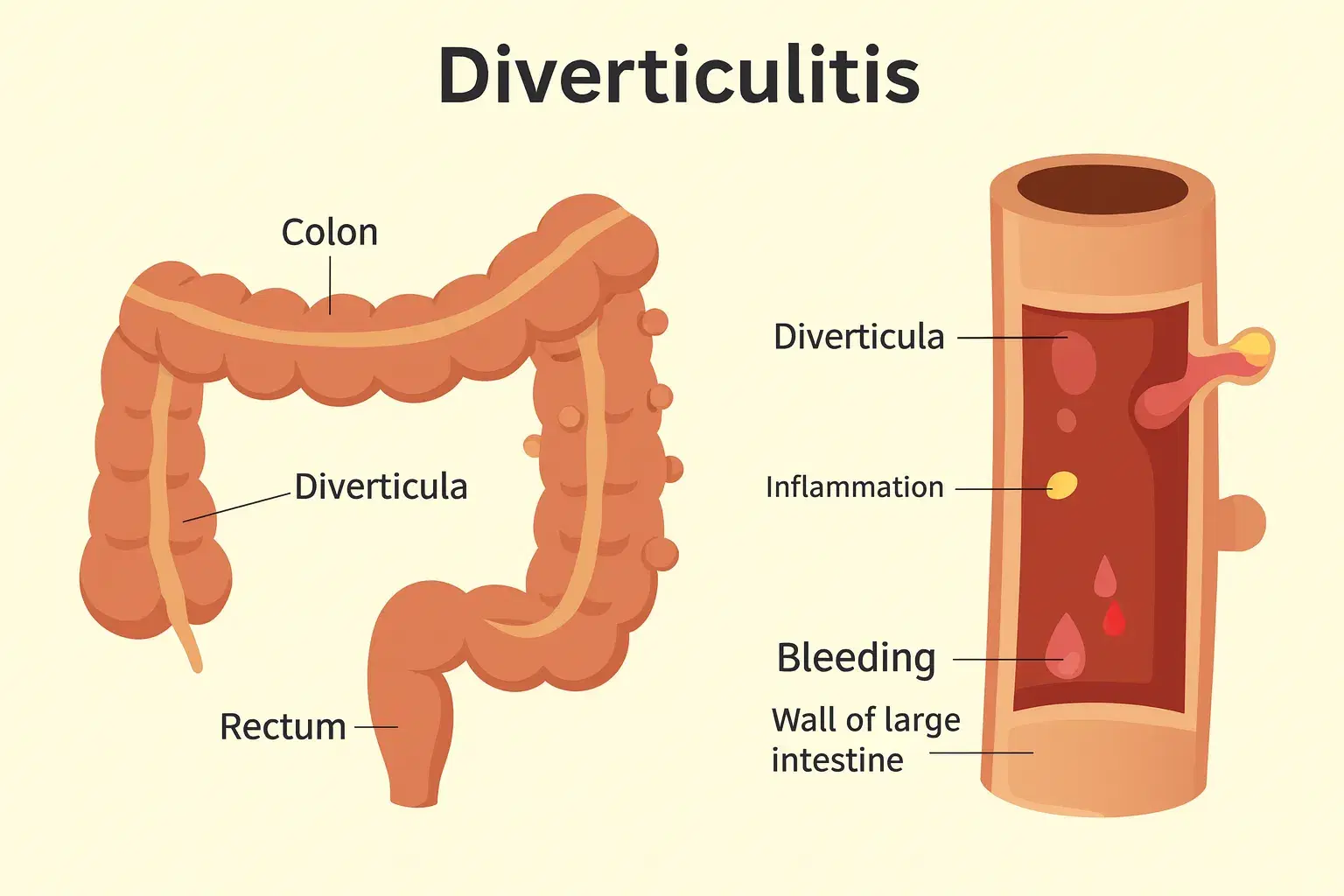
Imagine your colon (your large intestine) as a smooth, strong tube, like a new bicycle inner tube. Over time, due to pressure and potential weak spots in the tube's wall, small bulges or pouches can push outward. In your colon, these small, bulging pouches are called diverticula. The condition of having these pouches is called diverticulosis.
This is incredibly common. It's estimated that a significant portion of the population over 60 has diverticulosis, and it's being seen more and more in younger people, even in their 40s. In most cases, diverticulosis is completely silent. You don't feel it, it doesn't cause pain, and most people live their entire lives without ever knowing they have it. It's often discovered by chance during a routine colonoscopy for other reasons.
So, what causes these weak spots? The primary culprit is believed to be high pressure inside the colon. This pressure often stems from a modern, low-fibre diet. When you don't eat enough fibre (found in vegetables, fruits, and whole grains), your stools become hard and difficult to pass. This leads to chronic straining during bowel movements—pressure that, over decades, can cause these pouches to form. This distinction is the first step in understanding Diverticulitis vs diverticulosis.
What is Diverticulitis?
If diverticulosis is just having the pouches, diverticulitis is the event. It's what happens when one or more of those pouches become inflamed or infected.
This is where the problem starts, and when you begin to feel unwell. The "itis" at the end of the word means inflammation. This colon pouch inflammation is what causes the signature pain and other symptoms we associate with the condition. A tiny piece of stool (called a fecalith) can get trapped in a pouch, or the pouch's opening can get blocked. This creates a stagnant environment where bacteria, which normally live harmlessly in your gut, can multiply and cause an infection. The pouch becomes swollen, red, and painful, and can sometimes even lead to a small tear. This is the core of diverticular disease when it becomes symptomatic.
Who is at Higher Risk of Colonic Diverticulitis?
While having diverticulosis is the first requirement, not everyone with it will get diverticulitis. So, what increases your risk of those quiet pouches turning into a painful infection? Research points to a few key factors:
- Age: This is a primary risk factor. As we get older, the walls of our colon naturally lose some of their strength and elasticity, making them more susceptible to forming pouches and getting inflamed.
- Low-Fibre Diet: This is the most significant lifestyle risk. A diet low in fibre—common in processed foods, fast food, and meals heavy on refined grains (like white bread or maida) instead of whole grains (like whole wheat roti or brown rice)—leads to constipation.
- Chronic Constipation: The straining from constipation directly increases the pressure inside your colon, which is thought to both help the pouches form and make them more likely to get infected.
- Sedentary Lifestyle: A lack of regular physical activity can make your digestive system sluggish and contribute to constipation, further increasing your risk.
- Obesity: Carrying excess weight, particularly around the abdomen, is linked to a higher risk of colonic diverticulitis. Obesity is a state of chronic, low-grade inflammation, which may make an infection more likely.
- Smoking: Smoking is detrimental to every part of your body, including your gut. It's believed to impair blood flow to the colon and weaken its tissues, making infections more likely and healing more difficult.
- Certain Medications: Regular use of Non-Steroidal Anti-Inflammatory Drugs (NSAIDs) like ibuprofen and naproxen, as well as steroids, has been associated with a higher risk of diverticulitis and its complications.
What Are the Common Diverticulitis Symptoms?
Recognizing the diverticulitis symptoms is key to seeking prompt medical care. The "itis" (inflammation) is what makes you feel sick, and the symptoms can range from mild and nagging to severe and debilitating.
Physical Symptoms You May Notice
When a diverticular pouch becomes inflamed, your body sounds an alarm. The most common diverticulitis symptoms include:
- Abdominal Pain: This is the hallmark symptom. The pain is typically constant and persistent, not the kind that comes and goes. For most people, it's located in the lower-left side of the abdomen. This is because the sigmoid colon, the most common site for diverticula, is on that side. However, in some people (particularly those of Asian descent), the pouches can be on the right side, so the pain may be there instead.
- Fever and Chills: This is a clear sign that your body is fighting an infection. The inflammation is caused by bacteria, and your immune system responds by raising your body temperature.
- Changes in Bowel Habits: The inflammation in your colon can disrupt its normal function. This can manifest as either constipation (feeling blocked up) or, less commonly, diarrhea (loose, watery stools).
- Bloating and Gas: You may feel a sense of fullness, pressure, or significant bloating in your abdomen that doesn't go away.
- Nausea and Vomiting: The intense pain and infection can make you feel sick to your stomach, leading to a loss of appetite, nausea, and in some cases, vomiting.
- Fatigue and Feeling Unwell: Your body is using a lot of energy to fight the colon pouch inflammation, which can leave you feeling drained, tired, and generally unwell.
When Symptoms Suggest Complications
In many cases, diverticulitis is "uncomplicated" and resolves with treatment. However, sometimes it can lead to more serious problems. If you experience the following, it's a sign of complicated diverticulitis and you must seek emergency medical help:
- Severe, Worsening Pain: Pain that becomes unbearable or spreads all over your abdomen.
- High Fever: A persistent, high-grade fever that doesn't respond to medication.
- Inability to Pass Stool or Gas: This could indicate a blockage or a more severe problem.
- Rectal Bleeding: While some bleeding can occur, significant amounts of bright red blood in your stool are a major red flag. (Note: Painless bleeding is often from diverticulosis, while painful bleeding can be from diverticulitis).
- Persistent Vomiting: The inability to keep any fluids down.
These severe symptoms can signal:
- An Abscess: A localized, walled-off pocket of pus that forms near the infected pouch.
- A Perforation: A small hole or tear in the pouch. This is a medical emergency as it can leak bacteria into your abdominal cavity, causing a widespread infection called peritonitis.
- Sepsis: A life-threatening, body-wide reaction to the infection spreading through your bloodstream.
- A Fistula: An abnormal tunnel that forms between the colon and another organ, such as the bladder (which can cause urinary tract infections and passing air during urination).
This is why you should never ignore persistent diverticulitis symptoms.
What Causes Diverticulitis?
We've established that diverticulosis (the pouches) is the prerequisite. But what is the specific event that lights the fuse and causes the explosion of diverticulitis?
How Do the Colon Pouches Become Infected?
The exact mechanism is still being studied, but the leading theory involves pressure, blockages, and bacteria.
- Blockage: The most common trigger is thought to be a small, hard piece of stool (a fecalith) that gets lodged in the opening of a diverticular pouch. It's like a small stone blocking the entrance to a cave.
- Bacterial Overgrowth: This blockage traps bacteria (which are always present in the colon) inside the pouch. With no way to get out, the bacteria multiply rapidly in this confined space.
- Inflammation and Infection: This bacterial overgrowth leads to the colon pouch inflammation and infection we call diverticulitis. The body's immune system attacks the bacteria, and the pouch becomes swollen, tender, and filled with pus.
- Pressure and Reduced Blood Flow: It's also believed that chronic high pressure in the colon (from constipation) can weaken the wall of the pouch over time. This can cause tiny, microscopic tears (micro-perforations) that allow bacteria to leak out, or it can reduce blood flow to the area, making it harder for the tissue to defend itself against infection.
Essentially, a diverticular pouch is a "blind alley" in your colon. When its exit gets blocked, it becomes a perfect, stagnant breeding ground for trouble.
Q&A: What Triggers Diverticulitis?
This is one of the most common questions from patients. If I have diverticulosis, what actions or factors can trigger a painful diverticulitis attack?
While the direct cause is the infection described above, certain factors act as colonic diverticulitis trigger factors by making that infection more likely to happen.
- A Low-Fibre Diet: This is the #1 trigger. When you don't eat enough fibre, your stools are hard. This not only causes the straining that forms the pouches but also creates the very "fecaliths" (hard stool pellets) that can plug them.
- Dehydration: Not drinking enough water, especially in a warm climate like India's, makes constipation worse. Fibre needs water to work; without it, it can actually bulk up and make the problem worse.
- Smoking: As mentioned, smoking weakens tissue integrity and your immune response, making it easier for an infection to take hold and harder for it to heal.
- Obesity: This is a major trigger factor. The chronic inflammatory state associated with obesity can make your gut "primed" for an inflammatory attack.
- Long-term NSAID Use: Regularly popping pills like ibuprofen for other aches and pains can be a trigger. These drugs are known to increase the risk of bleeding and perforation in the gut lining, including in diverticula.
- Age-Related Tissue Weakness: While not a "trigger" you can control, the simple fact of aging makes the colon wall weaker and more prone to issues.
Recognizing these triggers is the first step toward prevention. While you can't change your age, you can absolutely control your diet, hydration, weight, and smoking habits. Spotting these diverticular disease signs and risk factors in your own life is key.
Q&A: Is Diverticulitis Serious?
This is a critical question, and the answer is: it absolutely can be.
The seriousness of diverticulitis exists on a wide spectrum:
- Mild (Uncomplicated) Diverticulitis: In many cases, the infection is mild. It causes pain and fever but remains contained within the colon wall. This is the most common form. With proper "bowel rest" (a liquid diet), hydration, and sometimes antibiotics, this form can be managed at home and usually resolves within a week or two.
- Severe (Complicated) Diverticulitis: This is where the condition becomes very serious. This happens when the infection is so severe that it leads to the complications we discussed earlier:
- Abscess: A painful, infected pocket of pus.
- Perforation: A hole in the colon that leaks intestinal contents into the abdomen. This is a life-threatening emergency requiring immediate surgery.
- Fistula: An abnormal connection to another organ.
- Blockage: Scarring from the infection can cause a blockage in the colon.
So, while a single, mild episode of diverticulitis may not be life-threatening, the potential for it to become severe is why it's always taken seriously by doctors. Any time you have symptoms, you must get evaluated. You cannot tell at home if your case is mild or on the verge of becoming a serious complication.
Repeated attacks, even if "mild," are also serious because they can lead to chronic scarring, narrowing of the colon, and a higher likelihood of needing surgery. This is why managing diverticular disease is a long-term partnership with your gastroenterologist.
Diverticulitis vs Diverticulosis (Key Comparison Section)
Let's make this comparison crystal clear. The terms are confusing, but the difference is the most important thing to understand. Diverticulitis vs diverticulosis is the difference between a quiet condition and a painful disease.
Think of it this way:
- Diverticulosis is like having small, dormant volcanoes on your land. They are just... there. They don't cause any problems, and you might not even know they exist.
- Diverticulitis is when one of those volcanoes erupts. It's a sudden, painful, and fiery event that causes a lot of damage and requires immediate attention.
Here is a simple chart to break down Diverticulitis vs Diverticulosis:
Feature | Diverticulosis | Diverticulitis |
What is it? | The presence of small pouches (diverticula) in the colon wall. | The inflammation or infection of one or more of these pouches. |
Symptoms | Usually none. May cause mild, occasional cramping or bloating. | Causes symptoms. The main ones are persistent abdominal pain (usually left-sided), fever, chills, and nausea. |
Nature | A chronic, structural condition. | An acute, inflammatory event or disease. |
Treatment | No treatment needed. Prevention of diverticulitis is the goal. | Requires treatment. This can range from a liquid diet and rest at home to IV antibiotics and surgery in a hospital. |
How Common? | Extremely common, especially with age. | Much less common. Only a small percentage of people with diverticulosis will ever get diverticulitis. |
Understanding this difference is key. Your goal, if you have diverticulosis, is to live your life in a way that keeps those "volcanoes" dormant forever.
Diagnosis of Diverticular Disease
If you present to a doctor with the classic diverticulitis symptoms, they will perform a careful evaluation to confirm the diagnosis and, more importantly, to check for complications.
The diagnostic process usually involves several steps:
- Physical Examination and History: Your doctor will ask you detailed questions about your symptoms, their onset, your diet, and your medical history. They will then perform a physical exam, gently pressing on your abdomen to check for tenderness, rigidity, or a palpable mass. The classic "left lower quadrant tenderness" is a strong clue.
- Blood Tests: You will likely have blood drawn. A Complete Blood Count (CBC) will check your white blood cell (WBC) count. A high WBC count is a strong indicator that your body is fighting an infection. Other tests can check for signs of inflammation (like CRP) and rule out liver or kidney issues.
- CT Scan (Computed Tomography): This is the gold standard for diagnosing active diverticulitis. A CT scan of your abdomen and pelvis uses X-rays and a computer to create detailed, cross-sectional images. It can:
- Clearly show the inflamed pouches and thickening of the colon wall.
- Confirm the diagnosis and rule out other conditions with similar symptoms (like appendicitis, kidney stones, or an ovarian cyst).
- Crucially, it can identify complications. A CT scan will clearly show an abscess, a perforation (leak), or a fistula.
- Colonoscopy: This is an important point: A colonoscopy is NOT performed during an acute attack of diverticulitis. A colonoscopy involves inserting a camera into the colon, and inflating it with air. Doing this to an inflamed, infected, and weakened colon wall carries a high risk of causing a perforation.
However, your doctor will almost certainly recommend a colonoscopy 6 to 8 weeks after you have fully recovered. This is done to confirm the extent of the diverticular disease, check for any other issues (like polyps or cancer), and establish a baseline for your colonic health.
Gastroenterology expertise is crucial here. At specialized centers like Bangalore Gastro Centre, specialists know exactly which test is appropriate for which stage of the disease to get you a safe and accurate diagnosis.
Treatment Options for Diverticulitis
Treatment for colonic diverticulitis depends entirely on its severity. A mild case is treated very differently from a severe, complicated one.
Home Management for Mild Cases
If your symptoms are mild, your pain is manageable, and you have no signs of complications, your doctor may treat you as an outpatient (at home). The goal is to "rest the bowel" and give the inflammation time to heal.
- Rest: You'll be advised to take it easy.
- Clear Liquid Diet: For 2-3 days, you will be asked to consume only clear liquids. This gives your colon a complete rest, as it doesn't have to work to digest food. Clear liquids include:
- Water (plain or coconut water)
- Clear broths or soups (strained rasam or dal water)
- Kanji (strained rice water)
- Clear fruit juices without pulp (like apple juice)
- Tea or coffee with no milk or cream.
- Antibiotics: Your doctor may or may not prescribe a course of oral antibiotics (typically 7-10 days) to kill the bacteria causing the infection. Guidelines on this are changing, and for very mild cases, antibiotics aren't always necessary.
- Gradual Reintroduction of Food: As you start to feel better, your doctor will have you slowly add low-fibre foods back into your diet (like white rice, idli, plain toast, bananas, boiled potatoes). You avoid high-fibre foods during the recovery phase, as they are harder to digest. You'll return to a high-fibre diet only after you are completely symptom-free.
Medical Treatment When Symptoms Worsen
If your case is severe (high fever, intense pain, vomiting) or if you have complications, you will be admitted to the hospital. Hospital treatment is more aggressive:
- Bowel Rest (NPO): You will not be allowed to eat or drink anything (NPO - nil per os, or "nothing by mouth").
- Intravenous (IV) Fluids: To keep you hydrated and deliver medication, you'll be put on an IV drip.
- IV Antibiotics: You will receive broad-spectrum antibiotics directly into your bloodstream for a faster, more powerful effect against the infection.
- Pain Management: You will be given medication to control the severe pain.
For complicated diverticulitis, further intervention is needed:
- Abscess Drainage: If a CT scan shows a large abscess, a radiologist may need to drain it. This is often a minimally invasive procedure where a needle is guided through the skin (percutaneously) to drain the pus.
- Surgery: Surgery is reserved for emergencies or for recurrent, chronic problems.
- Emergency Surgery: This is required for a perforation (a hole in the colon) or for a severe infection that isn't responding to antibiotics. The surgeon will remove the diseased portion of the colon. This may involve a temporary colostomy (a "bag"), which is often reversed in a second surgery months later.
- Elective Surgery: If you have had multiple, recurrent attacks of colonic diverticulitis, your doctor may recommend a planned (elective) surgery to remove the sigmoid colon. This is done to prevent future attacks and avoid a more dangerous emergency surgery down the line.
Q&A: Can Diverticulitis Be Prevented?
Yes! This is the most empowering part of the story. While you can't get rid of the diverticulosis pouches once they've formed, you have a great deal of control over preventing them from ever becoming diverticulitis.
Prevention is all about reducing pressure in your colon and promoting a healthy gut.
- Eat High-Fibre Foods: This is the single most important preventive step. Fibre softens and bulks up your stool, making it easy to pass without straining.
- Aim for 25-35 grams of fibre per day.
- Soluble Fibre: Found in oats, isabgol (psyllium husk), apples, citrus fruits, and beans (like rajma and chana). It dissolves in water to form a gel.
- Insoluble Fibre: Found in whole-wheat roti, brown rice, and vegetables (like bhindi, carrots, and leafy greens). It adds bulk to the stool.
- Go slow! If you're not used to fibre, add it to your diet gradually over a few weeks to avoid gas and bloating.
- Stay Hydrated: Fibre is a sponge; it needs water to work. You must drink plenty of fluids (2-3 litres a day) to keep your stool soft.
- Avoid Chronic Constipation: The goal of fibre and water is to have regular, soft bowel movements.
- Regular Physical Activity: Exercise helps stimulate your gut muscles (peristalsis) and keeps things moving, preventing constipation. Even a 30-minute brisk walk daily can make a big difference.
- Limit Processed Foods: Foods high in maida (refined flour), sugar, and unhealthy fats are low in fibre and can contribute to poor gut health.
- Quit Smoking: This will improve your gut's (and whole body's) healing capacity.
By taking these steps, you are actively working to prevent the colon pouch inflammation before it can start. You are also lowering your risk of showing any diverticular disease signs in the first place.
Recommended Dietary Tips for Colonic Health
Your diet is your primary tool for managing diverticular disease. But the advice is different depending on whether you are in a "flare" or in "remission."
Foods to Include (For Prevention/Remission)
When you are feeling well, your diet should be rich in fibre.
- Fruits: Papayas, bananas, apples (with skin), pears, oranges.
- Vegetables: All of them. Leafy greens (spinach, methi), cruciferous veggies (cauliflower, broccoli), and traditional Indian sabzis.
- Legumes: Lentils (dal), chickpeas (chana), kidney beans (rajma), and black beans are fibre powerhouses.
- Whole Grains: Swap white rice for brown rice, and maida bread for 100% whole-wheat roti or bread. Start your day with oats.
Foods to Limit (During Active Flare & Recovery)
This is a common point of confusion. During an active flare-up and for a few weeks after, your colon is healing. It's like a sprained ankle. You need to rest it. In this phase, fibre is the enemy.
Your doctor will put you on a low-fibre (or "low-residue") diet. This means:
- NO whole grains.
- NO raw vegetables or fruits.
- NO nuts, seeds, or legumes.
- YES to: White rice, idli, dosa (in moderation), boiled potatoes, plain yogurt, and well-cooked, soft vegetables (like strained pumpkin puree).
What about the Nuts and Seeds Myth?
For decades, patients with diverticulosis were told to avoid nuts, seeds (like in tomatoes or brinjals), and popcorn. The theory was that these tiny particles could get stuck in a pouch and cause an attack. This theory has now been largely disproven. Large-scale studies have shown that people who eat nuts and seeds are at no higher risk (and may even be at a lower risk) of diverticulitis.
Once you are fully healed and in remission, you do not need to avoid these healthy, fibrous foods.
Managing your diet is also a key component for other inflammatory gut conditions. To learn more about a related condition, you can read our guide on Crohn's Disease: Symptoms, Treatment & Management Strategies.
Related Educational Video for Further Learning
While this blog focuses on the large intestine, your entire digestive tract is one system. The principles of good nutrition, fibre, and gut health are universal. A healthy, well-nourished gut is better equipped to prevent a wide range of issues, including diverticular disease.
To learn more about how diet impacts your digestive system, watch this helpful video from the Bangalore Gastro Centre's educational library:
Eat These Fantastic Foods for a Healthy Small Intestine!
When Should You Seek Medical Help?
You must seek medical help if you experience any of the "red flag" symptoms of diverticulitis, especially for the first time. Do not try to self-diagnose.
Call your doctor or go to an emergency room if you have:
- Persistent abdominal pain, especially in the lower-left, that lasts for more than a day.
- Fever accompanies the pain.
- Blood in your stools.
- Persistent vomiting and inability to keep fluids down.
- Severe, worsening pain that makes it difficult to move.
These symptoms require immediate evaluation by a qualified gastroenterologist. At specialized gastroenterology centers like Bangalore Gastro Centre, diagnosis and treatment decisions are personalized based on your symptoms, your overall health, and the severity of the attack, ensuring you get the safest and most effective care.
FAQs About Diverticulitis
- Can stress trigger diverticulitis?
There is no direct evidence that stress causes a diverticulitis attack. However, stress can wreak havoc on your digestive system. It can cause constipation or diarrhea and increase gut sensitivity, which could potentially irritate an already sensitive colon. - Is diverticulitis related to IBS (Irritable Bowel Syndrome)?
This is a great question. They are different conditions, but they can co-exist and their symptoms (pain, bloating, bowel changes) can overlap, which sometimes makes diagnosis tricky. IBS is a "functional" disorder, meaning the gut looks normal but doesn't function correctly. Diverticulitis is a structural, inflammatory problem. - Are recurrent episodes common?
After one attack of diverticulitis, the risk of a second attack is estimated to be around 20-30%. The risk increases with each subsequent attack. This is why long-term prevention through diet and lifestyle is not just a suggestion—it's a crucial part of your ongoing health plan.
Conclusion
Diverticular disease is a journey. It starts with the silent, common condition of diverticulosis and, for a smaller group of people, can lead to the painful, serious event of diverticulitis.
The most important takeaway is to be an advocate for your own health.
- Know the risk factors: A low-fibre diet, constipation, and a sedentary lifestyle are your key enemies.
- Recognize the symptoms: Persistent lower-left abdominal pain plus fever is the classic warning sign.
- Don't ignore the pain: Severe diverticulitis symptoms are an emergency.
- Embrace prevention: A diet high in fibre, full of fruits, vegetables, and whole grains, combined with plenty of water and regular exercise, is your best defense.
Awareness helps you take early action, and a healthy lifestyle plays a major role in prevention. If you are experiencing severe symptoms or are concerned about your gut health, always seek help from a qualified specialist.
Stay informed by exploring more health topics and subscribing to the Bangalore Gastro Centre YouTube channel for more educational videos.