

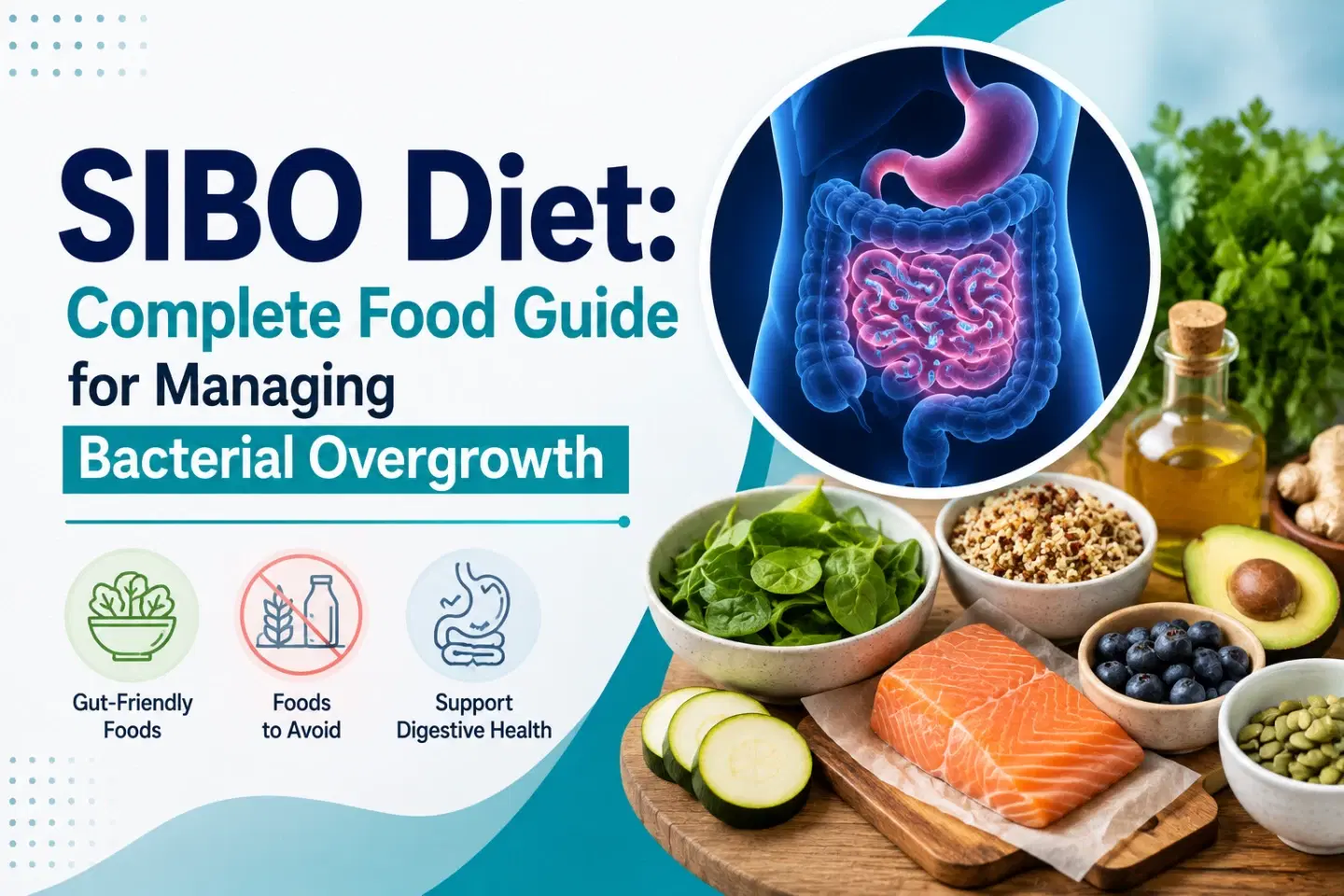
SIBO Diet: Complete Food Guide for Managing Bacterial Overgrowth
"Doctor, my stomach is completely flat in the morning. But by evening, I look six months pregnant."
This is one of the most common complaints heard in gastroenterology clinics across India. Patients often blame it on a heavy lunch of rajma chawal or perhaps an extra chapati. They try antacids. They try herbal teas. They take over-the-counter gas relief pills. Nothing works. The bloating remains relentless, often accompanied by erratic bowel movements, severe abdominal pain, and brain fog.
The underlying problem is rarely just "indigestion." Often, it is a medically diagnosable condition called Small Intestinal Bacterial Overgrowth (SIBO).
Your small intestine is designed to absorb nutrients. It is not designed to house large colonies of bacteria. When the bacteria that normally reside in your large intestine (the colon) migrate upward and multiply in the small intestine, chaos ensues. These misplaced bacteria feast on the carbohydrates you eat, fermenting them into massive amounts of gas.
Treating this condition requires a multi-pronged medical approach. While antibiotics clear the immediate overgrowth, long-term success relies entirely on what goes on your plate. A highly specific SIBO diet is required to starve the bacteria without starving the patient.
This comprehensive guide explores the deep science of bacterial overgrowth and the exact dietary protocols required to heal.
The Biology of the Bloat: Understanding SIBO
To understand the dietary solution, you must first understand the anatomical problem.
The human gastrointestinal tract is highly compartmentalized. Your stomach is highly acidic, a harsh environment that kills most ingested pathogens. Moving down, the small intestine is roughly 20 feet long. It is responsible for breaking down food and absorbing vitamins, minerals, and macronutrients. Normally, the bacterial count here is relatively low (less than $10^3$ colony-forming units per milliliter of aspirate).
The large intestine, however, is a bustling metropolis. It houses trillions of bacteria. These colonic bacteria are healthy and necessary. They ferment indigestible fibers, produce short-chain fatty acids (like butyrate), and synthesize vitamins.
SIBO occurs when this geographic separation fails.
When colonic bacteria backflow into the small intestine, they get first access to your food. If you consume a meal rich in fermentable carbohydrates-such as lentils, wheat, or dairy-the bacteria consume these sugars before your body can absorb them.
The byproduct of this bacterial feast is gas.
Types of Overgrowth
Clinical research, backed by high-quality randomized controlled trials (RCTs), categorizes this overgrowth based on the specific gases produced:
- Hydrogen-Dominant SIBO: Bacteria produce excess hydrogen gas. This is most commonly associated with rapid gut transit times and severe, watery diarrhea.
- Intestinal Methanogen Overgrowth (IMO): Archaea (single-celled organisms distinct from bacteria) consume hydrogen and produce methane gas. Methane acts as a paralytic to the gut muscles, heavily linking this variant to chronic, intractable constipation.
- Hydrogen Sulfide SIBO: A newer, less commonly tested variant where bacteria produce hydrogen sulfide. Patients often report "rotten egg" smelling gas and experience visceral hypersensitivity (extreme pain) alongside diarrhea.
Why does the bacteria migrate in the first place? Often, it is a failure of the Migrating Motor Complex (MMC). Think of the MMC as the street sweeper of your gut. Every 90 to 120 minutes during fasting states, the MMC sends a sweeping electrical wave through the small intestine, pushing leftover food and bacteria down into the colon.
In India, our lifestyle often directly suppresses the MMC. We are chronic snackers. A morning chai with biscuits, a mid-morning handful of nuts, a heavy lunch, evening tea with savory snacks, and a late dinner. Because the MMC only operates when you are fasting, constant grazing means the "street sweeper" never turns on. The debris piles up, and bacteria multiply.
Core Principles of the SIBO Diet
How do you eat to fix this? The fundamental goal of a SIBO diet is to selectively starve the overgrown bacteria while adequately nourishing the human host.
Bacteria primarily feed on fermentable carbohydrates. Therefore, the dietary strategy revolves around drastically reducing these specific carbohydrates for a temporary period. The most scientifically validated approach is the Low FODMAP diet, often modified specifically for bacterial overgrowth.
FODMAP stands for Fermentable Oligosaccharides, Disaccharides, Monosaccharides, and Polyols. These are short-chain carbohydrates and sugar alcohols that are poorly absorbed by the human body but highly fermentable by gut bacteria.
The Three Phases of Dietary Intervention
Proper SIBO dietary management is not a lifelong sentence of restriction. It is a phased medical intervention.
- The Elimination Phase (2 to 6 weeks): This is the strict phase. All highly fermentable foods are completely removed from the diet. The goal is symptom reduction and bacterial starvation. This phase is often done in conjunction with medical therapies, such as the gut-specific antibiotic Rifaximin.
- The Reintroduction Phase (6 to 8 weeks): Once symptoms have resolved, specific FODMAP groups are systematically reintroduced one at a time. The patient monitors for symptoms to identify their unique triggers.
- The Maintenance Phase (Long-term): The patient returns to the most varied diet possible, only restricting the specific foods identified as triggers during phase two.
It is vital to understand that a highly restrictive SIBO diet should never be permanent. Long-term restriction of fermentable fibers will eventually starve your beneficial colonic bacteria, leading to a host of other microbiome dysfunctions.
What to Eat With SIBO: Building Your Plate in India
Adapting this protocol for an Indian household requires careful planning. Our traditional diets are heavily reliant on legumes, wheat, and dairy, all of which are highly fermentable.
So, exactly what to eat with SIBO? The focus must shift to easily digestible proteins, non-starchy vegetables, and simple carbohydrates that are absorbed high up in the digestive tract before reaching the bacteria.
Here is a comprehensive SIBO food list tailored for the Indian palate.
Proteins (Safe and Essential)
- Proteins do not ferment in the gut. They putrefy, which is a different chemical process that does not produce the same hydrogen or methane gases. You can eat protein freely.
- Non-Vegetarian: Chicken, fish, mutton, and eggs are entirely safe. Avoid heavy, tomato-and-onion-based gravies. Opt for grilled, baked, or lightly sautéed preparations.
- Vegetarian: This is trickier, as most vegetarian proteins in India come from high-FODMAP legumes. Firm tofu is a safe, low-FODMAP option. Lactose-free paneer can be used in moderation if dairy proteins are tolerated. Soaked and sprouted moong dal is often the easiest legume to digest, but should be limited during the strict elimination phase.
Carbohydrates (The Safe Zone)
You must consume carbohydrates that break down quickly.
- White Rice: White rice is virtually 100% absorbed in the upper gastrointestinal tract. It is the safest carbohydrate for this condition. (Note: Brown rice has more fermentable fiber and should be avoided initially).
- Quinoa: An excellent, safe alternative to wheat.
- Oats: Rolled oats are generally safe in portions of up to half a cup.
- Potatoes: Regular white potatoes are safe. (Sweet potatoes are higher in polyols and should be limited).
Vegetables (Low Fermentation Options)
Vegetables provide essential micronutrients, but portion size matters deeply. Even low-FODMAP vegetables can cause symptoms if eaten in massive quantities.
- Safe Gourds: Bottle gourd (Lauki), Ridge gourd (Tori), and Snake gourd are incredibly gentle on the gut.
- Leafy Greens: Spinach and fenugreek (methi) leaves are safe in normal portions.
- Others: Carrots, cucumbers, eggplant (brinjal), and tomatoes (if no acid reflux is present) are generally well-tolerated.
Fats and Oils
Fats do not ferment and are generally safe. However, excessive fat can slow down gut motility, which is counterproductive for clearing bacteria.
- Safe Options: Ghee (clarified butter is virtually lactose-free), coconut oil, olive oil, and mustard oil.
To make this practical, let us look at a typical day of eating. Understanding what to eat with SIBO is easiest when visualized.
Sample 1-Day Indian Meal Plan:
- Breakfast: Two eggs scrambled in a small amount of ghee, alongside a bowl of rolled oats cooked in almond milk (check for no added gums).
- Lunch: A generous portion of white rice, grilled chicken or firm tofu, and a side of mildly spiced lauki (bottle gourd) sabzi.
- Dinner: Quinoa upma made with carrots, green beans, and peanuts, flavored with curry leaves and mustard seeds.
The Culprits: Foods to Avoid with SIBO
Knowing what to eliminate is often more important than knowing what to include. The list of foods to avoid with SIBO contains many staples of Indian cuisine. This requires a significant, albeit temporary, culinary adjustment.
- The Allium Family (Onion and Garlic)
These are the most potent triggers for gut symptoms. Onions and garlic are incredibly rich in fructans, a type of oligosaccharide that humans cannot digest at all. When they reach the overgrown bacteria, the fermentation is explosive.
Indian Cooking Hack: To replace the flavor of onions and garlic, use a small pinch of hing (asafoetida). Ensure the hing is pure and not heavily cut with wheat flour. You can also cook with garlic-infused oil; the flavor compounds transfer to the oil, but the fermentable carbohydrates do not.
- Wheat and Rye
Chapati, paratha, and naan must be paused. Wheat is another massive source of fructans. While many people mistake this for gluten intolerance, in the context of bacterial overgrowth, it is the fermentable carbohydrate (fructan) in the wheat causing the bloat, not the protein (gluten).
- Legumes and Lentils
Dal is the lifeblood of the Indian vegetarian diet, but it is enemy number one during an active gut flare. Legumes contain high amounts of galacto-oligosaccharides (GOS).
Avoid: Rajma (kidney beans), chole (chickpeas), tur dal, and urad dal.
- Dairy (Lactose)
Lactose is a disaccharide (the "D" in FODMAP). Many Indian adults already have diminished lactase enzymes. When lactose meets overgrown bacteria, it ferments rapidly into hydrogen gas, causing severe cramps and diarrhea.
Avoid: Milk, regular yogurt (curd), soft cheeses.
Exceptions: Hard, aged cheeses and lactose-free milk are often tolerated.
- High-Fructose Fruits
Fructose is a monosaccharide. If consumed in excess of glucose, it ferments.
Avoid: Apples, pears, mangoes, watermelon, and cherries.
Safe Alternatives: Papaya, blueberries, strawberries, and firm bananas.
For a deeper, visual understanding of how these foods cause biochemical chaos in your stomach, watch this highly recommended breakdown: SIBO: The Real Cause Behind Gas, Acidity & Stomach Issues | Fix Your Gut Naturally (India Guide.
The Diagnostic and Treatment Journey in India
Diet alone is rarely enough to cure a severe overgrowth. It is a management tool. True eradication requires precise medical diagnostics and targeted treatments.
If you suspect you are dealing with this condition, the first step is accurate testing. The gold standard non-invasive test is the Lactulose or Glucose Breath Test.
Here is how it works: You drink a sugary solution (lactulose or glucose). You then breathe into a collection bag every 15 to 20 minutes for up to three hours. Since humans do not produce hydrogen or methane gas on their own, any of these gases detected in your breath means bacteria are fermenting the sugar inside you. The timing of the gas spike tells the doctor exactly where the bacteria are located in your intestinal tract.
At specialized centers like Bangalore Gastro Centre, advanced diagnostic equipment is used to map these exact gas levels, ensuring a highly targeted treatment plan.
Once diagnosed, the primary medical intervention is usually a localized antibiotic, most commonly Rifaximin. Unlike systemic antibiotics that decimate the entire microbiome, Rifaximin stays highly concentrated in the small intestine, acting locally to wipe out the overgrowth while largely sparing the beneficial bacteria in the colon. High-quality, Sort A evidence from double-blind RCTs shows Rifaximin provides significant symptom relief for non-constipated patients. [Source: The American Journal of Gastroenterology].
For methane-dominant variants, Rifaximin is often paired with Neomycin or Metronidazole for maximum efficacy.
During the antibiotic phase, strict SIBO dietary management is actually not recommended. Counterintuitively, bacteria are easier to kill with antibiotics when they are actively feeding and replicating. Patients are often advised to eat normally during the 14-day antibiotic course, and then immediately switch to the restrictive diet to prevent relapse.
In rare cases where chronic overgrowth is caused by anatomical strictures, adhesions from prior surgeries, or severe motility disorders, medical management may fail. In such scenarios, surgical intervention might be evaluated to correct the underlying anatomical defect. To understand more about when structural issues require operative care, read our detailed guide on Surgical Gastroenterology: When Surgery Is Needed for GI Issues.
Patient Questions: Q&A on Autoimmune Diseases and Gut Health
Because the gut microbiome is deeply intertwined with systemic immunity, patients frequently present with questions bridging gastroenterology and rheumatology. Here, we address the most pressing concerns regarding gut health.
What exactly triggers an autoimmune disease?
Autoimmune diseases occur when the body's immune system loses its self-tolerance. Instead of solely attacking foreign pathogens (viruses and harmful bacteria), it begins producing autoantibodies that attack your own tissues.
The exact trigger is highly complex and multi-factorial. It requires a genetic predisposition (having certain genes like HLA-B27). However, genetics alone are not enough. An environmental trigger is required to "turn the gene on." High-quality clinical data points to severe viral infections, chronic stress, environmental toxins, and profoundly altered gut microbiomes (dysbiosis) as the primary environmental triggers.
Can changing my diet reverse an autoimmune condition?
Diet cannot genetically "cure" an autoimmune disease, but it is one of the most powerful tools for inducing and maintaining clinical remission.
By utilizing a targeted SIBO food list, you eliminate the fermentable carbohydrates that feed the pathogenic bacteria. This stops the production of endotoxins. Without endotoxins damaging the intestinal wall, the gut lining can finally heal and close the tight junctions. Once the "leaky gut" is sealed, the constant flood of foreign particles into the bloodstream stops. The immune system is no longer constantly triggered, and systemic inflammation markers (like CRP and ESR) rapidly decrease, leading to a dramatic reduction in joint pain and autoimmune flares.
When should I see a specialist for my bloating?
Occasional bloating after a heavy wedding feast is normal. However, you should consult a gastroenterologist immediately if your bloating is accompanied by any of the following "red flag" symptoms:
Unintentional weight loss. Blood in your stool. Chronic diarrhea that wakes you up from sleep. Severe abdominal pain that does not resolve with a bowel movement. Concomitant onset of severe joint pain, skin rashes, or extreme fatigue. Bloating occurs within 30 minutes of eating every single meal, regardless of portion size.
Do not accept daily physical discomfort as your permanent reality.
Moving Forward: Healing Your Digestion
Managing your condition with a SIBO diet takes patience, meticulous planning, and a willingness to temporarily alter your relationship with food. It can be culturally isolating in India to decline the dal and chapati at family gatherings.
However, the reward is reclaiming your health. By understanding the underlying biology of your digestion, avoiding high-fermentation triggers, and utilizing targeted medical therapies, you can eradicate the bacterial overgrowth. You can repair your gut barrier, calm your hyperactive immune system, and finally eat without the fear of relentless, painful bloating. Healing is entirely possible; it simply begins with the right knowledge and the right food on your plate.