
Piles 101 – Myths, Symptoms and What You Need to Know
Understanding Piles in Everyday Life
Piles, or hemorrhoids, are one of the most common anorectal conditions seen in gastroenterology. They occur when the veins in the lower rectum or anal area become swollen or enlarged. Yet, many people delay seeking help due to embarrassment or confusion. Understanding the basics of piles can prevent complications and encourage timely care.
What Exactly Are Piles?
Piles are swollen blood vessels in the rectum or anus, similar to varicose veins in the legs. They can be internal (inside the rectum) or external (under the skin around the anus).
- Internal hemorrhoids are usually painless but may cause bright red bleeding during bowel movements.
- External hemorrhoids can be painful, itchy, and sometimes form clots (thrombosed piles), leading to swelling and tenderness.
Piles are a frequent condition treated by gastroenterologists who specialize in digestive and anorectal health.
Grades of Piles and Their Severity
Doctors classify piles into four grades:
- Grade I: Internal piles that don’t protrude and may cause mild bleeding.
- Grade II: Prolapse during bowel movement but retract on their own.
- Grade III: Need manual pushing back into the rectum.
- Grade IV: Permanently prolapsed and often require medical intervention.
Recognizing early symptoms and seeking timely evaluation can prevent piles from progressing to advanced stages.
Why Do Piles Develop?
Piles develop due to increased pressure in the rectal veins. Several risk factors contribute:
- Chronic constipation or diarrhea that causes straining
- Prolonged sitting, especially during desk jobs or phone use on the toilet
- Pregnancy, due to hormonal and physical pressure
- Heavy lifting or intense workouts
- Obesity and aging, which weaken rectal tissues
- Low-fibre diets that lead to hard stools
Interestingly, the same lifestyle patterns that lead to piles are linked to other digestive conditions like GERD (Acid Reflux), showing how closely gut health is connected to our habits.
Common Symptoms of Piles
Piles can present differently depending on type and severity. The most common symptoms include:
- Bright red bleeding during or after bowel movements
- Itching, irritation, or lump near the anal area
- Discomfort while sitting or walking
- Feeling of incomplete evacuation after defecation
It’s important not to self-diagnose. Not all bleeding means piles – conditions like fissures, polyps, or even colorectal diseases can cause similar symptoms.
Diagnosis and Medical Evaluation
A gastroenterologist will perform a digital rectal examination or use a proctoscope to confirm the diagnosis. These simple procedures help differentiate piles from other anal conditions such as fissures or skin tags.
Self-diagnosing through the internet or ignoring symptoms can delay proper treatment and worsen discomfort.
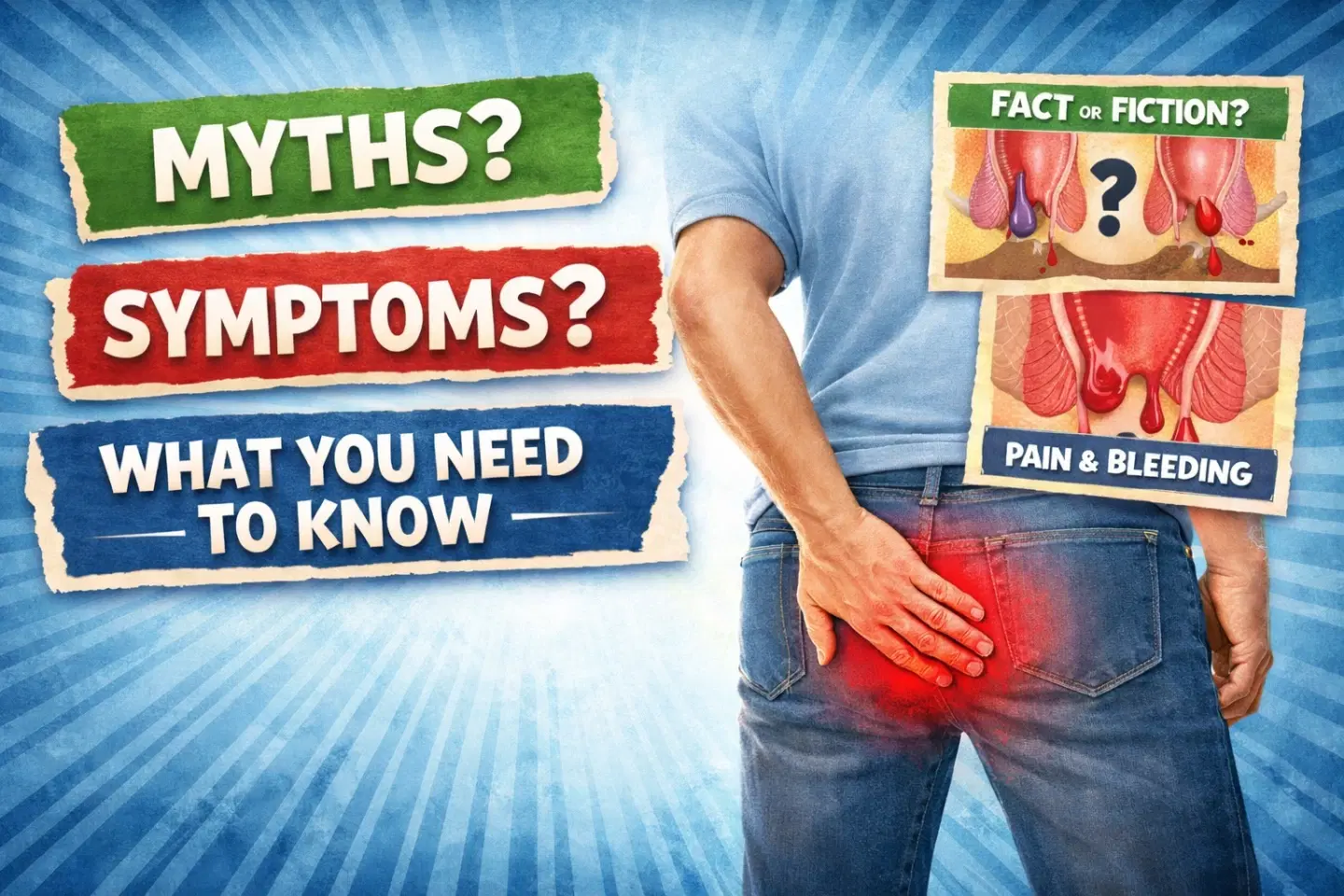
Myths vs Facts About Piles
- Myth: Only older people get piles.
Fact: Increasingly common among young adults due to sedentary jobs and low-fibre diets. - Myth: Piles always cause pain.
Fact: Internal piles are usually painless; pain arises mainly with external or thrombosed piles. - Myth: All rectal bleeding means piles.
Fact: Bleeding could indicate other conditions. Always get evaluated. - Myth: Surgery is the only option.
Fact: Early grades often improve with diet and lifestyle modifications.
Around 40% of adults experience hemorrhoids at some point (Cleveland Clinic). Awareness and timely care are key to preventing severe cases.
Lifestyle and Dietary Tips to Prevent or Manage Piles
- Eat fibre-rich foods like fruits, vegetables, and whole grains.
- Drink plenty of water to keep stools soft.
- Avoid prolonged sitting, especially on the toilet.
- Exercise regularly to enhance bowel movement.
- Treat constipation and diarrhea early.
Simple preventive habits can drastically reduce the recurrence of piles and improve overall gut health.
When to See a Gastroenterologist
If you experience persistent bleeding, pain, or swelling, consult a gastroenterologist. Specialists can confirm the cause and suggest the right treatment – whether conservative management or minimally invasive procedures.
Bangalore Gastro Centre offers a multidisciplinary approach to digestive and anorectal health, ensuring that every condition is addressed holistically.
Final Takeaway
Piles are common but often misunderstood. They are not something to be embarrassed about. Early recognition, healthy habits, and timely medical evaluation can prevent complications and help you regain comfort.
To understand piles better, watch the full video “Piles 101: Myths, Symptoms & What You NEED to Know!” on our YouTube channel.
For more expert insights on digestive and gut health, subscribe to Bangalore Gastro Centre’s YouTube channel and stay informed about your digestive wellness!