


Fecal Elastase Test: The Complete Guide to Pancreatic Function Testing
The pancreas is often the unsung hero of our digestive system. Tucked away behind the stomach, it quietly performs the crucial job of producing enzymes that break down our food—specifically fats, proteins, and carbohydrates. When this organ functions optimally, we enjoy our meals (from rich biryanis to simple dals) without a second thought. However, when the pancreas struggles, it can lead to significant digestive distress and malnutrition. This is where the fecal elastase test becomes a vital diagnostic tool.
In the realm of gastroenterology, early detection is the cornerstone of effective treatment. The fecal elastase test is widely regarded as the gold standard for a non-invasive initial evaluation of pancreatic health. It is primarily used to determine if the pancreas is producing enough digestive enzymes, a condition medically known as exocrine pancreatic dysfunction or pancreatic insufficiency.
Unlike older methods that required invasive tubes or lengthy procedures, this test is simple, patient-friendly, and highly accurate for detecting moderate to severe issues. In this comprehensive guide, we will navigate through the "what, why, and how" of this test, answering the most pressing questions patients often have.
Note: This information is based on gastroenterology best practices followed by leading centres such as Bangalore Gastro Centre.
What Is the Fecal Elastase Test?
To truly understand your digestive health, we must first demystify the tools used to assess it. Here, we break down the basics of this essential diagnostic procedure.
Q1: What is a fecal elastase test?
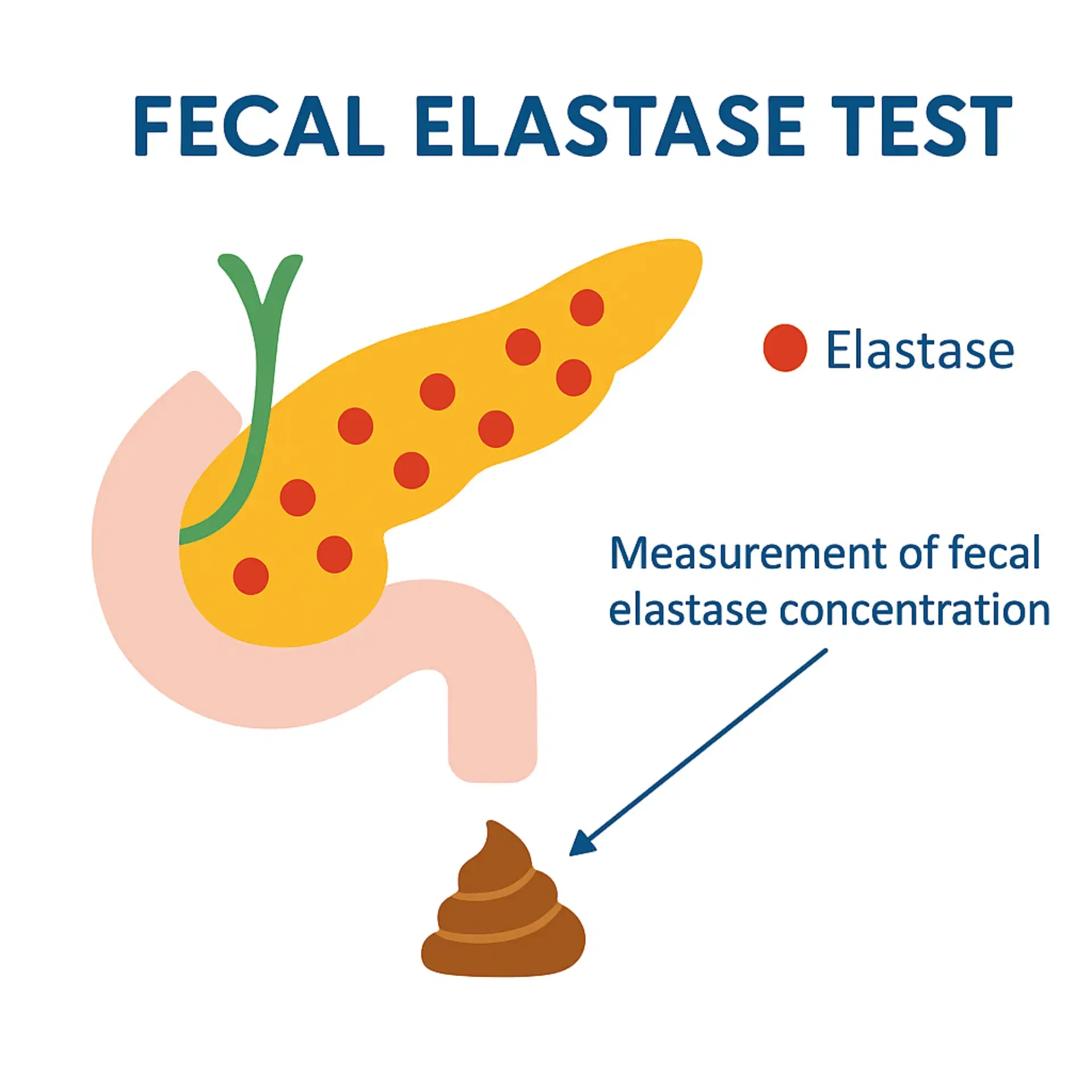
The fecal elastase test is a simple diagnostic stool analysis used to measure the concentration of an enzyme called "elastase-1" in your stool. Elastase is a specific enzyme produced by the pancreas that helps digest proteins. Unlike other enzymes that degrade as they pass through the intestines, elastase remains remarkably stable and unchanged until it is excreted. This stability makes it an excellent marker for pancreatic performance. If your stool contains low levels of elastase, it is a strong indicator that your pancreas isn't producing enough digestive enzymes, pointing towards pancreatic insufficiency.
Q2: Why is the fecal elastase test done?
Your gastroenterologist may recommend this test if they suspect that your digestive issues stem from the pancreas. It is primarily done to diagnose or rule out:
- Exocrine Pancreatic Dysfunction: A condition where the pancreas fails to secrete necessary enzymes.
- Chronic Pancreatitis: Long-term inflammation of the pancreas, often caused by alcohol use or gallstones, which can permanently damage organ function.
- Cystic Fibrosis: A genetic condition that affects the lungs and digestive system.
- Unexplained Weight Loss & Malabsorption: To determine if the body is failing to absorb nutrients due to a lack of enzymes.
Q3: How does the fecal elastase test work?
The principle is straightforward. Since a healthy pancreas releases elastase into the small intestine to aid digestion, this enzyme inevitably ends up in the stool. By analyzing a small stool sample, lab technicians can quantify the amount of elastase present. High levels indicate a healthy, working pancreas. Low levels suggest that the pancreatic output is compromised. Its biggest advantage over other pancreatic function tests is that it is non-invasive—no needles, no sedation, and no uncomfortable tubes are required.
Symptoms & Conditions That Require Pancreatic Function Testing
Many patients in India ignore subtle digestive warning signs, attributing them to "something I ate" or "gastric trouble." However, persistent symptoms warrant a closer look. If you are experiencing the following, your doctor might suggest a fecal elastase test:
- Steatorrhea (Greasy Stools): This is the hallmark symptom of fat malabsorption. Stools may appear pale, bulky, oily, and float in the toilet bowl. They are often difficult to flush. This happens because, without enough enzymes, dietary fat passes right through you.
- Chronic Diarrhea: Loose, watery stools that persist for weeks without an infection are a red flag.
- Unintentional Weight Loss: You are eating normally, but the scale is dropping. This indicates that your body isn't absorbing the calories and nutrients from your food.
- Abdominal Pain: Recurring pain in the upper abdomen, sometimes radiating to the back, often after eating fatty foods.
- Vitamin Deficiency: Low levels of fat-soluble vitamins (A, D, E, and K) despite a healthy diet.
These symptoms collectively point towards pancreatic insufficiency. When the pancreas cannot produce enough enzymes to break down food, the body enters a state of starvation despite food intake. Diagnosing exocrine pancreatic dysfunction early via the fecal elastase test can prevent severe malnutrition and improve quality of life significantly.
Pancreatic Function Test – Patient Question 1
Q4: What is a pancreatic function test?
This is a common question for patients who have just received a referral slip from their doctor. In broad terms, a pancreatic function test is any diagnostic procedure designed to evaluate how well the pancreas is performing its two main jobs: releasing digestive enzymes (exocrine function) and releasing hormones like insulin (endocrine function). However, when we speak of digestion, we focus on the exocrine function.
There are two main categories of these tests:
1. Direct Pancreatic Function Tests:
These are the most accurate but are invasive and uncomfortable. They involve stimulating the pancreas (usually by injecting a hormone like secretin) and then collecting the fluid it produces using a tube inserted through the nose or mouth into the small intestine. Due to their invasive nature and cost, they are rarely used today except in specialized research or complex cases.
2. Indirect Pancreatic Function Tests:
These are far more common as they are patient-friendly and easier to perform. They measure the consequences of pancreatic insufficiency rather than the secretions directly.
- Stool Tests: The fecal elastase test falls into this category. It is the most popular choice because it is highly specific to the human pancreas and easy to perform. Another stool test is fecal fat quantification, which involves collecting stool over 72 hours (a cumbersome process for patients).
- Blood Tests: Measuring levels of trypsinogen or amylase can sometimes give clues, but they are less specific for chronic insufficiency.
- Breath Tests: The 13C mixed triglyceride breath test is another option where the patient ingests a tagged meal, and the breath is analyzed to see how well the fat was digested.
Why is the fecal elastase test often preferred?
Doctors prefer the fecal elastase test because it strikes the perfect balance between accuracy and convenience. For a patient suffering from chronic diarrhea or abdominal pain, a single stool sample is much less traumatic than an endoscopy or a 72-hour collection period. It is particularly effective at diagnosing moderate to severe pancreatic insufficiency.
How to Test Pancreatic Function – Patient Question 2
Q5: How to test pancreatic function?
If you suspect your digestion is compromised, you might wonder about the specific pathway a doctor takes to test your pancreatic function. The process is generally methodical to ensure accurate diagnosis while minimizing discomfort.
The Diagnostic Pathway:
- Clinical Evaluation: It starts with a history. A doctor will ask about your alcohol consumption, history of gallstones, and description of your stools.
- Non-Invasive Testing (The First Line): This is where the fecal elastase test is utilized. It is usually the first step because it screens for exocrine pancreatic dysfunction effectively.
- Imaging: If the stool test is positive (showing low elastase), doctors often follow up with imaging like a CT scan, MRI, or Endoscopic Ultrasound (EUS) to look for physical damage to the pancreas, such as calcification or atrophy (shrinkage).
- Trial of Therapy: Sometimes, the "test" is actually a treatment trial. If symptoms strongly suggest insufficiency, a doctor might prescribe Pancreatic Enzyme Replacement Therapy (PERT). If symptoms improve, the diagnosis is confirmed.
Where Stool Elastase Fits In:
The stool elastase test acts as the gatekeeper. If your elastase levels are normal, the doctor might look for other causes of your symptoms, such as IBD or Celiac disease.
Nutritional Context:
While testing is crucial, maintaining your gut health through diet during this investigative phase is equally important. The small intestine needs support to absorb whatever nutrients it can. Proper nutrition can help mitigate some symptoms while you await diagnosis.
For a deeper dive into what you should be eating, watch this insightful video from
Stool Elastase Test – Patient Question 3
Q6: What is the stool elastase test and how is it performed?
Patients often feel anxious about medical tests, especially those involving stool samples. Understanding exactly what is the stool elastase test and the logistics of how it is performed can alleviate much of this anxiety.
The Procedure: Step-by-Step
- The Kit: Your doctor or the laboratory will provide you with a sterile collection container. This usually has a small spoon or scoop attached to the lid.
- Collection: You will need to pass a stool into a clean, dry container. It is crucial that the stool does not mix with urine or toilet water, as this can dilute the sample and skew the results. A common tip is to place a layer of plastic wrap over the toilet rim to catch the sample or use a dedicated collection pan (often referred to as a "hat") provided by the lab.
- Sampling: Using the scoop provided, transfer a small amount of stool (usually about the size of a walnut) into the sterile vial.
- Sealing and Labeling: Screw the lid on tightly. Ensure your name, date of birth, and the date of collection are clearly written on the label.
- Storage and Transport: Elastase is a robust enzyme, meaning it doesn't degrade quickly. However, it is best to deliver the sample to the lab as soon as possible. If there is a delay, keep the sample refrigerated.
Who should undergo a stool elastase test?
- Individuals with a history of chronic pancreatitis.
- Patients with Cystic Fibrosis.
- Anyone experiencing unexplained chronic diarrhea or steatorrhea (oily stools).
- Diabetics (both Type 1 and Type 2) reporting digestive issues, as diabetes is closely linked to pancreatic decline.
Common Concerns:
- Is it painful? Absolutely not. It is purely a collection process.
- Is it messy? With the proper collection kit and precautions (like using a catch pan), it is hygienic and straightforward.
- Is it accurate? Yes, for moderate to severe pancreatic insufficiency, it is highly sensitive and specific.
How to Prepare for Elastase Test
One of the most frequent queries we receive is how to prepare for elastase test. Unlike blood sugar tests or endoscopies, the preparation for this test is surprisingly simple, which is a relief to many patients.
Dietary Guidelines:
- No Fasting Required: You do not need to fast. You can eat and drink as usual before collecting the sample.
- Continue a Normal Diet: In fact, it is better if you eat a normal diet containing some fat. This ensures your pancreas is being stimulated naturally, giving a realistic picture of its daily function.
Medication Guidelines:
- Pancreatic Enzymes: If you are already taking enzyme supplements (like Creon or Pancreatin), you DO NOT need to stop them. This is a unique advantage of the fecal elastase test. The test specifically detects human elastase. The enzymes in supplements are typically porcine (pig-derived) and do not cross-react with the test. So, taking medication won't give you a false "normal" result.
- Other Medications: Continue your regular medications for blood pressure, diabetes, etc., unless specifically instructed otherwise by your doctor.
What to Avoid:
- Laxatives: Avoid taking laxatives before the test. Artificial induction of diarrhea can dilute the stool sample, potentially leading to a falsely low elastase reading. The stool sample should ideally be solid or semi-solid, though the lab can often work with loose stools if necessary.
- Antibiotics: While usually fine, inform your doctor if you are on a heavy course of antibiotics, as gut flora changes can sometimes impact stool consistency.
By following these simple steps on how to prepare for elastase test, you ensure that the results reflect your true physiological state.
What Do Elastase Results Mean?
Once the sample is submitted, the waiting game begins. When the report arrives, interpreting the numbers can be confusing. Here is a breakdown of what do elastase results mean in the context of your health.
The results are typically measured in micrograms of elastase per gram of stool (µg/g).
1. Normal Pancreatic Function (> 200 µg/g)
- Result: If your value is greater than 200 µg/g (often >500 in healthy individuals), your pancreas is producing sufficient elastase.
- Implication: Your digestive symptoms are likely not caused by exocrine pancreatic dysfunction. Your doctor may look for other causes like Irritable Bowel Syndrome (IBS), bacterial overgrowth, or food intolerances.
2. Mild to Moderate Pancreatic Insufficiency (100 – 200 µg/g)
- Result: A value falling in this range indicates that the pancreas is struggling but still functioning to some degree.
- Implication: You may have early-stage chronic pancreatitis or mild dysfunction. You might not require full enzyme replacement yet, but lifestyle changes and monitoring are essential.
3. Severe Pancreatic Insufficiency (< 100 µg/g)
- Result: A value below 100 µg/g is a strong indicator of severe pancreatic insufficiency.
- Implication: The pancreas has lost significant function. This usually correlates with symptoms like weight loss and extremely oily stools. Treatment with enzyme replacement is typically necessary.
Factors Influencing Results:
It is important to note that a "False Positive" (a low result when the pancreas is actually fine) can happen if the stool sample is very watery (watery diarrhea). This is because the excess water dilutes the enzyme concentration. If you have watery diarrhea not related to pancreatic issues, your doctor might repeat the test once the stool forms up, or they might use a lyophilized (freeze-dried) method to account for the water content.
Understanding Pancreatic Insufficiency and Exocrine Pancreatic Dysfunction
To manage your health, you must understand the condition itself. Exocrine pancreatic dysfunction is essentially a supply chain failure. Your body needs enzymes to unlock the nutrients in food. Without them, food passes through partially digested.
Common Causes in the Indian Context:
- Chronic Pancreatitis: Often linked to long-term alcohol consumption, but increasingly seen in non-smokers/non-drinkers due to genetic factors or autoimmune conditions.
- Gallstones: A history of gallstones can scar the pancreas (more on this in the next section).
- Diabetes: India is the diabetes capital of the world. Over time, the pancreatic damage that causes Type 2 diabetes (loss of insulin cells) can also affect the cells that make digestive enzymes.
- Post-Surgical Changes: Surgeries involving the stomach or intestines (like bariatric surgery or cancer resection) can alter how the pancreas and food interact.
The fecal elastase test serves as the early warning system. Detecting this dysfunction early prevents the "vicious cycle" where the patient eats but becomes malnourished, leading to weaker immunity and further health decline.
Related Concerns: Gallstones and the Pancreas
While discussing pancreatic health, we must address a very common and related offender: Gallstones. Many patients at Bangalore Gastro Centre ask about gallstones because they are a leading cause of acute pancreatitis, which can eventually lead to chronic insufficiency. Here are answers to the most frequent questions regarding this painful condition.
Q: What does gallstone pain feel like?
Gallstone pain, medically known as biliary colic, is distinct and intense. It is typically felt in the upper right abdomen, just below the rib cage. The pain can be sudden and rapidly intensifying.
- Radiation: It often radiates (travels) to the right shoulder blade or the center of the back between the shoulder blades.
- Trigger: It frequently occurs after a heavy, fatty meal (like a wedding feast or fried snacks), causing the gallbladder to contract vigorously against the stone.
- Nature: Patients describe it as a gnawing, cramping, or stabbing pain that makes it hard to find a comfortable position. It may be accompanied by nausea and vomiting.
Q: How long does gallstone pain last?
Unlike a simple stomach ache that might fade in minutes, gallstone pain is persistent. An episode of biliary colic typically lasts anywhere from 1 to 5 hours.
- If the pain persists for more than 5-6 hours and is accompanied by fever, chills, or yellowing of the eyes (jaundice), it is no longer just "colic." It may indicate acute cholecystitis (infection of the gallbladder) or pancreatitis (where a stone has blocked the pancreatic duct). This is a medical emergency requiring immediate hospitalization.
Q: Can gallstones pass naturally?
This is a tricky question. Small gallstones can pass through the bile ducts and into the intestine naturally, often without the person even noticing. However, reliance on them "passing naturally" is risky.
- The Danger: If a stone is too large to pass easily but small enough to enter the duct, it can get stuck. A blockage at the common bile duct affects both the liver and the pancreas. This blockage can trigger acute pancreatitis, a severe and life-threatening inflammation.
- Medical Consensus: There are no scientifically proven "flushes" or diets that safely dissolve or pass gallstones. If stones are causing symptoms (pain), the standard of care is usually the removal of the gallbladder (cholecystectomy) to prevent recurrent attacks and pancreatic damage.
Treatment Pathways & Follow-Up After Fecal Elastase Test
So, you have taken the fecal elastase test, and the results show pancreatic insufficiency. What comes next? The good news is that this condition is highly manageable.
1. Pancreatic Enzyme Replacement Therapy (PERT):
This is the gold standard treatment. Doctors prescribe pills containing concentrated pancreatic enzymes (lipase, protease, amylase). You take these pills with every meal and snack. They essentially do the job your pancreas can no longer do—breaking down fats and proteins so your body can absorb them.
- Note: Dosage is key. Taking too little won't work. Your gastroenterologist will tailor the dose based on your weight and the fat content of your diet.
2. Diet Modifications:
A common myth is that you must stop eating fat entirely. This is incorrect. You need healthy fats for vital body functions. Instead, the goal is to eat a balanced diet and match your enzyme medication to the amount of food you eat.
- Small, Frequent Meals: This puts less demand on your digestive system than three huge meals.
- Avoid Alcohol: If alcohol was the cause of the damage, total abstinence is crucial to prevent further destruction of the gland.
- Quit Smoking: Smoking accelerates pancreatic damage and increases cancer risk.
3. Vitamin Supplementation:
Since you may be low on vitamins A, D, E, and K, your doctor will likely prescribe specific supplements to correct these deficiencies and protect your bone health and immunity.
Monitoring:
Treatment isn't a "fix it and forget it" deal. You will likely need follow-up appointments to monitor your weight, nutritional status, and symptom improvement. Repeat testing might be done, but usually, symptom relief (stop of diarrhea, weight gain) is the best indicator that the treatment is working.
Diet & Gut Health After Pancreatic Function Testing
Whether your fecal elastase test results are normal or abnormal, the testing process is a wake-up call to prioritize gut health. A gut-friendly diet is your best defense against digestive disorders.
In India, where our diet is rich in spices, oils, and dairy, moderation and selection are key. Incorporating probiotics (like curd/yogurt), soluble fiber (oats, fruits), and lean proteins can reduce the workload on your pancreas.
For a visual guide on exactly what to eat to support your small intestine and overall digestion, we highly recommend watching this educational resource. It breaks down complex nutritional advice into simple, actionable tips.
Way Forward
Digestive health is complex, but diagnosing the root cause doesn't have to be painful or complicated. The fecal elastase test represents a significant leap forward in how we understand and manage pancreatic health. It offers a clear, non-invasive window into the workings of an organ that is vital to our well-being.
If you are struggling with persistent digestive changes, weight loss, or symptoms that just don't add up, do not ignore them. Early testing can differentiate between simple indigestion and exocrine pancreatic dysfunction, putting you on the fast track to recovery.
We encourage you to take charge of your health. Consult qualified gastroenterologists who can guide you through this process with expertise and care. For more expert gastroenterology education and to understand more about how your digestive system works, explore the Bangalore Gastro Centre YouTube channel.