

Difficulty Swallowing (Dysphagia): Causes, Autoimmune Links, and Treatment
Food is central to Indian culture. Whether it is a family gathering over a heavy weekend biryani, a quick dosa before work, or sharing sweets during a festival, eating is meant to be an effortless, joyful experience.
But what happens when that simple act becomes a source of anxiety?
You take a bite. You chew. You try to swallow. Suddenly, panic sets in. You experience the terrifying sensation of food getting stuck in throat. Water doesn't seem to help. You might have to cough violently or wait out an uncomfortable, tight pain before the food finally passes down.
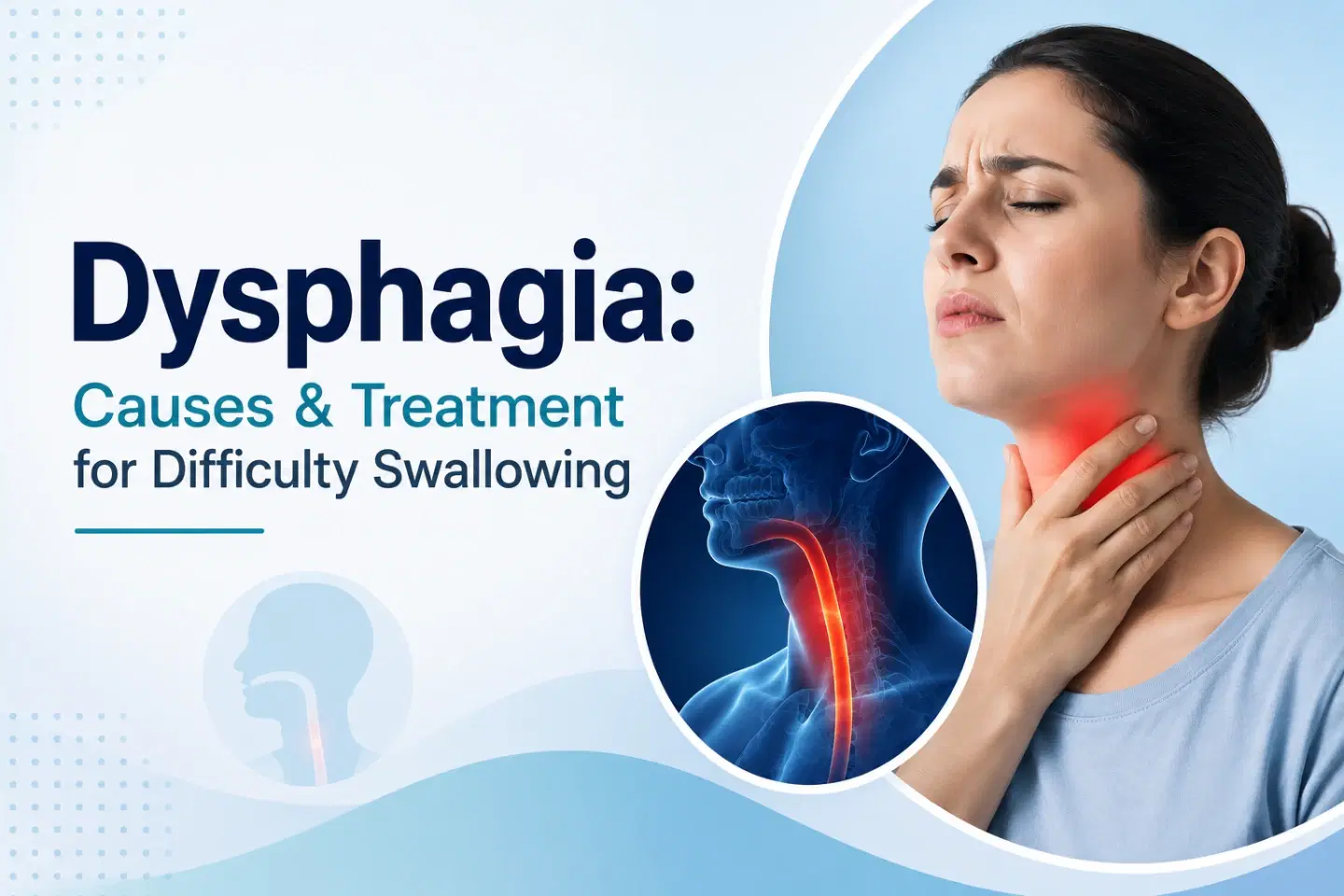
If this scenario sounds familiar, you are not alone. Difficulty swallowing is a medical condition known as dysphagia. It is not merely a nuisance. It is a clear signal from your body that the complex mechanical and neurological highway connecting your mouth to your stomach is malfunctioning.
In this comprehensive guide, we will break down exactly what happens when you cannot swallow properly. We will examine the anatomical causes, explore how hidden autoimmune diseases and your gut microbiome play a massive role, and outline the treatments available in India today.
The Anatomy of a Swallow: What Goes Wrong?
Swallowing is a biological marvel. It requires the precise coordination of 50 pairs of muscles and multiple nerves. When you swallow, the process happens in three distinct phases.
First, the oral phase. You chew your food and mix it with saliva. Your tongue pushes this mass (called a bolus) to the back of your mouth. Second, the pharyngeal phase. Your vocal cords close tightly to protect your airway. Your epiglottis drops down like a trapdoor over your windpipe. Third, the esophageal phase. The food enters your esophagus—a muscular tube running from your throat to your stomach. Here, rhythmic muscle contractions called peristalsis push the food downward.
Dysphagia occurs when there is a breakdown in any of these three phases. Medical professionals generally categorize the problem into two distinct types based on where the breakdown happens.
Oropharyngeal vs. Esophageal Issues
Oropharyngeal dysphagia means the problem lies high up in the throat or mouth. People with this type usually struggle to initiate a swallow. They might cough, choke, or have food come back up through their nose. This is often linked to neurological damage, such as a stroke, Parkinson's disease, or nerve damage.
Esophageal dysphagia feels entirely different. You can initiate the swallow just fine, but the food stops halfway down. Patients almost universally describe this by saying it feels like something stuck in chest. The food hangs in the esophagus, causing heavy pressure, discomfort, and sometimes sharp pain behind the breastbone.
Primary Causes: Why Does This Happen?
Patients sit in our clinics every single day and ask, "Why does food get stuck in my chest?" The answer requires a thorough medical investigation, as the causes range from simple acid reflux to complex nerve disorders.
1. Severe Acid Reflux (GERD)
Gastroesophageal Reflux Disease (GERD) is incredibly common in India. Our dietary love for heavy spices, deep-fried snacks, and late-night dinners creates the perfect storm for acid reflux. When stomach acid constantly washes up into the esophagus, it burns the delicate lining. Over time, the body tries to heal this burn with scar tissue. This scar tissue builds up, thickens, and narrows the esophageal tube. This narrowing is called a stricture. When the tube is too narrow, solid foods simply cannot pass through easily.
2. Esophageal Motility Disorders
Sometimes the tube is wide open, but the muscles themselves are failing. Esophageal motility disorders happen when the rhythmic contractions of the esophagus become uncoordinated, weak, or completely absent.
- Achalasia: A condition where the lower esophageal sphincter (the valve between the esophagus and stomach) refuses to relax and open. Food pools in the esophagus.
- Diffuse Esophageal Spasm: The muscles contract wildly and out of sync. This often mimics the pain of a heart attack.
3. Physical Obstructions
Beyond scar tissue, other physical barriers can block food. Esophageal rings are thin, fragile mucosal tissues that can form and partially block the lower esophagus. In older patients, we also have to rigorously rule out esophageal cancer, which presents as a progressively growing tumor that slowly chokes off the passageway.
The Autoimmune Connection: When Your Body Fights Itself
To truly understand modern gastroenterology, we have to look past the mechanical pipes and examine the immune system. There is a deep, highly documented link between autoimmune diseases and swallowing difficulties.
Imagine a bustling traffic intersection in Mumbai or Bengaluru. Usually, the traffic police direct the cars perfectly. The system flows. Now imagine the traffic police suddenly become confused. They start aggressively redirecting cars into oncoming traffic, causing massive gridlock and damage.
This is exactly what happens in an autoimmune disease. Your immune system—designed to fight off foreign viruses and bacteria—gets confused and begins attacking your own healthy tissues. When this attack targets your digestive tract, swallowing becomes a nightmare.
Scleroderma and the Esophagus
Scleroderma is a rare autoimmune disease that causes the hardening and tightening of the skin and connective tissues. However, it does not stop at the skin. In many patients, scleroderma attacks the smooth muscles of the lower esophagus. The muscle fibers are gradually replaced by stiff, rigid scar tissue. As a result, the esophagus loses all its squeezing power. Patients develop severe esophageal motility disorders because the esophagus becomes a stiff, paralyzed pipe.
Eosinophilic Esophagitis (EoE)
EoE is rapidly becoming one of the most diagnosed causes of food impaction in young adults. It is a chronic, allergic inflammatory disease. In EoE, specific white blood cells called eosinophils build up in the lining of the esophagus. This happens as an immune reaction to specific foods or environmental allergens.
The esophagus becomes severely inflamed, stiff, and covered in rings. For a patient with EoE, swallowing a dry piece of chicken or heavy bread almost guarantees the sensation of food getting stuck in throat.
Rheumatoid Arthritis and the Cricoarytenoid Joint
We often associate rheumatoid arthritis (RA) strictly with joint pain in the hands or knees. However, RA is a systemic inflammatory condition. Deep in your throat sits a tiny joint called the cricoarytenoid joint, which helps open and close your vocal cords during swallowing. In severe autoimmune flare-ups, this tiny joint can become inflamed and arthritic, directly causing pain and difficulty swallowing.
The Gut Microbiome: The Engine of Inflammation
You cannot discuss autoimmune conditions and digestive inflammation without talking about the gut microbiome. The human gut houses trillions of bacteria, fungi, and viruses. This complex ecosystem does not just digest your food; it actively trains and manages your immune system.
Dysbiosis and the Gut-Joint Axis
When your gut bacteria are balanced, they produce short-chain fatty acids (SCFAs) that keep the intestinal lining strong and reduce body-wide inflammation. However, highly processed diets, chronic stress, and frequent antibiotic use can wipe out the "good" bacteria. This imbalance is called dysbiosis.
Dysbiosis degrades the intestinal wall, creating a "leaky gut." Toxins and undigested food particles leak into the bloodstream, putting the immune system on high alert. This chronic, low-grade systemic inflammation travels throughout the body.
Medical science now recognizes the "gut-joint axis"—the direct pathway where gut inflammation triggers joint inflammation in conditions like Rheumatoid Arthritis or Ankylosing Spondylitis. [Source: Reputable Medical Journal].
How does this relate to swallowing? The exact same inflammatory cytokines that attack your joints can target the mucosal lining of your esophagus. Poor gut health acts as the gasoline that fuels autoimmune flare-ups, worsening conditions like EoE and scleroderma, and exacerbating difficulty swallowing. Fixing the esophagus often requires fixing the gut first.
Dietary Impacts on Swallowing and Gut Health
In India, our diet is deeply flavorful but can be taxing on a compromised digestive system. Heavy reliance on red chilies, acidic curries, and eating dinners past 9:00 PM are major triggers for acid reflux and subsequent esophageal damage.
If you frequently feel that it feels like something stuck in chest, your first line of defense is dietary modification.
- Eat smaller, frequent meals: Avoid stretching the stomach, which puts pressure on the esophageal valve.
- Chew meticulously: Digestion begins in the mouth. Saliva contains enzymes that break down food. If you swallow large, unchewed chunks, you are forcing your esophagus to do the work your teeth were supposed to do.
- Mind your grains: Some grains are inherently easier to break down than others, heavily impacting your gut transit time and acid production. We highly recommend educating yourself on the impact of daily staples. Watch this detailed breakdown: Rice Vs Chapati | Which Is Best for Digestion? The Truth Explained | Bangalore Gastro Centre.
The Diagnostic Journey: Finding the Root Cause
When you experience the terrifying feeling of food getting stuck in throat, guessing the cause is dangerous. You need exact, high-definition diagnostics. At specialized facilities like Bangalore Gastro Centre, the diagnostic approach is methodical and patient-centric.
1. Upper GI Endoscopy (Gastroscopy) This is the gold standard. A gastroenterologist gently guides a thin, flexible tube with a high-definition camera down your throat while you are comfortably sedated. This allows the doctor to see the exact state of your esophageal lining. They look for strictures, tumors, or the classic white rings of Eosinophilic Esophagitis. Biopsies (tiny tissue samples) are taken to check for microscopic inflammation.
2. High-Resolution Esophageal Manometry If the endoscopy shows a perfectly normal-looking tube, we must test the muscles. Manometry is the definitive test for esophageal motility disorders. A thin pressure-sensitive catheter is passed into the esophagus. As you take small sips of water, the computer records the exact strength, coordination, and timing of your muscle contractions. This is how conditions like Achalasia are definitively diagnosed.
3. Barium Swallow (Esophagram) You drink a chalky, barium-based liquid while an X-ray technician records a video. The barium coats the lining of your digestive tract, lighting up under X-ray. It provides a real-time movie of your swallowing mechanics, highlighting structural abnormalities or uncoordinated muscle spasms.
Advanced Treatment Options
Treatment is never one-size-fits-all. It depends entirely on the root cause uncovered during diagnosis.
Medication: For GERD-related strictures, the foundation of treatment is profound acid suppression using Proton Pump Inhibitors (PPIs). By stopping the acid, we stop the inflammation. For EoE, patients may be prescribed swallowed topical steroids. Instead of inhaling the steroid asthma medication, the patient swallows it to coat and heal the esophagus.
Endoscopic Therapy (Dilation): If you have a stricture or a narrow ring, medication alone will not open it. During an endoscopy, a doctor can safely pass a tiny, deflated balloon into the narrowed area. The balloon is then carefully inflated to stretch the scar tissue and widen the esophagus. Patients often wake up from this procedure with immediate relief.
Botox Injections: For certain severe muscle spasms, botulinum toxin (Botox) can be injected directly into the esophageal muscles during an endoscopy. It temporarily paralyzes the overactive muscles, providing relief for several months.
Surgery: For advanced conditions like Achalasia, surgical intervention is highly effective. Procedures like the Heller Myotomy or POEM (Peroral Endoscopic Myotomy) involve meticulously cutting the muscle fibers of the lower esophageal valve, forcing it to remain open so food can finally pass into the stomach.
Patient Questions: Q&A on Autoimmune Diseases and Swallowing Issues
Because the human body is an interconnected system, patients often have complex, overlapping concerns. Below, we address some of the most pressing questions we receive in the clinic.
What triggers autoimmune diseases that affect swallowing?
Autoimmune diseases are typically triggered by a combination of genetic predisposition and environmental factors. You might carry a gene for a specific autoimmune condition your entire life without it activating. However, a severe viral infection, prolonged periods of extreme psychological stress, or exposure to certain environmental toxins can "flip the switch." Once the immune system is activated improperly, it begins producing autoantibodies that attack healthy tissue, such as the smooth muscle in your digestive tract, leading directly to dysphagia.
How does the gut play a role in autoimmune dysphagia?
Your gut is the headquarters of your immune system. Nearly 70% of your immune cells reside in the gut lining. When your microbiome is healthy, it sends calming signals to your immune system. When your microbiome is damaged (due to poor diet, chronic infections, or indiscriminate antibiotic use), the gut barrier becomes permeable.
Harmful bacteria and undigested proteins leak into your bloodstream. Your immune system attacks these leaks, creating systemic inflammation. This constant state of high alert exhausts and confuses the immune system, heavily contributing to the onset and severity of autoimmune attacks on the esophagus. Healing the gut lining through specific dietary protocols is a primary step in managing autoimmune swallowing disorders.
Why does food get stuck in my chest?
This specific sensation occurs because the esophagus sits directly behind your breastbone (sternum). When food hits a physical blockage (like a stricture or a tumor) or a functional blockage (like a spasm or a valve that won't open), the food bolus stops. The esophagus continues trying to push the food down, squeezing violently against the blockage.
These intense muscle contractions generate heavy pressure. Because the esophagus shares nerve pathways with the heart, the pain is often referred to the chest area. This is why does food get stuck in my chest is the most common complaint we hear from patients suffering from structural or motility-related swallowing issues.
When should I see a specialist for swallowing problems?
You should see a gastroenterologist immediately if you experience weight loss, vomiting, pain while swallowing, or if food gets stuck regularly. Do not wait for it to pass.
Furthermore, a very dangerous side effect of swallowing difficulties is aspiration—when tiny particles of food or liquid slip past the vocal cords and go down into the lungs instead of the stomach. This causes chronic coughing, wheezing, and can lead to severe aspiration pneumonia. If you develop a persistent cough alongside your swallowing issues, a multi-disciplinary approach is required. For detailed guidance on respiratory symptoms, please read our When to See a Pulmonologist: Respiratory Health Guide.
Can anxiety cause difficulty swallowing?
Yes. It is a condition known as globus sensation or globus pharyngeus. Extreme stress and anxiety can cause the muscles in the throat to tighten, creating the persistent feeling of a lump in the throat. However, true difficulty swallowing (where food actually gets stuck and cannot pass) is rarely just anxiety. A doctor must rule out physical and autoimmune causes before attributing the problem to stress.
Taking Control of Your Digestive Health
Ignoring digestive distress is a dangerous gamble. What starts as a mild annoyance during dinner can rapidly escalate into severe weight loss, malnutrition, and a severely compromised quality of life.
The mechanics of swallowing are delicate. Whether your symptoms are caused by long-standing acid reflux, complex esophageal motility disorders, or an underlying autoimmune condition driven by a distressed gut microbiome, the answers are attainable. Modern gastroenterology offers incredibly precise diagnostic tools and highly effective treatments.
You do not have to live with the fear of your next meal. If you or a loved one are struggling, seeking expert medical evaluation is the first step toward reclaiming your health and your peace of mind. Let the joy of eating return.