

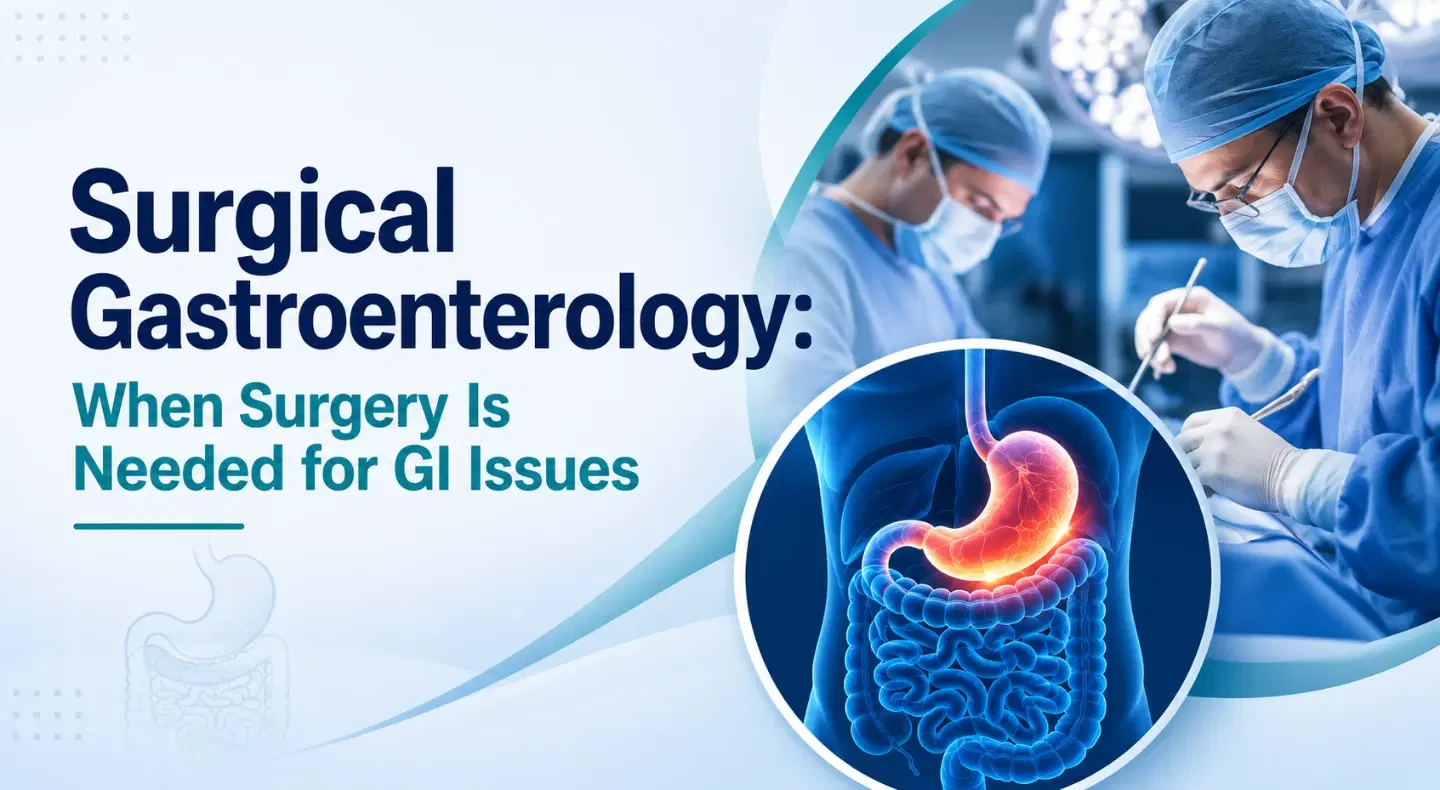
Surgical Gastroenterology: When Surgery Is Needed for GI Issues
Digestive discomfort is something almost everyone experiences at some point. In India, where our culinary heritage is rich with spices, complex carbohydrates, and heavy dairy, an occasional bout of acidity or indigestion is often brushed off as a normal part of life. We reach for home remedies—a glass of jeera water, a quick antacid from the local pharmacy, or a piece of jaggery after dinner. Most of the time, these simple interventions work. The discomfort fades. Life goes on.
But what happens when the pain does not fade? What happens when that persistent burning sensation, sudden sharp abdominal pain, or chronic bowel irregularity signals a structural or severe pathological issue rather than just a heavy meal?
There is a distinct tipping point in gastrointestinal health where medications, dietary changes, and lifestyle adjustments reach their therapeutic limits. Recognizing this point is essential for your long-term health. Your primary care physician or medical gastroenterologist might manage your condition initially. However, when structural corrections or tissue removals are required, your care is transferred to a specialist. A surgical gastroenterologist is a highly trained surgeon who specializes exclusively in operative procedures of the digestive tract, liver, bile ducts, and pancreas.
This comprehensive guide will explore the deep connections within your digestive system, explain the scientifically established mechanisms of mucosal inflammation, and help you understand exactly When do you need GI surgery based strictly on high-quality medical evidence.
Deep Inside the Gut: Epithelial Barrier Dysfunction and Immunity
Before understanding surgery, we must understand the environment in which these diseases develop. The human gastrointestinal tract is not just a simple plumbing system that absorbs nutrients and expels waste. It is a highly complex, metabolically active organ system.
Within your large intestine resides the gut microbiome. This ecosystem is composed of trillions of microorganisms. In a healthy state, these microbes live in symbiosis with you, breaking down complex carbohydrates found in Indian dietary staples like lentils and whole wheat to produce short-chain fatty acids (SCFAs) like butyrate. High-quality systematic reviews consistently show that butyrate provides essential energy to the cells lining your colon and supports the integrity of the intestinal lining.
However, when this delicate balance is severely disrupted—a state known as dysbiosis—clinical problems begin. In evidence-based gastroenterology, we do not refer to this as "leaky gut," which is often a scientifically vague term. Instead, the medical consensus identifies this as epithelial barrier dysfunction. When the tight junctions holding your intestinal cells together fail, microscopic bacterial fragments like lipopolysaccharides (LPS) cross the intestinal barrier.
Your immune system immediately detects these foreign invaders. Macrophages and T-cells rush to the site, releasing inflammatory cytokines. Think of your immune system like the chaotic traffic at Bangalore’s Silk Board junction. Under normal circumstances, traffic police direct the vehicles efficiently, ensuring harmful elements are stopped while regular commuters pass smoothly. But imagine if the communication signals break down and the police become confused, suddenly stopping and attacking the daily, innocent commuters. This is similar to the pathophysiology of an autoimmune disease. Your immune cells misidentify targets due to systemic inflammation and begin attacking your own healthy tissues.
If you are experiencing severe, chronic gut issues stemming from these complex immune responses, finding the right specialist becomes your absolute priority. Patients often spend hours researching to find the Best surgical gastroenterologist in Bangalore to ensure they receive an accurate diagnosis supported by clinical data.
Autoimmune Diseases and the Gut-Joint Axis
The systemic inflammation originating in the gut does not always stay in the gut. The human body is a highly interconnected network. This brings us to a well-documented clinical concept: the gut-joint axis.
Many patients who suffer from chronic digestive issues also complain of severe joint pain, morning stiffness, or swollen knees. They often visit orthopedic doctors, unaware that the root cause of their joint deterioration lies within their abdomen.
Certain autoimmune gastrointestinal conditions, specifically Inflammatory Bowel Disease (IBD)—which encompasses Crohn's disease and Ulcerative Colitis—are strongly linked to enteropathic arthritis. Randomized Controlled Trials (RCTs) evaluating biologic therapies (like TNF inhibitors) frequently measure both intestinal mucosal healing and joint symptom improvement simultaneously because the inflammatory pathways are shared. The cytokines produced in the diseased gut travel through the bloodstream and settle in the synovium (the lining of the joints).
Medical management with immunosuppressants and biologics is always the first line of defense, supported by Level A evidence. However, IBD can cause severe, irreversible structural damage over time. Crohn's disease causes deep transmural inflammation that thickens the bowel wall, leading to fibrotic strictures (narrowing) or fistulas (abnormal connections between organs). Ulcerative Colitis can cause widespread ulceration and a toxic megacolon.
When these severe complications arise, medical therapy is no longer sufficient. The diseased portion of the bowel must be physically removed. This is when the expertise of a surgical gastroenterologist is required to perform complex bowel resections. Identifying a skilled Gastro surgeon Bangalore early in your disease progression can drastically improve your long-term surgical outcomes and quality of life.
Common Conditions: When Do You Need GI Surgery?
Deciding When do you need GI surgery depends entirely on the specific pathology, the severity of symptoms, and the failure of conservative management as defined by clinical guidelines. Let’s examine the most common conditions that eventually require operative intervention in India, focusing strictly on what high-quality evidence dictates.
1. Gallbladder Disease and Gallstones
Gallstones are incredibly common in the Indian population. The gallbladder is a small, pear-shaped organ tucked under your liver. Its job is to store and concentrate bile. When you eat a meal high in fat, the gallbladder contracts, squeezing bile through the cystic duct and into the small intestine.
Sometimes, the cholesterol and bilirubin in the bile crystallize, aggregating into solid stones. Many people have asymptomatic or "silent" gallstones. It is important to note that according to high-quality systematic reviews, prophylactic surgery for asymptomatic gallstones is generally not recommended.
However, if a stone blocks the cystic duct during a contraction, it causes severe, agonizing pain known as biliary colic. If the blockage persists, it causes acute cholecystitis. RCTs conclusively show that early laparoscopic cholecystectomy (within 72 hours of symptom onset) for acute cholecystitis is superior to delayed surgery, reducing hospital stay and complication rates. If you are looking for the Best gastro surgeon in Bangalore, you will find that evidence-based laparoscopic cholecystectomy is one of their most highly perfected operations.
2. Gastrointestinal Cancers
Cancer of the esophagus, stomach, colon, or rectum represents a clear and urgent scenario answering the question of When do you need GI surgery. Surgery is the cornerstone of curative treatment for localized GI cancers.
The goal is complete surgical resection of the tumor along with surrounding healthy tissue (margins) and regional lymph nodes to prevent recurrence. These are highly complex oncological procedures governed by strict international protocols. Ensuring you are treated at a facility with the Best surgical gastroenterologist in Bangalore is vital, as the surgeon's adherence to oncologic resection principles directly impacts survival rates. At specialized centers like Bangalore Gastro Centre, advanced diagnostics help identify these malignancies early, allowing for evidence-based surgical planning.
3. Hernias
A hernia occurs when an internal organ or fatty tissue pushes through a weak spot in the surrounding muscle or connective tissue. Inguinal hernias and ventral hernias are the most common.
The medical consensus on hernia repair has evolved significantly due to high-quality RCTs. Large-scale trials published in major medical journals have demonstrated that "watchful waiting" is a safe and acceptable approach for men with truly asymptomatic inguinal hernias, as the risk of sudden strangulation is remarkably low.
However, for symptomatic hernias—those causing pain or interfering with daily activities—elective surgical repair is the gold standard. The primary danger of an untreated symptomatic hernia is strangulation, a surgical emergency where a loop of intestine becomes trapped, cutting off its own blood supply. Consulting a top Gastro surgeon Bangalore ensures that the latest tension-free mesh repair techniques are utilized. Meta-analyses confirm that mesh repairs significantly reduce the risk of hernia recurrence compared to non-mesh techniques.
Demystifying GI Surgical Procedures
The thought of abdominal surgery is naturally terrifying for most patients. However, the landscape of GI surgical procedures has transformed radically over the past two decades.
Laparoscopic Surgery
Laparoscopy, or minimally invasive surgery, is the standard of care for most abdominal operations today. Instead of a single large incision, the surgeon makes three to four tiny incisions. Carbon dioxide gas inflates the abdomen, and a high-definition laparoscope guides specialized instruments.
The benefits of these minimally invasive GI surgical procedures are not just anecdotal; they are backed by decades of Cochrane reviews. Compared to open surgery, laparoscopy consistently demonstrates reduced postoperative pain, lower surgical site infection rates, shorter hospital stays, and a faster return to normal activities.
Robotic-Assisted Surgery
The evolution continues with robotic surgery. This is an advanced form of minimally invasive surgery where the surgeon sits at a console, viewing a 3D image of the surgical site and manipulating robotic arms.
Recent clinical trials are actively comparing robotic versus standard laparoscopic techniques. While both are safe, robotic surgery offers superior visualization and greater range of motion. This is particularly beneficial for complex pelvic surgeries, such as rectal cancer resections, where the working space is incredibly narrow. Only the Best gastro surgeon in Bangalore with specialized training can operate these advanced robotic systems effectively to achieve optimal oncologic margins.
The Indian Diet, Digestion, and Post-Surgical Recovery
Recovery from modern GI surgical procedures is generally smooth, but it requires active patient participation. The Indian diet is highly diverse, but it often features heavy components.
Immediately following a major bowel resection or gallbladder removal, the digestive system requires a phased return to normal function. Fast-track surgery protocols (also known as ERAS - Enhanced Recovery After Surgery), which are backed by extensive Level A evidence, encourage early feeding to stimulate bowel motility. Patients typically start with clear liquids and advance rapidly to solid foods as tolerated. Traditional, easily digestible foods like soft rice or khichdi are excellent during this phase.
Your Gastro surgeon Bangalore will work closely with clinical dietitians. For instance, after gallbladder removal, patients must temporarily moderate high-fat intake. Without the gallbladder acting as a reservoir, bile drips continuously into the intestine. RCTs indicate that while a strict low-fat diet is not permanently necessary, a gradual reintroduction of fats prevents post-cholecystectomy diarrhea.
Furthermore, patients must be aware that gastrointestinal symptoms can overlap with other systemic issues. Severe Acid Reflux (GERD) can aspirate into the lungs, worsening asthma. If you experience overlapping respiratory symptoms, reading our When to See a Pulmonologist: Respiratory Health Guide can help clarify whether your symptoms require multiple specialists. Comprehensive care at Bangalore Gastro Centre ensures all your interconnected systems are evaluated.
Patient Questions: Autoimmune Diseases, The Gut, and Surgery
When dealing with chronic illness, patients have countless questions. To help clarify these topics, we have compiled a Q&A section based on the most frequent inquiries, answered strictly using current evidence-based medicine.
What actually triggers an autoimmune disease in the gut?
Autoimmune diseases like Crohn’s and Ulcerative Colitis are multifactorial. High-quality epidemiological and genetic studies indicate it is a combination of genetic predisposition (such as NOD2 gene mutations) and environmental triggers. Environmental factors include severe gastrointestinal infections, smoking (which heavily impacts Crohn's disease), and alterations in the microbiome. When the mucosal barrier is breached, the immune system launches an inappropriate, chronic attack against normal gut flora. [Source: Level A Evidence / Gastroenterology Consensus Guidelines]
How do I know if my joint pain is caused by my gut?
Enteropathic arthritis usually flares up in tandem with your intestinal symptoms. If your knee pain or lower back stiffness gets significantly worse during a bout of severe diarrhea or abdominal cramping, there is a high probability the two are connected. Unlike mechanical wear-and-tear (osteoarthritis), inflammatory joint pain usually feels worse in the morning and improves with physical movement. Bring these symptoms to the attention of a surgical gastroenterologist or rheumatologist for a comprehensive evaluation.
Are there any alternatives to surgery for severe Inflammatory Bowel Disease?
In the early to moderate stages of IBD, medical therapy is the standard. Gastroenterologists use a step-up or top-down approach utilizing corticosteroids and advanced biologic therapies (like anti-TNF agents). However, when medications fail, surgery is required. Interestingly, landmark RCTs like the LIR!C trial have compared laparoscopic ileocecal resection directly against infliximab (a biologic) for limited, non-stricturing Crohn's disease. The trial demonstrated that surgery is a highly acceptable, cost-effective alternative to long-term biologic therapy for specific patients, challenging the notion that surgery is only a "last resort." Understanding exactly When do you need GI surgery requires close evaluation of this clinical data by your medical team. [Source: RCT Meta-Analysis / LIR!C Trial Data]
How do I choose the right specialist for my abdominal surgery?
You should seek a board-certified surgical gastroenterologist who has completed dedicated fellowship training in GI surgery. Numerous clinical studies linking surgical volume to patient outcomes show that surgeons and hospitals performing a high volume of specific procedures have significantly lower complication rates. Finding the Best surgical gastroenterologist in Bangalore requires looking at the hospital's infrastructure, ICU capabilities, and the surgeon's complication rates. You deserve the Best gastro surgeon in Bangalore for your complex care.
What is the long-term impact of removing a portion of my intestine?
The impact depends heavily on which part of the intestine is removed. If a small section of the colon is removed, most patients adapt perfectly well, as confirmed by long-term quality-of-life studies. If a large portion of the terminal ileum (part of the small intestine) is removed, patients will face vitamin B12 malabsorption, requiring lifetime injections, and may experience bile acid diarrhea. Advanced GI surgical procedures are strictly designed to perform bowel-sparing resections whenever oncologically and pathologically safe to minimize these functional impacts.
Conclusion
The journey from experiencing mild digestive discomfort to requiring surgical intervention is medically complex. Ignoring persistent abdominal pain, chronic changes in bowel habits, or sudden acute symptoms is dangerous.
While conservative management has its place, structural defects and severe inflammatory damage require advanced medical science. Modern surgical techniques, backed by rigorous Randomized Controlled Trials and clinical guidelines, prioritize your safety, minimize pain, and accelerate recovery.
If you are struggling with unresolved gastrointestinal issues and are wondering if surgery is the next step, seeking professional advice based on high-quality evidence is essential. A consultation with an expert surgical gastroenterologist at Bangalore Gastro Centre can provide you with a clear, accurate diagnosis and a definitive path forward to reclaiming your digestive health.