

Pilonidal Sinus: Causes, Symptoms & Treatment
Pilonidal Sinus: Causes, Symptoms & Treatment Options
A painful, swollen lump near the tailbone, with discharge, difficulty sitting, and a tendency to flare up again and again, is a surprisingly common problem, especially among young men. The culprit is often a pilonidal sinus, a condition that is harmless in principle but can be genuinely miserable in practice, interfering with sitting, driving, work, and daily comfort.
The good news is that a pilonidal sinus is very treatable, and the range of treatment options has grown considerably, from simple hygiene measures to minimally invasive procedures and, when needed, more definitive surgery. This guide explains what a pilonidal sinus is, why it develops, how to recognise it, and the full spectrum of treatment options, so you can understand the choices and find a lasting solution.
What Is a Pilonidal Sinus?
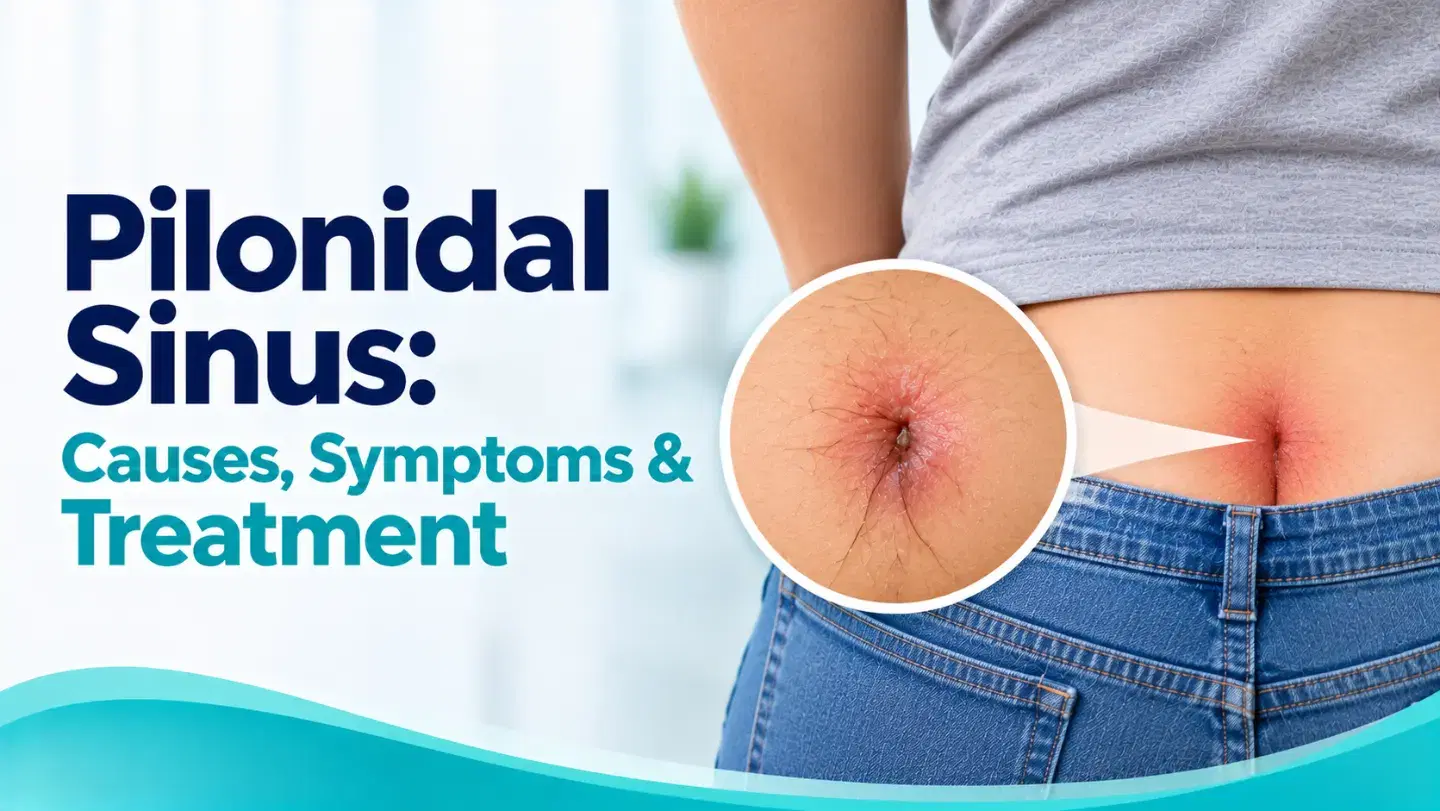
A pilonidal sinus is a small tunnel or tract that develops in the skin of the natal cleft, the crease between the buttocks, usually near the tailbone at the base of the spine (the sacrococcygeal area). The word “pilonidal” literally means “nest of hair,” which is a clue to its cause, as these tracts typically contain hair and skin debris.
The condition can take a few forms. Some people have only a small, painless pit or dimple in the cleft that causes no trouble and may be noticed incidentally. In others, the sinus becomes infected and forms a painful abscess, a swollen, tender collection of pus. And some develop a chronic, intermittently discharging sinus that flares and settles repeatedly. The terms pilonidal cyst, pilonidal sinus, and pilonidal abscess are often used somewhat interchangeably, but they broadly describe this same underlying problem at different stages, from a quiet tract to an acute infection to a persistent, recurring one.
A helpful way to picture it is as a splinter the body cannot expel. Loose hairs act like tiny splinters that work their way into the skin of the cleft, and the body, unable to remove them, walls them off into a tunnel that is prone to repeated infection. Understanding this hair-driven mechanism is key to both treating the sinus and preventing it from coming back.
What Causes a Pilonidal Sinus?
A pilonidal sinus develops when loose hairs become embedded in the skin of the natal cleft. Hairs shed from the back and buttocks collect in the deep crease, and the combination of friction, pressure, and movement drives them point-first into the skin. The body treats the embedded hair as a foreign object and reacts by forming a sinus around it, which can then become infected.
Several factors increase the likelihood of this happening, and they explain who tends to be affected:
- Being a young adult male. The condition is most common in men in their teens, twenties, and early thirties, partly due to hair growth and hormonal factors.
- Being hairy (having thick or abundant body hair in the area).
- Prolonged sitting. Long hours seated, as in driving or desk work, increase pressure and friction in the cleft, which is why it was historically nicknamed “Jeep driver’s disease.”
- Being overweight, which deepens the cleft and increases friction.
- A deep natal cleft, excessive sweating, and friction from tight clothing.
- Poor hygiene in the area, and a family history of the condition.
For many people in sedentary jobs, long commutes and hours at a desk create ideal conditions, which is part of why the condition remains common. Recognising these contributors also points directly to prevention, much of which centres on hair and hygiene.
Pilonidal Sinus Symptoms
The symptoms of a pilonidal sinus depend on whether it is quiet, acutely infected, or chronically discharging. Common pilonidal sinus symptoms include:
- A small pit, dimple, or opening in the skin of the cleft near the tailbone, sometimes with a visible tuft of hair, which may be painless.
- Pain, swelling, and redness near the tailbone when the sinus becomes infected, often making sitting and movement uncomfortable.
- A tender, swollen lump (an abscess) that can develop quickly and be intensely painful.
- Discharge of pus or blood, often with an unpleasant smell, from the opening, which may bring temporary relief of pressure.
- Fever and feeling unwell when there is active infection.
- Recurring flare-ups, where the area settles and then becomes painful and discharges again, in a frustrating cycle.
The pattern of a swelling near the tailbone that flares, discharges, and recurs is characteristic. Because the location is awkward and private, people often delay seeking help, but the condition tends to recur until it is properly treated.
Treating an Acute Pilonidal Abscess
When a pilonidal sinus becomes acutely infected and forms a painful abscess, the immediate priority is to drain it. Like other abscesses, a collection of trapped pus needs to be released, and antibiotics alone will not clear it. A simple incision and drainage, usually under local anaesthetic, releases the pus and relieves the pain quickly.
It is important to understand, though, that draining an acute abscess treats the immediate infection but does not necessarily cure the underlying sinus. The tract often remains, which means the problem can recur, and definitive treatment of the sinus itself may be needed later once the acute infection has settled. This two-stage reality, relieve the acute problem first, then address the sinus, is a normal part of managing pilonidal disease.
Can You Treat a Pilonidal Sinus Without Surgery?
This is a common and reasonable question, and the answer is nuanced. Conservative, non-surgical measures have a genuine and valuable role, particularly for mild or asymptomatic disease and for preventing recurrence, though they are usually not a complete cure for an established, symptomatic sinus.
The cornerstone of conservative management is hair control and hygiene. Because hair drives the condition, keeping the area free of loose hair, through careful regular hair removal such as shaving, trimming, or longer-term laser hair removal, and maintaining meticulous cleanliness, can prevent flare-ups and reduce the chance of recurrence. Keeping the area dry, avoiding prolonged sitting where possible, and losing excess weight all help too. For someone with only a small, quiet pit, these measures may keep the problem at bay. And after any procedure, these same habits are essential to stop the sinus returning.
However, for an established sinus that is repeatedly infected or discharging, conservative measures alone usually will not make the tract disappear, and a procedure is generally needed to cure it. The encouraging development is that “a procedure” no longer necessarily means major surgery, thanks to the rise of minimally invasive options.
Modern Treatment Options for Pilonidal Sinus
Treatment has evolved considerably, and there is now a spectrum of options ranging from minimally invasive techniques to more definitive surgery. The right choice depends on the extent of the disease, whether it has recurred, and individual factors, and it is best decided with a specialist.
Minimally invasive techniques have become increasingly popular as a first-line approach for suitable cases, because they involve smaller wounds, less pain, and a faster return to normal life. These include pit picking (a small procedure removing the tiny pits and draining any tracts), endoscopic pilonidal sinus treatment (where the sinus is visualised and cleaned out through a small opening), and laser treatment that closes the tract. These approaches have good results for appropriate cases, though recurrence can occur, and they have made treatment far less disruptive than it once was [Source: Reputable Medical Journal - Comparative Study].
Excision surgery removes the sinus tract more completely and is often chosen for extensive, complex, or recurrent disease. After excision, the wound may be managed in different ways: left open to heal gradually from the base up (which heals slowly over weeks but has a low recurrence rate), closed directly in the midline (faster but with a higher chance of wound problems and recurrence), or, increasingly preferred for complex cases, closed with an off-midline flap technique such as the Karydakis flap, Limberg flap, or cleft lift. These flap procedures reposition the scar away from the deep midline and flatten the cleft, which significantly reduces the risk of recurrence and is particularly valuable for recurrent or difficult disease.
At specialised centres like Bangalore Gastro Centre, the full range of options is available, and treatment is matched to the individual, balancing the goals of curing the sinus, minimising recovery time, and reducing the chance of recurrence.
Preventing Recurrence
Because pilonidal disease has a real tendency to return, prevention is a central part of treatment, and it largely comes back to the factors that caused it. After any treatment, keeping the natal cleft free of loose hair is the single most important step, whether through regular careful hair removal or longer-term laser hair reduction, which many find the most convenient and effective option. Meticulous hygiene, keeping the area clean and dry, matters greatly, as does avoiding prolonged unbroken sitting where possible, taking breaks to stand and move. Maintaining a healthy weight reduces friction in the cleft. These habits, maintained consistently, dramatically lower the chance of the sinus coming back, and they turn a one-off treatment into a lasting cure.
How a Pilonidal Sinus Is Diagnosed
Diagnosing a pilonidal sinus is usually straightforward and based mainly on examination, which is reassuring for anyone anxious about complicated tests. A doctor examines the natal cleft and typically sees the characteristic features: one or more small pits or openings in the midline of the cleft, sometimes with a visible tuft of hair, and, when infected, a tender, swollen, red area or a discharging opening. This visual pattern, combined with the history of pain, swelling, and recurring discharge near the tailbone, is often enough to confirm the diagnosis.
In more complex or recurrent cases, the doctor may assess how extensive the tracts are, since sinuses can branch sideways from the midline pits, and occasionally imaging such as an MRI is used to map complicated or recurrent disease before planning surgery, much as it is for other tunnelling conditions in this area. Part of the assessment is also distinguishing a pilonidal sinus from other causes of a lump or infection near the tailbone or anus, since the location near the midline of the cleft, rather than right at the anus, is a key clue. This careful assessment ensures the treatment chosen matches the extent of the disease, which is what gives the best chance of a lasting cure.
Pilonidal Sinus: Patient Questions Answered
What is a pilonidal sinus?
A pilonidal sinus is a small tunnel or tract in the skin of the natal cleft, the crease between the buttocks, usually near the tailbone. It develops when loose hairs become embedded in the skin and the body walls them off, forming a tract that often contains hair and debris and can become infected. It may be a painless pit, an acutely infected and painful abscess, or a chronically discharging sinus that flares repeatedly. It is most common in young men, and factors like being hairy, prolonged sitting, and being overweight increase the risk.
Does a pilonidal sinus need surgery?
An established, repeatedly infected or discharging pilonidal sinus usually needs a procedure to cure it, because conservative measures alone rarely make the tract disappear. However, “a procedure” no longer always means major surgery. Minimally invasive options, such as pit picking, endoscopic treatment, and laser closure, offer smaller wounds and faster recovery for suitable cases, while more extensive or recurrent disease may need excision, often with an off-midline flap technique for the lowest recurrence. An acute abscess first needs drainage. A small, painless pit causing no trouble may simply be managed with hair control and hygiene.
How do you treat a pilonidal sinus without surgery?
Non-surgical treatment centres on hair control and hygiene, which is genuinely valuable for mild or quiet disease and for preventing recurrence, though it usually will not cure an established, infected sinus. Keeping the natal cleft free of loose hair, through regular careful shaving, trimming, or longer-term laser hair removal, and maintaining meticulous cleanliness can prevent flare-ups. Keeping the area dry, avoiding prolonged sitting, and losing excess weight help too. For a small, symptomless pit these measures may suffice, but a repeatedly infected sinus generally needs a procedure, now often a minimally invasive one, to cure it.
How long does it take to recover from pilonidal sinus treatment?
Recovery varies widely with the treatment. Minimally invasive procedures like pit picking, endoscopic treatment, or laser generally allow a quicker return to normal activities, often within days to a couple of weeks, with smaller wounds. Excision with an open wound heals more slowly, over several weeks to a few months, requiring regular dressing changes, though it has a low recurrence rate. Flap procedures involve a longer operation but aim for durable healing with low recurrence. Your surgeon will explain the expected recovery for your specific treatment, along with the wound care needed.
Why does a pilonidal sinus keep coming back?
Pilonidal disease has a real tendency to recur because the underlying cause, hair becoming embedded in the cleft, often persists, and because some treatments leave a deep midline wound or scar that is prone to the same process. Recurrence is more likely without good aftercare. This is exactly why prevention is so important: keeping the area free of loose hair (regular hair removal or laser), maintaining meticulous hygiene, avoiding prolonged sitting, and managing weight all substantially reduce the chance of return. Flap techniques, which flatten the cleft and move the scar off the midline, also lower recurrence for complex cases.
The Bottom Line
A pilonidal sinus is a common and frustrating condition, essentially the result of hair becoming trapped in the skin near the tailbone and triggering repeated infection. It can range from a harmless pit to a painful abscess to a chronically recurring sinus, and while it is not dangerous, it can seriously disrupt comfort and daily life until it is properly treated.
The encouraging news is that treatment has come a long way. An acute abscess is quickly relieved by drainage, mild disease can often be managed with diligent hair control and hygiene, and established sinuses can be cured with options ranging from minimally invasive procedures to flap surgery for complex cases. Throughout, keeping the area free of loose hair is the key to preventing recurrence. If you have a painful or recurring swelling near your tailbone, the specialists at Bangalore Gastro Centre can assess it and guide you to the treatment that offers the most lasting, least disruptive cure.
This article is for general education and is not a substitute for personalised medical advice. Please consult a qualified surgeon about the treatment of a pilonidal sinus.