


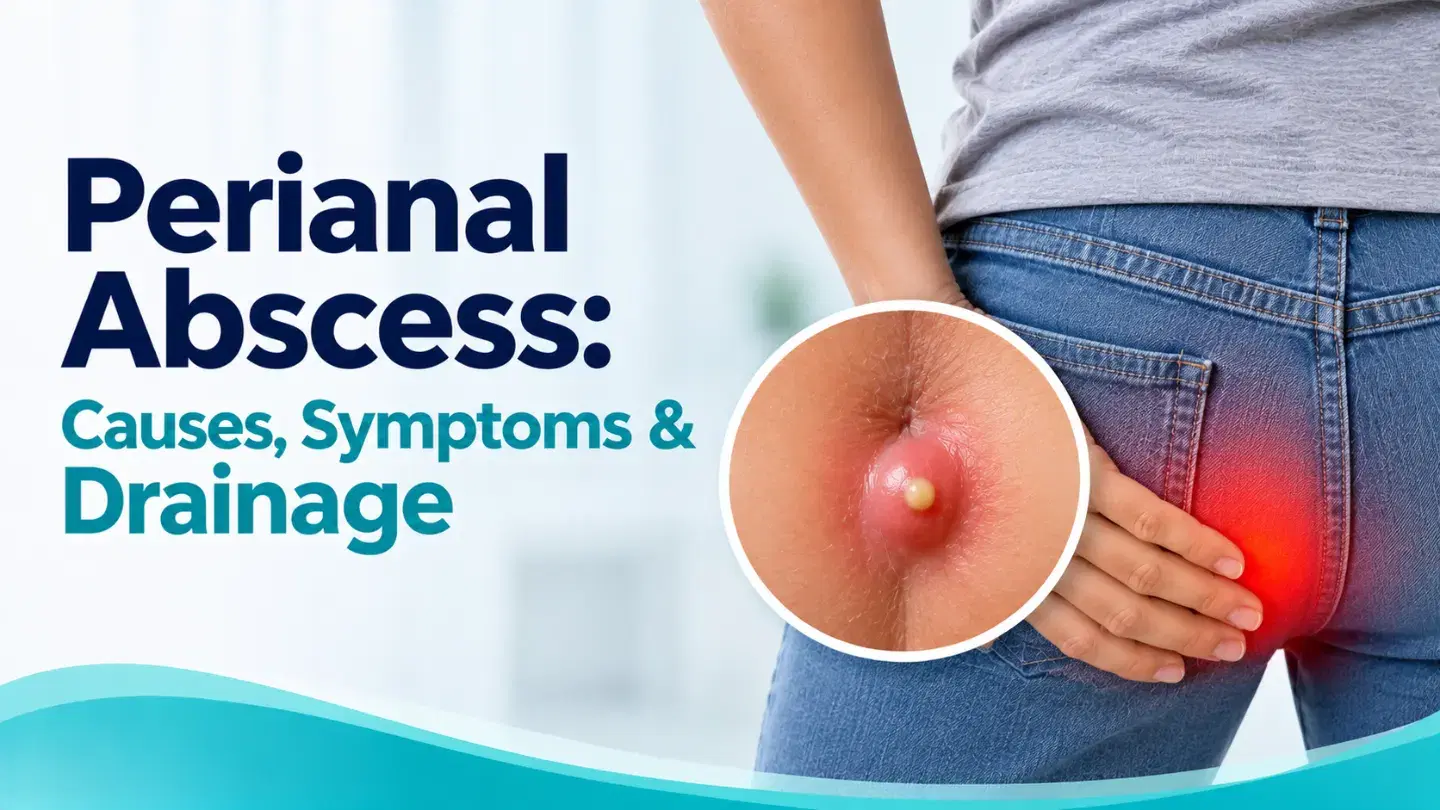
Perianal Abscess: Causes, Symptoms & Drainage
Perianal Abscess: Causes, Symptoms & Drainage Treatment
Few things are as acutely miserable as a perianal abscess. It arrives as a rapidly worsening, throbbing pain near the anus, making it agony to sit, move, or pass stool, and it often brings fever and a general feeling of being unwell. It is intensely private, and embarrassment leads many people to delay seeking help, hoping it will settle on its own. Unfortunately, it almost never does, and delay only prolongs the suffering.
The essential thing to understand about a perianal abscess is that it is a collection of trapped pus, and trapped pus needs to be released. This guide explains what causes a perianal abscess, how to recognise it, why drainage, rather than antibiotics alone, is the key treatment, how long it takes to heal, and the important connection to another condition, an anal fistula. Understanding it helps you get the prompt relief this painful problem demands.
What Is a Perianal Abscess?
A perianal abscess, sometimes called an anal or anorectal abscess, is a collection of pus that forms near the anus or rectum as a result of infection. To understand where it comes from, you need to know about the anal glands. Inside the anal canal are small glands that normally produce a little fluid to help with the passage of stool.
When one of these glands becomes blocked and infected, bacteria multiply and pus begins to collect. With nowhere to escape, the pus builds up under pressure, forming an abscess, a swollen, intensely painful pocket of infection near the anus. Doctors call this origin a cryptoglandular infection, and it accounts for most perianal abscesses.
A useful way to picture it is like a blocked, infected pore that swells into a painful boil, except located deep near the anus, where the surrounding area is rich in nerves and the trapped pus has little room to expand. That combination of trapped pus under pressure in a very sensitive area is exactly why a perianal abscess hurts so intensely and why it demands prompt attention.
What Causes a Perianal Abscess?
The large majority of perianal abscesses arise from the blocked, infected anal gland described above, which can happen to otherwise healthy people. However, certain conditions make them more likely or more severe, and knowing these helps identify who needs particular care:
- Crohn’s disease. This inflammatory bowel condition is strongly associated with perianal abscesses and fistulas, which can be complex and recurrent.
- Diabetes. Raised blood sugar impairs the body’s ability to fight infection, making abscesses more likely and potentially more serious.
- A weakened immune system, whether from illness or medication, increases both the risk and the danger of infection.
- Previous perianal abscess or fistula.
- Smoking, and sometimes constipation or diarrhoea that irritates the area.
In people with diabetes or a weakened immune system in particular, a perianal abscess can occasionally progress to a severe, rapidly spreading infection, which is a medical emergency. This is one reason that a painful anal swelling, especially with fever or spreading redness, should never be left to chance in these groups.
Perianal Abscess Symptoms
The symptoms of a perianal abscess usually come on over a day or two and worsen quickly. Common perianal abscess symptoms include:
- Severe, constant, throbbing pain near the anus, which typically worsens when sitting, moving, coughing, or passing stool.
- A tender, swollen lump near the anus, which may be red, warm, and firm to the touch.
- Redness and swelling of the surrounding skin.
- Discharge of pus, sometimes with blood or an unpleasant smell, if the abscess bursts and drains on its own, which often brings temporary relief of the pressure.
- Fever, chills, and a general feeling of being unwell, reflecting the infection.
- Difficulty sitting or finding a comfortable position.
Not all abscesses are easily visible. Deeper anorectal abscesses may cause intense deep pain, a feeling of fullness, and fever without an obvious external lump, which can make them harder to recognise. Any severe, worsening pain near the anus, particularly with fever, should prompt urgent medical assessment, because the underlying problem is unlikely to resolve without treatment.
Why Antibiotics Alone Are Not Enough
This is a point worth emphasising, because it surprises many people and explains why prompt medical care matters. A perianal abscess is a collection of trapped pus, and antibiotics, which travel through the bloodstream, penetrate poorly into a walled-off pocket of pus. They can help control infection spreading in the surrounding tissue, but they cannot clear the pus that is already trapped under pressure.
The analogy of a boil holds here: just as a large boil needs to be lanced to release the pus before it can truly heal, an abscess needs to be drained. Relying on antibiotics alone usually means the pain continues and the abscess persists or worsens. This is why the definitive treatment for a perianal abscess is a procedure to drain it, with antibiotics playing only a supporting role in certain situations.
Drainage: The Key Treatment
The definitive treatment for a perianal abscess is incision and drainage. In this procedure, a surgeon makes a small cut over the abscess to release the trapped pus, relieving the pressure and allowing the infection to clear. It is typically done under anaesthesia, either a local anaesthetic for a straightforward superficial abscess or a general or regional anaesthetic for deeper or more complex ones, to ensure it is done thoroughly and comfortably.
Once the pus is released, the pain often improves dramatically and quickly, which is a great relief after the intense discomfort that precedes treatment. The wound is usually left open rather than stitched closed, so that it can drain fully and heal from the inside out, which prevents the infection from being sealed in and recurring. Afterwards, care focuses on keeping the area clean, with warm sitz baths (sitting in warm water), simple pain relief, and good hygiene, along with keeping stools soft to make bowel movements comfortable during healing.
Antibiotics are added in specific situations, such as significant surrounding infection (cellulitis), diabetes, a weakened immune system, or certain heart conditions, but they complement drainage rather than replace it. At specialised centres like Bangalore Gastro Centre, prompt and thorough drainage is provided so that this painful condition is relieved quickly and safely.
How Long Does a Perianal Abscess Take to Heal?
After drainage, the immediate severe pain usually settles quickly, often within a day or two, as the pressure is relieved. The wound itself, however, takes longer to heal fully, typically a few weeks, because it is deliberately left open to heal from the base upward. During this time, the area needs regular care: warm sitz baths two or three times a day, gentle cleaning, keeping the wound area clean and dry between baths, and keeping stools soft with adequate fibre and fluids so that bowel movements do not disturb healing.
Most people can return to their normal activities fairly soon after drainage, even while the wound continues to heal. Your surgeon will give specific guidance on wound care and what to expect. The key is to follow the aftercare advice and attend any follow-up, both to ensure proper healing and to watch for the one common complication worth understanding: an anal fistula.
The Connection to Anal Fistula
An important part of understanding perianal abscesses is knowing what can follow them. In a significant proportion of cases, after an abscess has been drained, a small tunnel called an anal fistula develops, connecting the site of the original infected gland to the skin. This happens because the underlying gland tract can persist even after the pus has drained.
A fistula tends to cause recurring, lower-grade symptoms: a persistent or intermittent discharge of pus or fluid from a small opening near the anus, and sometimes repeated abscesses in the same area. If this happens, it is not a failure of the abscess treatment but a recognised, treatable sequel that may need its own procedure to cure. This is one reason follow-up after an abscess matters, and why recurring discharge or repeated abscesses should always be assessed. Being aware of this connection helps you recognise a fistula early if it develops, rather than being caught off guard.
Perianal Abscess vs Other Anal Problems
Because several conditions cause pain or swelling near the anus, it helps to understand how a perianal abscess differs from its neighbours, since the treatments are very different. A perianal abscess is defined by a rapidly developing, intensely painful, swollen lump, often with fever, reflecting an active collection of pus that needs draining.
An anal fissure, by contrast, is a small tear in the lining of the anal canal that causes sharp pain specifically during and after bowel movements, along with bright red bleeding, but no swelling or pus. Haemorrhoids (piles) typically cause painless bleeding, itching, or a soft lump, rather than the hot, throbbing, feverish swelling of an abscess. A pilonidal abscess causes similar pain and pus but is located higher up, near the tailbone in the cleft between the buttocks, rather than right at the anus. Distinguishing these matters because an abscess needs prompt drainage, a fissure needs stool softening and healing measures, and piles are managed differently again. This is exactly why a painful swelling near the anus should be examined rather than self-diagnosed, so that the right treatment is given quickly.
Caring for the Wound After Drainage
Good aftercare following drainage makes a real difference to comfort and healing, and it is simpler than many people fear. Because the wound is deliberately left open to heal from the inside out, the main goals are keeping it clean, allowing it to drain, and keeping bowel movements comfortable.
Warm sitz baths are the cornerstone: sitting in a few inches of warm water for ten to fifteen minutes, two or three times a day and especially after bowel movements, soothes the area, keeps it clean, and encourages healing. Gently cleaning the area with water and patting it dry, rather than harsh wiping, protects the healing tissue. Keeping stools soft with adequate fibre, fluids, and, if advised, a stool softener makes bowel movements far less daunting while the wound heals. Simple pain relief helps in the early days, and any dressings should be managed as your doctor advises. Most people find the severe pain gone within a day or two of drainage, with the open wound steadily closing over the following weeks. Attending follow-up is worthwhile, both to confirm proper healing and to catch any sign of a fistula developing early.
Perianal Abscess: Patient Questions Answered
What causes a perianal abscess?
Most perianal abscesses are caused by a small gland inside the anal canal becoming blocked and infected, so that bacteria multiply and pus collects, forming a painful swelling near the anus, a process doctors call cryptoglandular infection. It can happen to otherwise healthy people. Certain conditions increase the risk or severity, including Crohn’s disease, diabetes, a weakened immune system, previous abscesses or fistulas, and smoking. In people with diabetes or reduced immunity, abscesses can be more serious, which is why prompt assessment matters, particularly if there is fever or spreading redness.
Does a perianal abscess need surgery?
Yes, in almost all cases a perianal abscess needs to be drained through a procedure called incision and drainage, which is the definitive treatment. This is because the abscess is a pocket of trapped pus, and antibiotics alone cannot clear trapped pus effectively, they penetrate poorly into a walled-off collection. Draining the pus relieves the pressure and pain, often dramatically, and allows healing. The procedure is done under anaesthesia and is usually straightforward. Antibiotics are added only in specific situations, such as surrounding infection, diabetes, or reduced immunity, as a supporting measure alongside drainage.
How long does a perianal abscess take to heal?
After drainage, the severe pain usually settles within a day or two as the pressure is relieved. The wound itself takes longer, typically a few weeks, because it is deliberately left open to heal from the inside out, which prevents the infection being sealed in. During healing, the area needs regular care: warm sitz baths a few times daily, gentle cleaning, and keeping stools soft with fibre and fluids. Most people return to normal activities fairly soon, even while the wound continues to heal. Following the aftercare advice and attending follow-up support proper healing.
Can a perianal abscess heal on its own?
Occasionally a perianal abscess bursts and drains on its own, which temporarily relieves the pressure, but this is not a reliable or complete cure, and the infection often persists or recurs. Relying on an abscess to resolve by itself usually means prolonged pain and a risk of the infection spreading, which can be dangerous, especially in people with diabetes or reduced immunity. Proper drainage by a doctor ensures the pus is fully released and the area can heal correctly. Because of this, a perianal abscess should be assessed and treated promptly rather than left to chance.
Is a perianal abscess an emergency?
It should be treated as urgent. While a small, superficial abscess in an otherwise healthy person may be managed promptly rather than as a dire emergency, the intense pain alone usually warrants quick treatment. More importantly, in people with diabetes or a weakened immune system, or when there is high fever, rapidly spreading redness, or severe illness, a perianal abscess can progress to a serious, spreading infection that is a true emergency needing immediate care. Because it is hard to judge severity yourself, any significant painful anal swelling, especially with fever, should be assessed without delay.
The Bottom Line
A perianal abscess is one of the most painful conditions in this area of the body, but it is also one of the most satisfying to treat, because draining the trapped pus brings rapid, dramatic relief. The key lessons are simple: it is caused by an infected anal gland, it causes severe throbbing pain and often fever, and it will not reliably resolve on its own. Antibiotics alone are not the answer; the pus must be drained.
So the most important response is not to suffer in silence or wait it out, but to seek prompt treatment, which quickly relieves the pain and allows proper healing. Be aware, too, of the possibility of a fistula developing afterwards, which is treatable if it does. If you have a painful swelling near the anus, especially with fever or if you have diabetes, the specialists at Bangalore Gastro Centre can drain it promptly and safely, and manage any complication, turning an agonising problem into a swiftly resolved one.
This article is for general education and is not a substitute for personalised medical advice. A painful anal swelling with fever or spreading redness needs urgent medical care; please seek prompt assessment.