

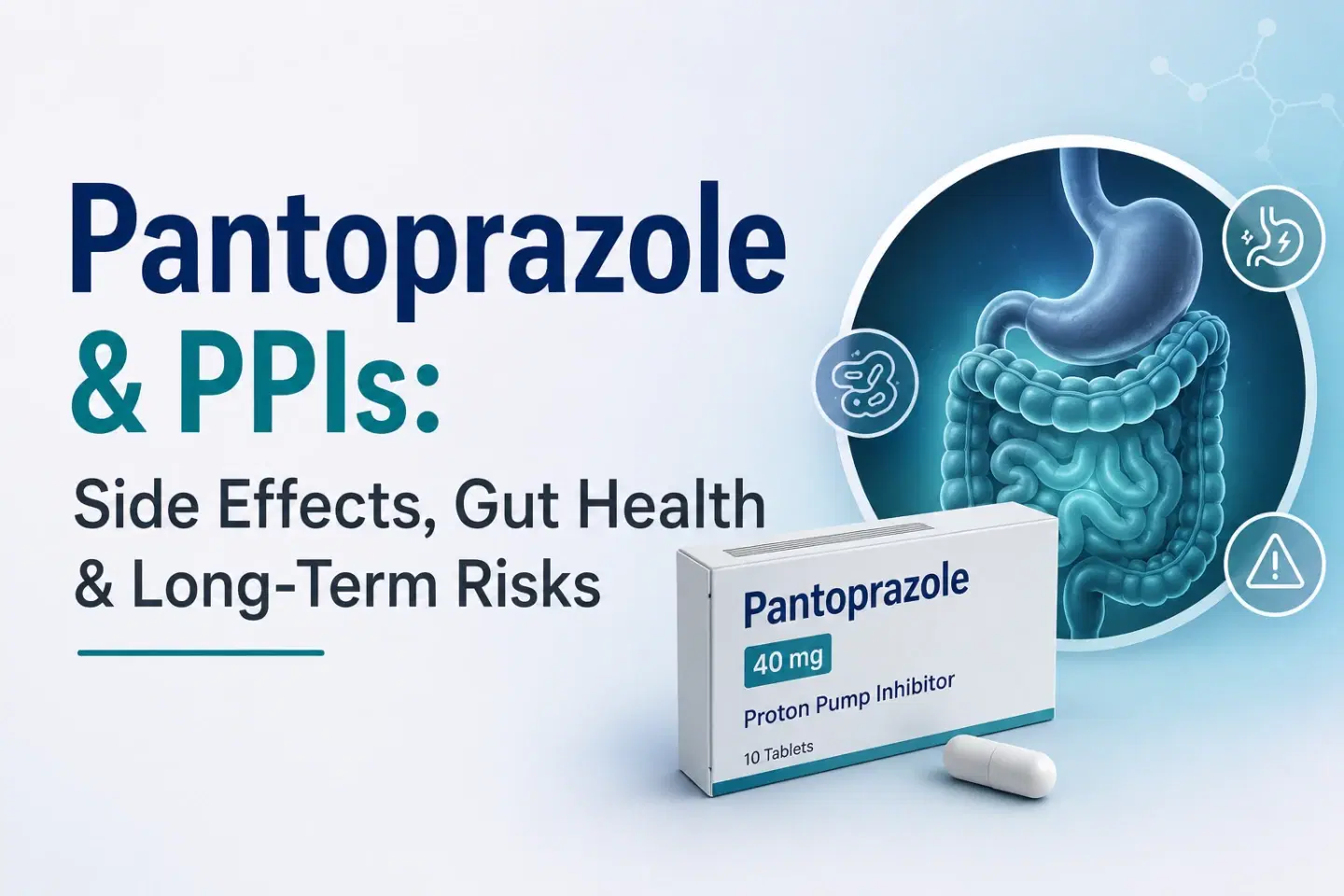
The Complete Guide to Pantoprazole & PPIs: Uses, Side Effects, and the Hidden Impact on Your Gut
It usually starts with a heavy meal. Perhaps it was a late-night biryani, an intensely spicy curry, or just the accumulated stress of a demanding workweek. You wake up at 2 AM with a familiar, uncomfortable burning sensation rising in your chest. You reach for the medicine cabinet. You pop a small pill. Within an hour, the fire goes out. Relief washes over you.
For millions of Indians, this medication is Pantoprazole.
It is an incredibly common household name. People treat it almost like a daily vitamin, taking it preemptively before wedding feasts or alongside their morning tea. But this sense of safety is deceptive. While these medications are modern medical marvels for treating acute severe acid-related disorders, they were never designed to be taken indefinitely without medical supervision.
When you turn off your stomach acid completely, day after day, month after month, you trigger a massive chain reaction throughout your entire body. Digestion changes. Nutrient absorption plummets. Even your immune system and your joints can begin to suffer.
This comprehensive guide will explain exactly how Proton pump inhibitors work, why Indian dietary habits make us so reliant on them, the profound long-term risks associated with suppressing stomach acid, and the medically documented connection between your gut, your immune system, and your overall health.
The Mechanics of Digestion: Why Your Stomach Needs Acid
To understand the medication, you must first understand the environment it alters. Your stomach is not just a storage bag for food. It is a highly active, aggressively acidic chemical processing plant.
The lining of your stomach is packed with specialized cells called parietal cells. These cells operate tiny internal mechanisms known as proton pumps. Their job is to secrete hydrogen and chloride ions, which combine to form hydrochloric acid. The environment inside a healthy human stomach is intensely acidic, normally sitting between a pH of 1.5 and 3.5. This acid is strong enough to dissolve certain metals.
You need this intense acid for three fundamental reasons. First, acid breaks down complex, dense proteins. Second, it activates pepsin, a digestive enzyme that is completely useless in a neutral pH environment. Third, stomach acid is your body's primary sterilization chamber. It instantly neutralizes and kills harmful bacteria, parasites, and pathogens hidden in the food and water you consume.
When you swallow PPI medications, the active compounds travel through your bloodstream and directly target these parietal cells. They covalently bind to the proton pumps, permanently shutting them down until the body can build new ones. This effectively turns off the acid faucet.
For a patient with a bleeding stomach ulcer, severe erosive esophagitis, or severe Gastroesophageal Reflux Disease (GERD), this acid suppression is a lifesaver. It gives the damaged, inflamed tissues the necessary time to heal without being constantly burned. But what happens when you use this powerful shut-off valve merely to mask the symptoms of poor lifestyle choices?
The Indian Context: Why We Rely So Heavily on Antacids
India is currently facing a silent epidemic of acidity and gastrointestinal distress. The reasons are deeply woven into our daily routines and cultural habits.
Many Indians start their day with tea or coffee on an entirely empty stomach. This instantly relaxes the lower esophageal sphincter (the valve between the stomach and food pipe) and stimulates acid production when there is no food to digest.
Furthermore, traditional Indian dinners are often the heaviest meal of the day, consumed at 9 PM or even 10 PM. We eat, and then we lie down to sleep shortly after. Gravity no longer keeps the stomach contents down. The rich, oily, and heavily spiced foods delay stomach emptying. The pressure builds, and acid washes back up into the esophagus.
Instead of addressing the late dinner time or the excessive consumption of refined carbohydrates, the modern reflex is to seek a quick pharmacological fix. Patients walk into local pharmacies and purchase strip after strip of these drugs over the counter. This creates a dangerous cycle of dependency. You eat poorly, you take a pill, the pain stops, so you eat poorly again.
The Dark Side of Acid Suppression: Short and Long-Term Risks
Short-term usage of acid suppressants—typically defined as a two to four-week course prescribed by a doctor—is generally very safe. You might experience minor issues like a mild headache, some nausea, or temporary changes in bowel habits.
The serious problems begin when patients self-prescribe for months or years. The side effects of PPIs taken over an extended duration are extensive and medically documented.
1. Severe Nutrient Malabsorption
Your body simply cannot extract nutrients from food without acid.
- Vitamin B12: Stomach acid is required to separate Vitamin B12 from dietary protein. Without acid, the B12 passes right through you. Chronic deficiency leads to severe fatigue, memory issues, and irreversible nerve damage.
- Calcium and Bone Health: Calcium requires an acidic environment to be ionized and absorbed in the intestines. Long-term acid suppression severely diminishes calcium absorption. Multiple medical studies indicate that prolonged use significantly increases the risk of bone fractures, osteopenia, and osteoporosis, especially in post-menopausal women. [Source: Reputable Medical Journal].
- Iron and Magnesium: Low stomach acid prevents the conversion of dietary iron into an absorbable state, leading to chronic anemia. Magnesium levels can also drop dangerously low, causing muscle cramps, heart palpitations, and extreme lethargy.
2. Increased Risk of Serious Infections
Remember that stomach acid is your sterilization chamber. When you remove the acid, you remove the security guards at the front door of your digestive tract. Bacteria that would normally die upon entering the stomach can now survive, multiply, and travel deeper into your intestines. Long-term users are at a significantly higher risk of developing severe intestinal infections like Clostridium difficile (C. diff), which causes violent, life-threatening diarrhea. They are also more susceptible to food poisoning from Salmonella and Campylobacter.
3. Kidney Health Concerns
Recent extensive observational studies have found a troubling link between long-term daily use of these medications and an increased risk of chronic kidney disease (CKD) and acute interstitial nephritis, a condition where the kidneys suddenly become inflamed.
The Deep Dive: The Gut Microbiome, Autoimmunity, and the Gut-Joint Axis
This is perhaps the most profound and least discussed consequence of chronic acid suppression. To understand this, we need to look deep into the large intestine.
Your gut is home to trillions of microorganisms—bacteria, fungi, and viruses—collectively known as the gut microbiome. A healthy microbiome heavily influences everything from your mood to your metabolism. Most importantly, roughly 70% of your entire immune system lives in your gut tissue (the Gut-Associated Lymphoid Tissue, or GALT).
When you continuously take Proton pump inhibitors, the pH of your entire gastrointestinal tract changes. Bacteria from your mouth and upper respiratory tract, which normally get destroyed in the stomach, are now able to migrate downward into the small intestine. This creates a condition known as SIBO (Small Intestinal Bacterial Overgrowth).
The presence of the wrong bacteria in the wrong places causes intense local inflammation. This inflammation begins to damage the delicate lining of your gut.
The intestinal wall is only one single cell thick. These cells are held together by "tight junctions." Under the stress of microbial imbalance (dysbiosis) and inflammation, these tight junctions loosen and break apart. This is a medical condition known as increased intestinal permeability, commonly referred to as "leaky gut."
The Traffic Analogy: How the Immune System Panics
Imagine your immune system as the traffic police in a chaotic, sprawling Indian city like Bengaluru. When the traffic lights work and the barricades (the gut barrier) are solid, everything flows smoothly. Cars stay in their lanes.
But when leaky gut occurs, the barricades fall. Suddenly, chaotic traffic—undigested food proteins, bacterial toxins, and pathogens—spills directly out of the digestive tract and into the bloodstream.
The traffic police (your immune system) absolutely panic. They see foreign invaders everywhere. They start wildly blowing whistles, putting up roadblocks, and attacking the invaders. This creates massive, systemic inflammation throughout your entire body.
The Autoimmune Trigger and the Gut-Joint Axis
When the immune system is in this state of chronic, hyper-vigilant panic, it makes mistakes. It creates antibodies to attack the foreign proteins leaking from the gut. However, some of these foreign proteins look structurally very similar to your body's own tissues.
Due to a phenomenon called "molecular mimicry," the confused immune system starts attacking your own body. This is the genesis of many autoimmune diseases.
If the immune system decides your thyroid tissue looks like the enemy, Hashimoto's Thyroiditis can develop. If it attacks your skin, psoriasis flares up. And very frequently, these confused antibodies attack the synovial fluid and lining of your joints.
This is the gut-joint axis. Chronic joint pain, morning stiffness, and conditions like Rheumatoid Arthritis are heavily influenced by the health of your gut microbiome. By continuously altering your gut pH with daily antacids, you are inadvertently creating an environment that fuels systemic inflammation and joint degradation.
Diet, Digestion, and Restoring Natural Balance
If medication isn't the long-term answer, how do you manage chronic acidity and protect your gut? The answer lies in fundamentally changing the way you eat and live. Diet is the most powerful medicine available.
- Mind the Gap: Leave at least three hours between your last meal and bedtime. If you sleep at 10:30 PM, your dinner must conclude by 7:30 PM.
- Portion Control and Carbohydrate Management: Large, heavy meals put intense mechanical pressure on the stomach valve. Reducing meal size helps tremendously. Furthermore, understanding how different Indian staple grains impact digestion is vital. To learn more about optimizing your staple foods for gut health, watch this detailed breakdown: Rice Vs Chapati | Which Is Best for Digestion? The Truth Explained | Bangalore Gastro Centre.
- Introduce Prebiotics and Probiotics: Help rebuild your damaged microbiome by consuming traditional Indian fermented foods. Unsweetened fresh homemade curd, traditional buttermilk (chaas) with cumin, and fermented kanji provide excellent bacterial diversity to heal the gut lining.
Tapering Off: The Acid Rebound Effect
A question doctors hear constantly is: How long can I take pantoprazole? According to medical guidelines, for standard heartburn or mild GERD, a course of 14 days is typical. For healing a gastric ulcer, a doctor might prescribe it for 4 to 8 weeks. Anything beyond 8 weeks requires a definitive medical diagnosis and active supervision from a gastroenterologist.
If you have been taking these medications daily for months or years, you absolutely cannot stop taking them cold turkey.
When you block acid production for a long time, your body senses the lack of acid. In response, it creates more and more parietal cells, desperately trying to overcome the drug's blockade. This is called hypergastrinemia.
If you suddenly stop the medication, all those extra acid-producing cells suddenly wake up without any chemical restraint. They flood your stomach with massive, unprecedented amounts of acid. This is known as "acid rebound hypersecretion." You will experience heartburn far worse than anything you had before you started the medication.
To safely stop, you must undergo a step-down approach. This involves slowly reducing the dose over several weeks. You might take the pill every other day, then every third day. Your doctor may temporarily bridge the gap with milder H2 blockers (like Famotidine) or basic liquid antacids that neutralize acid rather than stopping its production.
Beyond the Gut: The Respiratory Connection
It is important to note that severe acid reflux does not just stay in the stomach or the lower food pipe. In many cases, microscopic droplets of stomach acid can travel all the way up the esophagus and be inhaled directly into the lungs.
This is called micro-aspiration, or Laryngopharyngeal Reflux (LPR), often known as silent reflux.
These tiny acid droplets burn the delicate lining of the lungs and the vocal cords. Patients often present with a chronic, unexplained dry cough, a hoarse voice in the mornings, or frequent throat clearing. In severe cases, this aspirated acid can significantly worsen asthma symptoms or cause recurrent respiratory infections.
If you are experiencing a chronic cough alongside your digestive issues, the two are likely connected. The respiratory system and the digestive system share a tight anatomical border. For a deeper understanding of when your symptoms cross the line from a digestive issue to a pulmonary one, read this detailed resource: When to See a Pulmonologist: Respiratory Health Guide.
Patient Questions: Autoimmune Diseases, Gut Health, and Acid Reflux
When dealing with chronic digestive issues, patients understandably have many questions. Below, we address some of the most complex and frequently asked queries regarding gut health, medication, and systemic inflammation.
What exactly triggers autoimmune diseases in the gut?
Autoimmune diseases are generally understood to be triggered by a combination of genetic predisposition and an environmental catalyst. You might carry the genes for Rheumatoid Arthritis, but they may never activate unless triggered. The gut is the most common site for this environmental trigger.
When the gut lining is compromised (leaky gut) due to poor diet, chronic stress, or the long-term use of PPI medications, foreign proteins and bacterial endotoxins enter the blood. The immune system reacts violently. If this barrier is not repaired, the immune system remains in a permanent state of high alert, eventually losing its ability to distinguish between foreign invaders and your own healthy cells.
How does the gut play a role in joint health and inflammation?
The connection is established through the "gut-joint axis." Certain pathogenic bacteria in a dysbiotic gut produce specific proteins that closely resemble the proteins found in human joint tissue (synovium). When the immune system creates antibodies to fight the bad bacteria leaking from the gut, those same antibodies travel through the bloodstream and attack the joints. Managing gut health is often the first step in managing chronic inflammatory joint pain.
How long can I take pantoprazole safely?
The safest duration depends entirely on your medical diagnosis. For an acute flare-up of gastritis or heartburn, a 2-week over-the-counter course is the general limit. For diagnosed erosive esophagitis or a bleeding ulcer, gastroenterologists generally prescribe a strict 4 to 8-week regimen.
So, how long can I take pantoprazole if I have severe chronic issues? If you suffer from Barrett’s Esophagus or a severe hiatal hernia, your doctor might determine that the benefits of continuous acid suppression outweigh the risks. However, this must be a heavily monitored, clinical decision, not a self-prescribed habit.
What are the worst side effects of PPIs if I take them for years?
The most severe side effects of PPIs over a span of years include severe osteoporosis leading to hip and spine fractures, profound Vitamin B12 deficiency resulting in neurological damage, increased vulnerability to serious intestinal infections like C. diff, and an elevated risk of developing chronic kidney disease. Furthermore, the resulting microbiome dysbiosis can trigger or exacerbate systemic inflammatory conditions.
Are all Proton pump inhibitors the same?
While they all belong to the same class of drugs and share the same core mechanism of action (shutting down the acid pumps), they have slight molecular differences. Common names include Omeprazole, Rabeprazole, Esomeprazole, and Pantoprazole. Some may interact differently with other medications you are taking, particularly blood thinners like Clopidogrel. A doctor will choose the specific variant based on your overall medical profile.
When should I see a specialist instead of treating myself?
You should immediately consult a specialist if you experience "alarm symptoms." These include difficulty swallowing, unintentional weight loss, vomiting blood, black or tarry stools, or if your heartburn persists despite taking a 14-day course of medication.
Do not ignore chronic symptoms. At specialized facilities like Bangalore Gastro Centre, the medical approach goes far beyond just prescribing symptom-masking pills. Advanced diagnostics, including endoscopy and advanced microbiome analysis, are utilized to identify the exact root cause of your reflux or inflammation. Treating the root cause is the only way to achieve permanent healing.
Conclusion: Rethinking Acid Relief
Heartburn is painful, disruptive, and uncomfortable. It is entirely understandable why we reach for immediate relief. Pantoprazole and other Proton pump inhibitors are incredibly effective at putting out the fire quickly.
However, we must stop viewing them as harmless daily supplements.
Your stomach acid is a vital biological necessity. It extracts the nutrients that build your bones and power your brain. It sterilizes your internal environment. When you suppress it endlessly, the side effects of PPIs ripple outward, disrupting your gut microbiome, weakening your bones, and potentially triggering systemic immune confusion.
If you find yourself frequently asking, "How long can I take pantoprazole?", it is time to step back and evaluate your health. Listen to your body. Chronic acid reflux is a loud warning signal that your diet, your lifestyle, or your gut anatomy requires professional attention. Address the root cause. Adjust your meal timings. Manage your stress. And when the problem persists, step away from the pharmacy counter and seek expert medical guidance. Your gut—and your overall health—will thank you.