


Liver Function Tests (LFT): Understanding Your Results, Gut Health, and Systemic Inflammation
The human liver is a quiet workhorse. It performs over five hundred distinct physiological functions every single minute of your life. It filters toxins. It produces bile to digest your meals. It stores vitamins, manages blood sugar, and synthesizes the proteins that allow your blood to clot. Yet, despite its monumental workload, the liver rarely complains until severe damage has occurred.
Because the liver lacks pain receptors in its inner tissues, you cannot feel it struggling. How do we monitor this silent engine? We rely on diagnostics. A comprehensive liver function test is the most effective window into your metabolic health.
In India, our lifestyle has transformed dramatically over the last two decades. We have transitioned from physically demanding routines to highly sedentary desk jobs, while our diets remain rich in carbohydrates, refined oils, and complex spices. This shift has triggered a massive rise in metabolic disorders. Non-alcoholic fatty liver disease (NAFLD) is now incredibly common among Indian adults aged 25 to 55.
Understanding your lab results is not just for doctors. Taking charge of your health requires basic medical literacy. This comprehensive guide will break down the science behind your liver blood test, explain how the digestive system connects to your joints, and explore what happens when the immune system mistakenly attacks this vital organ.
What is an LFT Test?
To put it simply, an LFT test is a specialized blood panel designed to measure the levels of specific enzymes, proteins, and waste products in your bloodstream.
Your doctor will typically order this screening during an annual physical, or if you present with symptoms like unexplained fatigue, abdominal swelling, dark urine, or sudden joint pain. The procedure is straightforward. A phlebotomist draws a small sample of blood from a vein in your arm. This sample is then spun down in a centrifuge at a laboratory to separate the serum, which is analyzed using automated biochemical pathways.
While a basic liver blood test does not strictly require fasting, many physicians in India prefer a 10 to 12-hour fasting sample because LFTs are often bundled with fasting blood sugar and lipid panels. Additionally, taking the test fasted ensures the most stable, standardized baseline possible.
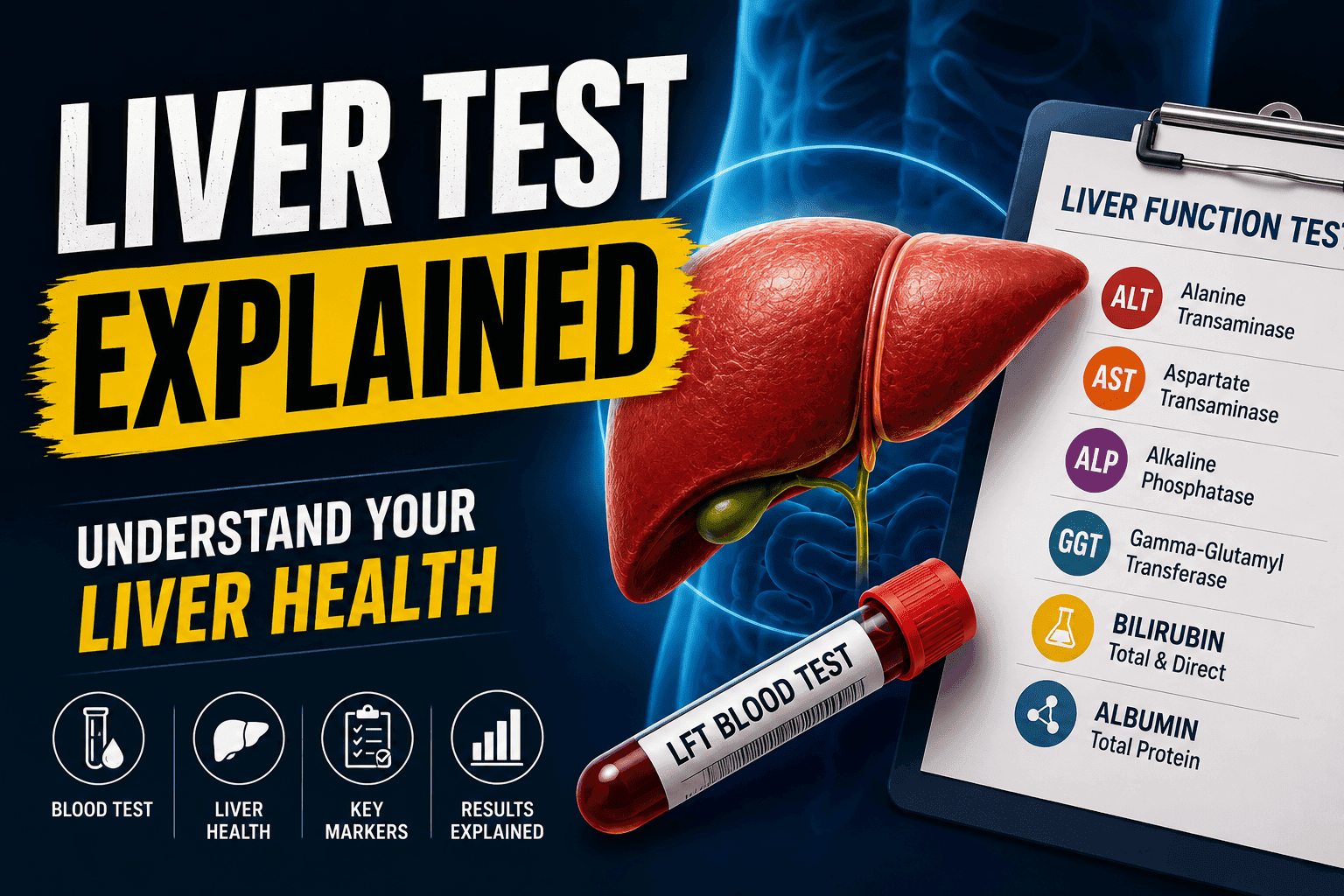
The Biomarkers: What Does LFT Show?
When you receive your lab report, you will see a long list of acronyms that look like an alphabet soup. AST. ALT. ALP. GGT.
What does LFT show exactly? It shows a snapshot of cellular integrity. Your liver is made of billions of cells called hepatocytes. Inside these cells are specific enzymes that help process amino acids. When these cells are healthy and intact, the enzymes stay inside. When the liver is inflamed, injured, or infected, the cell membranes become permeable or rupture entirely.
Let's examine the specific markers you will see on your report.
Alanine Transaminase (ALT) and Aspartate Transaminase (AST)
ALT and AST are the two most prominent markers of hepatic inflammation. ALT is found almost exclusively in the liver. AST is found in the liver, but also in heart muscle and skeletal muscle.
If your lab report indicates elevated liver enzymes, it is usually referring to these two transaminases. High ALT levels strongly suggest that hepatocytes are actively dying or sustaining damage, leaking their contents into the bloodstream. A doctor will often look at the AST/ALT ratio to determine if the damage is related to alcohol consumption, viral hepatitis, or fatty liver disease.
Alkaline Phosphatase (ALP) and Gamma-Glutamyl Transferase (GGT)
While ALT and AST tell us about the liver cells themselves, ALP and GGT tell us about the plumbing system. The liver produces bile, which travels through tiny tubes called bile ducts down into the gallbladder and small intestine.
If a gallstone blocks a bile duct, or if the ducts become inflamed due to an autoimmune condition, the pressure builds up. This causes ALP and GGT to spill into the blood. Therefore, when patients ask what does LFT show regarding bile flow, we look directly at these two specific markers.
Bilirubin (Total and Direct)
Bilirubin is a yellow waste product created when your body naturally breaks down old, worn-out red blood cells. The liver's job is to grab this toxic bilirubin from the blood, process it (making it water-soluble), and excrete it into the bile so it can leave your body in your stool.
If the liver is failing, it cannot process bilirubin fast enough. The yellow pigment builds up in the blood, eventually seeping into the skin and the whites of the eyes, causing a condition known as jaundice.
Albumin and Total Protein
Enzymes measure damage. Proteins measure function. Albumin is a massive, complex protein synthesized exclusively by the liver. It acts like a sponge in your blood vessels, maintaining osmotic pressure and preventing fluid from leaking into surrounding tissues.
If your liver function test reveals low albumin levels, it suggests chronic, long-term liver impairment. The factory has slowed down. This is why patients with advanced cirrhosis often develop severe swelling (edema) in their legs and abdomen.
Interpreting the Data: Normal Liver Function Values
It is essential to understand that reference ranges can vary slightly from one laboratory to another based on the specific chemical reagents they use. However, standard medical consensus provides a generally accepted baseline.
Normal liver function values typically fall within these parameters for healthy Indian adults:
- ALT: 29 to 33 units per liter (U/L)
- AST: 8 to 48 U/L
- ALP: 40 to 129 U/L
- Albumin: 3.5 to 5.0 grams per deciliter (g/dL)
- Total Bilirubin: 0.1 to 1.2 milligrams per deciliter (mg/dL)
However, numbers that are consistently double or triple the upper limit require immediate medical investigation. Sustained elevated liver enzymes are a red flag for chronic underlying inflammation that must be addressed before irreversible scarring (fibrosis) begins.
The Gut-Liver Axis: Where Digestion Meets Inflammation
You cannot fully understand your liver function test without understanding the gut. In recent years, gastroenterology has shifted heavily toward studying the gut microbiome.
Anatomically, the liver and the intestines are intimately connected by the portal vein. Think of the portal vein as a massive biological superhighway. Every single drop of nutrient-rich blood coming from your stomach, small intestine, and large intestine flows directly into the liver for inspection and processing before it is allowed to enter the rest of the body.
But this superhighway carries more than just nutrients. Your gut is home to trillions of bacteria. When you maintain a healthy balance of flora, these bacteria produce beneficial short-chain fatty acids that protect the liver. However, poor dietary choices, chronic stress, and overuse of antibiotics can kill off the good bacteria, leading to a state called dysbiosis.
Leaky Gut and Systemic Shock
When dysbiosis occurs, the tight junctions between the cells lining your intestines begin to loosen. This is commonly referred to as "leaky gut" (increased intestinal permeability). Toxic bacterial byproducts, specifically lipopolysaccharides (LPS), slip through these gaps, enter the portal vein, and flood the liver.
The liver contains specialized immune defenders called Kupffer cells. When they detect this massive influx of bacterial toxins, they sound the alarm, triggering a massive inflammatory response. This chronic, low-grade inflammation damages hepatocytes. When you get your blood drawn, this invisible internal battle is exactly what causes your doctor to point out elevated liver enzymes on your report.
Autoimmunity: When the Liver is Under Attack
Sometimes, elevated liver enzymes are not caused by fatty foods, alcohol, or a leaky gut. Sometimes, the threat comes from within. Autoimmune liver diseases occur when your body's defense mechanisms misidentify your own healthy tissues as dangerous foreign invaders.
Imagine a chaotic traffic intersection in a busy Indian city like Bengaluru or Mumbai during peak rush hour, but all the traffic lights have completely failed. Cars, buses, auto-rickshaws, and pedestrians are moving in every direction. Horns are blaring. The traffic police are overwhelmed and start directing vehicles into oncoming traffic by mistake. Complete chaos ensues.
That is exactly what happens when your immune system gets confused. It loses its regulatory signals. It can no longer distinguish between a dangerous virus and your healthy liver cells. The resulting immune attack causes profound, rapid tissue destruction.
Types of Autoimmune Liver Conditions
There are two primary conditions to be aware of:
- Autoimmune Hepatitis (AIH): The immune system attacks the hepatocytes directly. This leads to wildly elevated AST and ALT levels. Left untreated, AIH can lead to rapid cirrhosis and liver failure.
- Primary Biliary Cholangitis (PBC): The immune system specifically targets the small bile ducts within the liver. As these ducts are destroyed, bile backs up. This condition is heavily characterized by elevated ALP and GGT levels, alongside intense itching and chronic fatigue.
At specialized centers like Bangalore Gastro Centre, advanced diagnostics help identify these specific autoimmune markers early. A standard liver function test is just the beginning; diagnosing autoimmunity requires looking for specific autoantibodies (like ANA or ASMA) and sometimes performing a liver biopsy.
Diet, the Microbiome, and Indian Lifestyles
How do we protect our gut-liver axis? The answer lies heavily in what we consume on a daily basis.
The traditional Indian diet has many highly beneficial elements. Spices like turmeric (curcumin) are incredibly potent anti-inflammatories. However, modern urban Indian diets have skewed heavily toward refined carbohydrates, processed sugars, and unhealthy fats.
When you consume excessive amounts of simple carbohydrates, the liver converts the excess glucose into triglycerides, storing them as fat directly inside the liver cells. This is the mechanism behind fatty liver disease. Over time, the fat oxidizes, causing inflammation that pushes your LFT test markers out of the normal range.
Dietary fiber is the ultimate food for a healthy microbiome. Fermented foods like natural yogurt (curd), buttermilk, and traditional idli batter provide excellent probiotics. High-fiber whole grains keep the digestive tract moving and prevent the buildup of toxins that can leak into the portal vein.
Choosing the right staple grains is a common point of confusion for many patients trying to improve their digestion and metabolic health. For a detailed breakdown of how common Indian staples impact your gut, watch this clinical breakdown: Rice Vs Chapati | Which Is Best for Digestion? The Truth Explained | Bangalore Gastro Centre.
Patient Questions: Autoimmune Diseases and Liver Health (FAQ)
Understanding complex medical data can be overwhelming. Below, we address the most common patient questions regarding liver blood test results, gut health, and systemic inflammation.
What triggers autoimmune liver diseases?
The exact trigger for autoimmune conditions remains a subject of intense medical research [Source: Journal of Hepatology]. However, scientists believe it is a combination of genetic predisposition and an environmental trigger. You might carry the genes for Autoimmune Hepatitis, but it remains dormant until a specific trigger—such as a severe viral infection, exposure to certain environmental toxins, or extreme, prolonged stress—activates the confused immune response.
How does the gut play a role in autoimmunity?
The gut houses nearly 70% of your body's entire immune system. The mucosal lining of your intestines is constantly interacting with the outside world via the food you eat. If chronic poor diet or antibiotic overuse destroys the healthy microbiome, the intestinal barrier weakens. Toxins leak into the bloodstream. This constant, low-level alarm fatigues the immune system, causing it to misfire and attack healthy organs, including the liver and the joints. Fixing the gut is often the first step in managing systemic autoimmune flares.
What does LFT show if I have an autoimmune issue?
A standard liver function test will not explicitly say "you have an autoimmune disease." Instead, it shows patterns of damage. If your ALT and AST are persistently high (sometimes in the hundreds or thousands) without any history of alcohol abuse or viral hepatitis, a doctor will suspect Autoimmune Hepatitis. If your ALP is isolated and elevated for months, they will suspect Primary Biliary Cholangitis. The LFT is the smoke alarm; further specialized antibody testing is required to find the actual fire.
Are normal liver function values a guarantee that my liver is completely healthy?
Not entirely. While normal liver function values are highly reassuring, they represent a snapshot in time. The liver is incredibly resilient and can sometimes maintain normal enzyme levels even when early scarring (fibrosis) has begun. If you have severe metabolic risk factors—such as obesity, type 2 diabetes, or high cholesterol—your doctor may recommend an ultrasound or a FibroScan to physically check the stiffness of the liver, regardless of what the blood work shows.
When should I see a specialist for elevated liver enzymes?
You should consult a gastroenterologist or hepatologist if your liver blood test shows enzyme levels that are more than twice the upper limit of normal, or if mild elevations persist for more than three to six months. Immediate medical attention is required if abnormal labs are accompanied by physical symptoms like jaundice (yellowing of eyes/skin), severe abdominal pain, dark urine, or extreme, unexplained lethargy.
Conclusion: Taking Control of Your Metabolic Health
Your liver is the quiet guardian of your internal ecosystem. It filters, builds, and regulates. The science of hepatology is evolving rapidly, proving that this organ does not operate in isolation. It is deeply connected to your gut microbiome, your joint health, and the intricate balance of your immune system.
The next time your physician hands you a lab report, you will no longer have to wonder about the numbers. You now know what an AST marker means. You understand why an inflamed gut can lead to an inflamed liver. A regular liver function test is one of the most powerful tools you have for early detection and preventive health.
If you are concerned about your recent blood work, or if you are experiencing symptoms of systemic inflammation and poor gut health, do not wait for the damage to progress. Comprehensive, expert evaluation is essential. For advanced diagnostic care and personalized treatment plans in India, specialized facilities like Bangalore Gastro Centre offer the expertise required to protect your liver and restore your metabolic harmony. Take proactive steps today to ensure your body's silent engine continues to run smoothly for decades to come.