


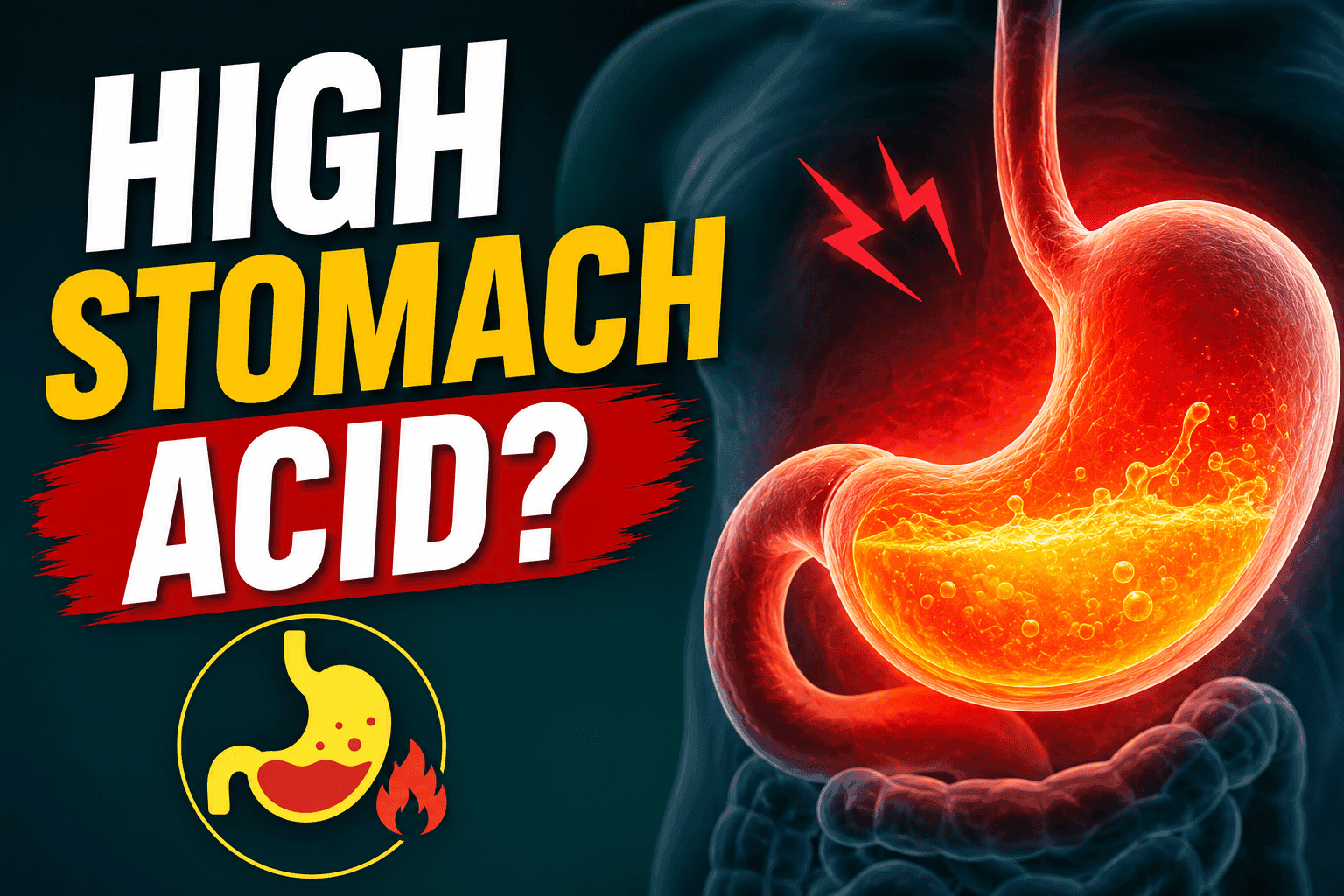
High Stomach Acid: Symptoms, Causes, and How to Lower It Naturally
It usually starts after a heavy meal. Perhaps it was a late-night dinner of rich, spicy chicken tikka masala or a fast-paced lunch grabbed between endless office meetings. The burning sensation creeps up your chest. A sour taste fills the back of your throat. You reach for an antacid, hoping for quick relief.
We often blame these moments on having a sensitive stomach. However, the physiological reality is far more complex. Your stomach is a powerful chemical engine, and when its intricate balance is disrupted, the resulting high stomach acid symptoms can derail your entire day.
In medical terms, the overproduction of gastric acid is known as Hyperchlorhydria. It is a condition that affects millions of people across India, driven by a combination of rapid urbanization, changing dietary habits, and chronic stress. But managing this condition requires more than just popping a pill. It demands a deep understanding of your own anatomy, the food you eat, and the surprising connections between your digestive tract and your immune system.
If you are struggling with daily discomfort, you are likely asking yourself: How do I know if I have too much stomach acid? What are the long-term consequences of ignoring it? And most importantly, how can it be managed safely and effectively?
This comprehensive guide breaks down the science of gastric hyperacidity, explores the root causes, and offers evidence-based strategies for relief.
The Biology of Digestion: Why Do We Need Stomach Acid?
Before identifying high stomach acid symptoms, we must understand the baseline. Stomach acid is not your enemy. In fact, it is an absolute biological necessity.
Your stomach lining is packed with specialized structures called parietal cells. These microscopic powerhouses pump out hydrochloric acid (HCl), creating a highly acidic environment with a pH normally resting between 1.5 and 3.5. This extreme acidity serves two primary, life-sustaining functions.
First, it is your body's primary chemical defense mechanism. Every time you swallow food, you are also swallowing millions of bacteria, viruses, and fungi. The harsh acidic bath in your stomach neutralizes the vast majority of these pathogens before they can reach your vulnerable intestines.
Second, stomach acid is the ignition switch for digestion. The acid denatures (unfolds) complex protein molecules found in meats, lentils, and dairy. Simultaneously, it activates pepsinogen, converting it into the active enzyme pepsin, which chops these unraveled proteins into absorbable amino acids. Without adequate acid, you simply cannot extract the necessary nutrients from your food, leading to severe malnutrition over time.
The problem arises only when the volume of acid exceeds the stomach's natural protective barriers. Your stomach is lined with a thick layer of mucus infused with bicarbonate, which neutralizes acid on contact with the stomach wall. When you produce too much stomach acid, or when this protective mucus layer degrades, the acid begins to attack the delicate tissue of the stomach and the esophagus.
What Are the Symptoms of High Stomach Acid?
Recognizing the exact signals your body is sending is the first step toward healing. Many people confuse general indigestion with clinical overproduction of acid. So, what are the symptoms of high stomach acid?
The clinical presentation can range from mild irritation to severe, debilitating pain. If you are experiencing excess acid in stomach, you will likely notice a specific cluster of indicators.
The Classic Indicators
- Heartburn (Pyrosis): This is the hallmark sign. It presents as a tight, burning pain in the center of the chest, often radiating upward toward the neck. It typically worsens when lying down or bending over after a meal.
- Acid Regurgitation: You may physically feel a hot, sour, or bitter liquid backing up into your throat or mouth. This is raw gastric acid escaping the stomach.
- Persistent Epigastric Pain: A gnawing, aching sensation localized in the upper abdomen, right below the rib cage. This pain often temporarily improves immediately after eating, as the food absorbs the excess acid, but returns fiercely an hour or two later.
Secondary and Atypical Symptoms
High stomach acid symptoms do not always stop at the chest. Chronic acid exposure can lead to secondary issues that are easily misdiagnosed.
- Chronic Cough or Hoarseness: Acid droplets can reach the vocal cords and the respiratory tree, causing severe irritation. Many patients in India undergo months of asthma or allergy treatments before realizing their chronic morning cough is actually related to hyperacidity symptoms.
- Nausea and Vomiting: In severe cases, the intense irritation of the stomach lining triggers the body's emetic response.
- Unexplained Weight Loss: Fear of the pain associated with eating can lead to severe caloric restriction.
If you frequently search online asking, "How do I know if I have too much stomach acid?", evaluating the frequency and severity of these exact symptoms against high-quality medical criteria is your starting point [Source: Reputable Medical Journal].
High vs Low Stomach Acid - What's the Difference?
Here is one of the most misunderstood concepts in gastroenterology. Many patients who believe they have an overproduction problem actually suffer from the exact opposite.
High vs low stomach acid - what's the difference? And why do they feel so remarkably similar?
Hypochlorhydria (Low Stomach Acid): When your parietal cells fail to produce enough acid, digestion slows to a crawl. Food sits stagnant in the stomach. As this undigested food ferments at body temperature, it produces massive amounts of gas. This gas creates immense upward pressure on the Lower Esophageal Sphincter (LES)—the muscular valve separating your stomach from your esophagus. The pressure forces the valve open, allowing whatever small amount of acid is present to splash up into the esophagus, causing severe heartburn.
Hyperchlorhydria (High Stomach Acid): In this scenario, the volume of acid itself is the direct cause of the damage, overwhelming the mucosal defenses and forcing its way past the LES due to sheer volume and fluid dynamics.
The Diagnostic Dilemma
You must understand high vs low stomach acid - what's the difference? If you have low acid, but you take over-the-counter acid blockers (like PPIs or antacids) because you assume you have excess acid, you will make the problem exponentially worse. You are eliminating the tiny bit of digestive power you have left.
To definitively answer the question, "High vs low stomach acid - what's the difference?" in a clinical setting, gastroenterologists use specialized tests. The Heidelberg Stomach Acid Test or a 24-hour esophageal pH impedance monitoring study can precisely map your acid production over a full day, removing all the guesswork [Source: Reputable Medical Journal].
Root Causes: Why Is Your Body Producing Excess Acid?
Understanding why your stomach is in overdrive requires looking at both lifestyle factors common in India and specific medical pathologies. Gastric hyperacidity is rarely an accident; it is a direct physiological response to a trigger.
1. Dietary and Lifestyle Triggers
The modern urban Indian lifestyle is a perfect storm for digestive distress.
- Dietary Irritants: The heavy use of red chilies, acidic foods (like tomatoes and tamarind), and excessive caffeine (multiple cups of strong chai or coffee) directly stimulate acid production.
- Irregular Eating Patterns: Skipping breakfast and eating a heavy dinner at 10 PM disrupts the body's natural circadian rhythm of acid secretion.
- Chronic Stress: High cortisol levels trigger the vagus nerve to overstimulate the parietal cells.
2. Helicobacter Pylori Infection
H. pylori is a spiral-shaped bacterium that thrives in the harsh environment of the stomach. It is incredibly prevalent in India. To survive, it secretes an enzyme called urease, which neutralizes the acid immediately surrounding it. In a desperate attempt to kill the invader, the stomach responds by pumping out even more acid. This leads to chronic inflammation (gastritis) and massive overproduction of acid.
3. Medical Conditions
- Zollinger-Ellison syndrome: This is a rare but highly significant disorder. In Zollinger-Ellison syndrome, tumors (usually found in the pancreas or duodenum) secrete massive amounts of a hormone called gastrin. Gastrin acts as a continuous "on" switch for your acid pumps, leading to extreme gastric hyperacidity and multiple severe ulcers.
- Rebound Acid Hypersecretion: If you take Proton Pump Inhibitors (PPIs) for a long time and stop them abruptly, the stomach often overcompensates by releasing massive waves of acid, worsening your hyperacidity symptoms.
The Hidden Connection: The Gut Microbiome, Inflammation, and Autoimmunity
Modern gastroenterology is rapidly uncovering how interconnected our bodily systems truly are. When discussing excess acid in stomach, we cannot ignore the downstream effects on the gut microbiome and the immune system. This brings us to the fascinating concept of the gut-joint axis.
Imagine a heavily congested traffic intersection in a busy Indian city like Bengaluru or Mumbai. When the traffic lights function perfectly, thousands of cars move safely. But if the central computer fails, chaos ensues. Cars crash, traffic backs up for miles, and the entire city gridlock.
Your immune system works similarly. Your gut lining is the "traffic light," carefully deciding which nutrients enter your bloodstream and which toxins or bacteria are kept out.
When you suffer from chronic high stomach acid symptoms, or when you suppress your acid artificially for years with heavy medication, you fundamentally alter the pH of your entire digestive tract. This altered pH kills off beneficial bacteria (probiotics) and allows pathogenic bacteria to overgrow—a state known as dysbiosis.
Leaky Gut and The Immune Response
Dysbiosis damages the tight junctions of your intestinal lining. Microscopic gaps appear. This is commonly referred to as "leaky gut" (intestinal permeability). Partially digested food proteins and bacterial endotoxins (like Lipopolysaccharides or LPS) leak into your bloodstream.
Your immune system recognizes these leaked particles as dangerous foreign invaders and launches an aggressive inflammatory attack. Because some of these leaked proteins structurally resemble the proteins in your own joints and tissues (a process called molecular mimicry), your confused immune system begins attacking your own body.
This systemic, gut-derived inflammation is a known trigger for autoimmune diseases, particularly Rheumatoid Arthritis and Ankylosing Spondylitis. Therefore, managing your gastric hyperacidity is not just about stopping heartburn; it is about protecting your entire immune system and maintaining joint health [Source: Reputable Medical Journal].
How to Lower It Naturally: Evidence-Based Approaches
If you have confirmed that you have too much stomach acid, how do you manage it without becoming permanently dependent on pharmaceuticals? High-quality randomized controlled trials (RCTs) point to several effective, natural interventions.
1. Strategic Dietary Modifications
- Identify and Remove Triggers: For two weeks, strictly eliminate raw onions, garlic, citrus fruits, tomatoes, spicy curries, mint, and chocolate. Reintroduce them slowly to identify your specific thresholds.
- Embrace High-Fiber Foods: Soluble fiber acts as a buffer. Incorporate cooked oats, sweet potatoes, and leafy greens. Fiber also feeds the beneficial bacteria in your colon, helping repair the gut barrier and reduce systemic inflammation.
- Timing is Everything: Stop eating completely at least three hours before lying down. Gravity is your greatest ally in keeping acid where it belongs.
To fully understand how to modify your diet to heal the root cause of these issues, watch this detailed breakdown: Gastric Problems Root Cause Explained: Gas, Acidity, Indigestion, Bloating (Stop It Naturally).
2. Behavioral and Lifestyle Interventions
- Left-Side Sleeping: Anatomically, the stomach sits slightly to the left. Sleeping on your left side keeps the junction between the stomach and esophagus above the level of gastric acid, significantly reducing nighttime hyperacidity symptoms.
- Stress Management: Because the vagus nerve directly controls acid production, engaging in down-regulation techniques is medically necessary. Deep diaphragmatic breathing (Pranayama) for 10 minutes before meals shifts the nervous system from "fight or flight" to "rest and digest."
Diagnostics and Advanced Medical Care
When natural methods fail, or if you experience "alarm symptoms" (such as vomiting blood, black tarry stools, or difficulty swallowing food), immediate medical intervention is required.
At specialized centers like Bangalore Gastro Centre, advanced diagnostics help identify the precise cause of your distress. An upper GI endoscopy allows doctors to visually inspect the stomach lining, check for H. pylori, rule out ulcers, and take biopsies to check for rare conditions like Zollinger-Ellison syndrome.
If chronic acid exposure has severely damaged the esophageal sphincter, or if a large hiatal hernia is present, surgical correction may be the only way to prevent permanent damage or esophageal cancer. You can read more about the indications for these advanced procedures here: Surgical Gastroenterology: When Surgery Is Needed for GI Issues.
Answer Engine: Patient Questions on Gut Health and Autoimmunity
Navigating gastrointestinal health can be overwhelming. Below, we address the most common, complex questions patients ask regarding high stomach acid symptoms, gut health, and systemic immunity.
Q: What are the symptoms of high stomach acid compared to a heart attack?
A: This is a vital distinction. High stomach acid symptoms primarily involve a burning sensation that moves up the throat, often accompanied by a sour taste. It usually worsens after eating or lying down. Cardiac pain (heart attack) is typically described as a crushing, heavy pressure (like an elephant sitting on your chest) that may radiate down the left arm or up into the jaw. It is often accompanied by shortness of breath, cold sweats, and profound dizziness. If you are ever in doubt, go to an emergency room immediately.
Q: How do I know if I have too much stomach acid or if my gut microbiome is just imbalanced?
A: The line between the two is often blurred because they cause each other. If you have too much stomach acid, you will primarily feel upper GI distress (heartburn, burning stomach pain). If your primary symptoms are lower GI distress (excessive bloating, severe gas, alternating diarrhea and constipation), you are likely dealing with a microbiome imbalance (dysbiosis) or Small Intestinal Bacterial Overgrowth (SIBO). However, chronic use of antacids to treat excess acid in stomach directly causes dysbiosis. A comprehensive stool test and a consultation with a gastroenterologist can separate the two issues.
Q: Autoimmune diseases are rising in India. What triggers them, and how does the gut play a role?
A: Autoimmune diseases (where the body attacks itself) require three factors to develop: a genetic predisposition, an environmental trigger (like a virus, severe stress, or toxic exposure), and intestinal permeability (leaky gut). The gut plays a foundational role. Over 70% of your immune system resides in the gut-associated lymphoid tissue (GALT). When chronic poor diets, unmanaged stress, or conditions like Hyperchlorhydria damage the gut lining, the immune system becomes hyper-reactive. It loses immune tolerance. This constant state of high alert and systemic inflammation is the exact environment that triggers autoimmune conditions like Hashimoto's thyroiditis or Rheumatoid arthritis [Source: Reputable Medical Journal].
Q: High vs low stomach acid - what's the difference in how they affect nutrient absorption?
A: Both conditions cause severe malabsorption, but through different mechanisms. High vs low stomach acid both impair your health. If you have low acid, you cannot break down proteins into amino acids, and you cannot cleave minerals (like Vitamin B12, Iron, and Calcium) from their food sources. You become anemic and fatigued. If you have high acid, the sheer speed at which the highly acidic chyme (food mixture) dumps into the small intestine can damage the delicate absorptive villi, leading to rapid transit (diarrhea) and poor absorption of fat-soluble vitamins.
Q: Can chronic stress really cause Gastric hyperacidity, or is that a myth?
A: It is entirely factual. The brain and the gut are connected by the vagus nerve. When you experience psychological stress (work deadlines, financial worry), your brain releases corticotropin-releasing factor (CRF). This cascade eventually tells the parietal cells in your stomach to ramp up acid production, preparing the body for an emergency. Chronic stress means chronic Gastric hyperacidity.
Q: I read about Zollinger-Ellison syndrome. How rare is it, and should I be worried?
A: Zollinger-Ellison syndrome is very rare, occurring in roughly 1 to 3 out of every 1 million people. It is characterized by gastrin-secreting tumors. You should only discuss this with your doctor if you have severe, unyielding high stomach acid symptoms that do not respond to any standard high-dose PPI therapy, or if you have multiple recurring ulcers in unusual locations (like past the first part of the duodenum). For the vast majority of people, lifestyle and dietary factors are the culprits.
Q: When should I bypass home remedies and see a specialist for my hyperacidity symptoms?
A: You should see a gastroenterologist immediately if your hyperacidity symptoms are accompanied by "red flag" markers. These include unintentional weight loss, difficulty or pain when swallowing (dysphagia), persistent vomiting, vomiting material that looks like coffee grounds, or passing black, tarry stools. Furthermore, if you have been using over-the-counter antacids for more than two weeks without relief, it is time to seek professional medical evaluation.
Conclusion
Living with high stomach acid symptoms does not have to be a permanent sentence. While the burning pain and discomfort can disrupt your life, understanding the underlying mechanisms empowers you to take back control. By recognizing the critical difference regarding high vs low stomach acid, acknowledging the powerful connection between your gut health and systemic autoimmune inflammation, and applying targeted, evidence-based lifestyle changes, you can calm the fire.
Listen to your body. Make the necessary dietary adjustments, manage your stress, and do not hesitate to seek advanced diagnostic care when needed. Your digestive health is the foundation of your overall well-being.