


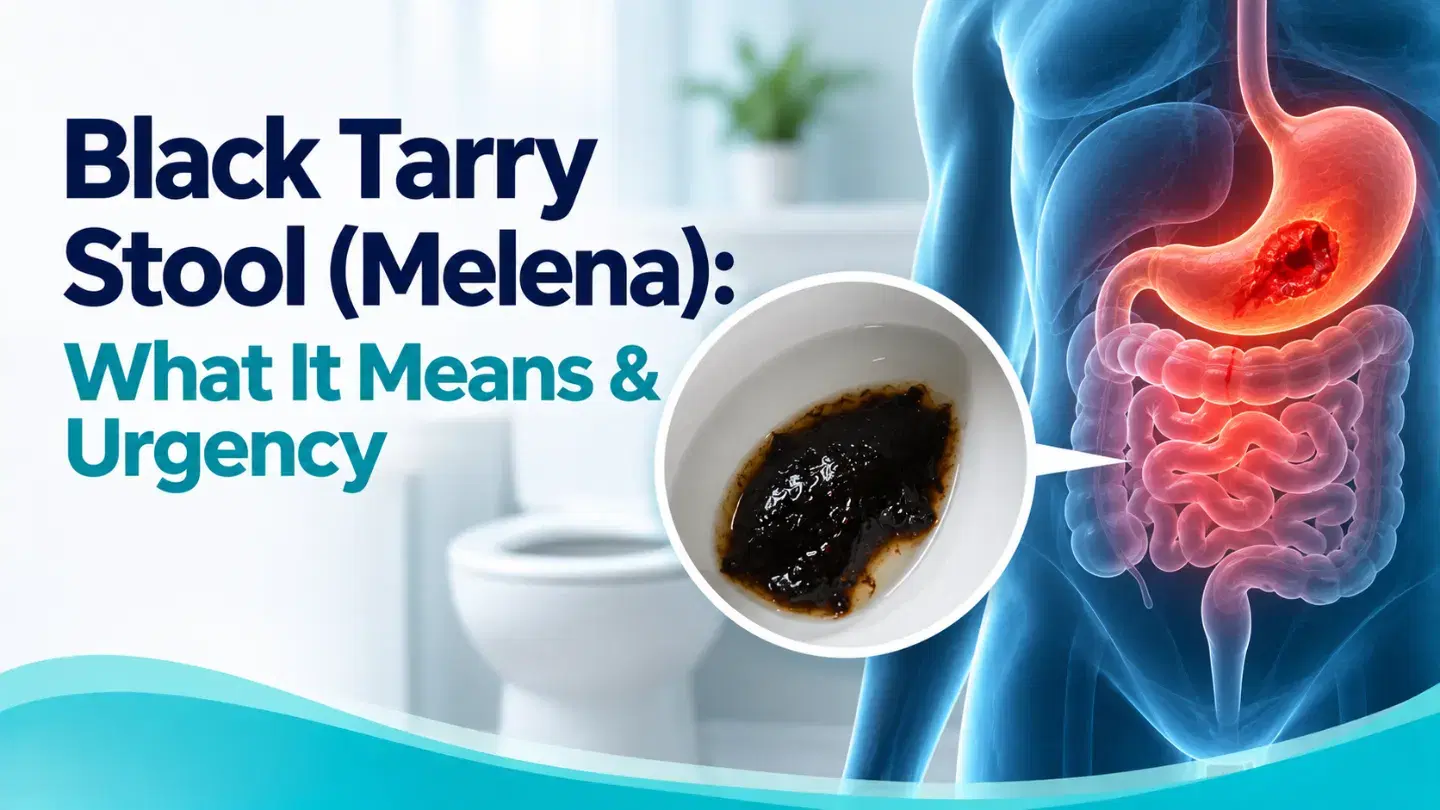
Black Tarry Stool (Melena): What It Means & Urgency
Black, Tarry Stool (Melena): What It Means & Why It’s Urgent
Looking into the toilet and seeing black, sticky, tar-like stool is alarming, and in many cases it should be. Unlike the bright red blood that people more readily recognise as a warning, black stool is less understood, which means its significance is often missed. Yet a truly black, tarry, foul-smelling stool can be one of the most urgent signals your digestive system ever sends, pointing to bleeding high up in the gut.
This guide explains what black tarry stool, known medically as melena, actually means, why its colour tells such an important story, the harmless things that can also darken stool, and, most importantly, when it is a medical emergency. Knowing the difference, and acting quickly when it matters, can genuinely be life-saving.
What Is Melena?
Melena is the medical term for black, tarry, sticky stool caused by bleeding in the upper part of the digestive tract, the oesophagus, stomach, or the first part of the small intestine. Its distinctive appearance is the key to understanding it.
When blood is released high up in the digestive system, it does not stay red. As it travels the long journey down through the stomach and intestines, it is acted upon by stomach acid and digestive enzymes, which chemically alter the iron-rich haemoglobin in the blood and turn it black. By the time it emerges, it has become dark, sticky, and tar-like, with a characteristic and unforgettable foul smell that is different from ordinary stool odour.
Think of the colour as a clue to location, like tracing a leak along a pipe. The further upstream the bleeding, the more the blood is “cooked” by digestion before it exits, which is why upper gut bleeding produces black stool. Bright red blood, by contrast, usually means a leak much closer to the exit, in the lower bowel or rectum. So the colour is not just a detail; it tells the doctor roughly where the problem is.
Why Black Tarry Stool Is So Important
The reason melena is taken so seriously is that it reflects genuine bleeding, often significant, from somewhere that cannot be seen or easily reached. A black tarry stool means blood has been lost into the gut in a quantity large enough to colour the stool, and that bleeding may be ongoing. Depending on the cause and the rate of bleeding, this can lead to anaemia, weakness, and, in severe cases, dangerous blood loss and shock.
This is why true melena is regarded as a red flag that warrants prompt medical assessment, and often urgent care. It is not a symptom to watch for a few days or to treat with home remedies. The bleeding behind it needs to be found and stopped, and the sooner that happens, the safer the outcome.
What Causes Black Tarry Stool?
Several conditions can cause bleeding high in the digestive tract and produce melena. The common and important causes include:
- Peptic ulcers. Ulcers in the stomach or duodenum are the most common cause of melena. They can erode into a blood vessel and bleed, sometimes heavily. Ulcers are often linked to H. pylori infection or to regular use of painkillers known as NSAIDs.
- Gastritis and erosions. Inflammation or small breaks in the stomach lining, often from alcohol, NSAIDs, or severe illness, can bleed.
- Oesophageal varices. In people with liver disease and cirrhosis, raised pressure causes swollen veins in the food pipe that can bleed, sometimes torrentially. This is a particularly dangerous cause.
- Mallory-Weiss tear. A tear at the junction of the oesophagus and stomach, often after forceful vomiting, can bleed.
- Oesophagitis, severe inflammation of the food pipe.
- Upper gastrointestinal cancers, which can bleed slowly over time.
Certain factors raise the risk of these bleeds, including regular use of NSAID painkillers, blood-thinning medicines, heavy alcohol use, H. pylori infection, and liver disease. If you take these medicines or have these conditions and notice black stool, it deserves particular attention.
The Harmless Causes: When Black Stool Is Not Blood
Before alarm takes over, it is important to know that not every black stool is melena. Several harmless things can darken stool without any bleeding at all:
- Iron supplements, very commonly taken in pregnancy and for anaemia, frequently turn stool black or very dark.
- Bismuth-containing medicines, such as some anti-diarrhoeal and antacid preparations, darken the stool.
- Certain foods, including liquorice, blueberries, black pudding, and other strongly coloured foods, can darken it temporarily.
Here is the key distinction. Stool blackened by iron, bismuth, or food is usually just dark, without the sticky, tar-like texture and the distinctive foul smell of true melena, and it comes with no other symptoms. True melena tends to be black, glossy, sticky, and tarry, with that unmistakable odour, and may be accompanied by signs of blood loss. If you are taking iron or bismuth and feel completely well, a dark stool is very likely harmless. But if there is any doubt, especially if you feel unwell, it is always safer to get it checked than to assume.
When Is Black Stool a Medical Emergency?
This is the most important section. A truly black, tarry, sticky, foul-smelling stool, particularly when not explained by iron or bismuth, should be treated as a medical emergency and assessed urgently. Seek immediate care, especially if the black stool comes with any of the following:
- Vomiting blood, or vomit that looks like coffee grounds (partly digested blood).
- Dizziness, light-headedness, fainting, or weakness.
- A rapid heartbeat or breathlessness.
- Severe abdominal pain.
- Pale, clammy skin and a sense of being very unwell.
These are signs of significant blood loss, and they need emergency hospital care without delay. Even without these alarming features, a genuinely tarry black stool should prompt prompt medical assessment rather than waiting. When it comes to upper gut bleeding, time matters, and it is always better to be assessed and reassured than to wait at home while bleeding continues.
How Is the Cause Found and Treated?
When someone presents with melena, doctors act quickly. The first priority is to assess how much blood has been lost and to stabilise the person with fluids and, if needed, a blood transfusion. The key investigation is an upper GI endoscopy, in which a thin, flexible camera is passed through the mouth to look directly at the oesophagus, stomach, and duodenum. This not only finds the source of bleeding but often allows it to be treated there and then, for example by sealing a bleeding ulcer or banding bleeding varices.
Blood tests check for anaemia and assess the overall picture, and the underlying cause is then treated, whether that means medicines to heal an ulcer and eradicate H. pylori, managing liver disease, or stopping a medication that caused the bleed. At specialised centres like Bangalore Gastro Centre, urgent endoscopy and expert management of gastrointestinal bleeding are available, which is exactly the care that black tarry stool demands.
Preventing Upper Gut Bleeding
While not every cause is preventable, several steps reduce the risk of the bleeds that cause melena. Use NSAID painkillers cautiously and only as advised, since regular use is a major cause of ulcers and bleeding, and discuss stomach protection with your doctor if you need them long-term. Treat H. pylori infection if it is found, as it is a leading cause of ulcers. Moderate alcohol, which irritates the stomach lining and contributes to liver disease. And if you have liver disease or take blood-thinning medicines, follow your doctor’s monitoring advice closely. Being alert to early symptoms of ulcers, such as persistent upper abdominal pain, and getting them treated, prevents many serious bleeds before they happen.
What to Do If You See Black Tarry Stool
Knowing how to respond in the moment removes panic and helps you act wisely. If you notice a genuinely black, tarry, sticky stool, the first step is to pause and consider the harmless explanations: have you been taking iron tablets or a bismuth-containing medicine, or eating foods like liquorice or black pudding? If the answer is a clear yes and you feel completely well, the dark colour is very likely from that, though it is still reasonable to mention it to your doctor.
If there is no such explanation, or if you feel at all unwell, treat it seriously. Note any accompanying symptoms, dizziness, weakness, abdominal pain, or whether you have vomited anything resembling coffee grounds, because this information helps the doctor judge urgency. If you have warning signs such as faintness, a racing heart, vomiting blood, or severe pain, seek emergency care immediately rather than waiting. If you feel otherwise well but the stool is genuinely tarry and unexplained, arrange prompt medical assessment the same day rather than adopting a wait-and-see approach. It also helps to be ready to tell the doctor about any painkillers (especially NSAIDs), blood thinners, or alcohol use, and any history of ulcers or liver disease, as these point toward likely causes. Acting promptly, rather than hoping it resolves, is what keeps a potentially serious bleed safe.
Melena vs Other Stool Changes
It helps to place black tarry stool within the bigger picture of what stool can tell you, because different changes carry very different meanings. Bright red blood, coating the stool or dripping into the bowl, usually comes from lower down, such as piles or a fissure, and points to a different set of causes than melena. Blood mixed through the stool, or a persistent change in bowel habits, raises other concerns that also warrant assessment. Pale, clay-coloured stool suggests a problem with bile flow rather than bleeding.
The specific value of recognising melena is that its black, tarry character points upward, to the stomach or upper intestine, and often to active bleeding that needs urgent attention. This is why doctors pay such close attention to the exact colour and texture: each tells a different story about where in the long digestive tract the problem lies. Being able to describe accurately what you have seen, the colour, the texture, the smell, and any other symptoms, genuinely helps your doctor reach the right answer quickly.
Black Tarry Stool: Patient Questions Answered
What does black tarry stool mean?
Black, tarry, sticky stool, known as melena, usually means there is bleeding high in the digestive tract, in the oesophagus, stomach, or the first part of the small intestine. As the blood travels down and is digested, it turns black and develops a distinctive tar-like texture and foul smell. The most common cause is a bleeding peptic ulcer, though gastritis, swollen veins in people with liver disease, and other conditions can also be responsible. True melena reflects genuine, often significant, bleeding and should be assessed promptly by a doctor.
Is black stool a medical emergency?
A truly black, tarry, sticky, foul-smelling stool that is not explained by iron tablets or bismuth medicines should be treated as a medical emergency and assessed urgently, because it can indicate significant upper gut bleeding. It is especially urgent if accompanied by vomiting blood or coffee-ground vomit, dizziness or fainting, a rapid heartbeat, breathlessness, severe abdominal pain, or pale, clammy skin. These are signs of serious blood loss needing immediate hospital care. Even without these features, genuine melena warrants prompt assessment rather than waiting at home.
What causes black sticky poop?
The most common serious cause is a bleeding peptic ulcer in the stomach or duodenum, often linked to H. pylori infection or regular NSAID painkiller use. Other causes include gastritis and erosions, bleeding from swollen veins (varices) in people with liver disease, a Mallory-Weiss tear after forceful vomiting, and, less commonly, upper gastrointestinal cancers. Harmless causes that darken stool without bleeding include iron supplements, bismuth-containing medicines, and certain dark foods, though these usually lack the sticky, tarry texture and foul smell of true bleeding-related black stool.
How can I tell melena from black stool caused by iron or food?
The main clues are texture, smell, and how you feel. True melena from bleeding tends to be black, glossy, sticky, and distinctly tar-like, with an unmistakable foul odour, and may come with symptoms of blood loss such as dizziness or weakness. Black stool from iron tablets, bismuth medicines, or dark foods is usually just dark rather than sticky and tarry, lacks that strong smell, and comes with no other symptoms, in someone who feels well. If you are unsure, or feel at all unwell, it is always safer to be checked than to assume it is harmless.
Can an ulcer cause black stool without pain?
Yes. While many ulcers cause upper abdominal pain, some, particularly those related to regular painkiller (NSAID) use, can bleed with little or no warning pain, and black tarry stool may be the first sign. This is one reason black stool should be taken seriously even in the absence of pain. Painless bleeding can still be significant. Anyone who takes NSAIDs regularly, or has risk factors for ulcers, and notices genuinely tarry black stool should seek assessment promptly rather than waiting for pain to confirm a problem.
The Bottom Line
Black, tarry stool is one of the digestive system’s clearest and most urgent warning signals, and understanding it can save a life. The colour is a clue to location: a truly black, sticky, foul-smelling stool usually means bleeding high in the gut, most often from an ulcer, and that bleeding needs to be found and stopped. While harmless causes like iron tablets and dark foods can also darken stool, they lack melena’s tarry texture and smell and cause no other symptoms.
The safe rule is this: if your stool is genuinely black and tarry and not clearly explained by iron or bismuth, especially if you feel unwell, treat it as an emergency and seek care at once. The specialists at Bangalore Gastro Centre provide the urgent endoscopy and expert treatment that upper gut bleeding demands, turning a frightening symptom into a treated, resolved problem.
Remember the simple principle behind it all: the colour of stool is a message about where a problem lies, and black and tarry points upward and urgent. Respecting that message, acting quickly rather than waiting, and not dismissing it as something you ate unless you are genuinely sure, is exactly the vigilance that keeps a serious bleed from becoming dangerous.
This article is for general education and is not a substitute for personalised medical advice. Black, tarry stool with faintness, vomiting blood, or severe pain is a medical emergency, seek immediate care.