


The Definitive Guide to Diagnosing Acid Reflux: Why Precision Matters for Your Gut and Immune Health
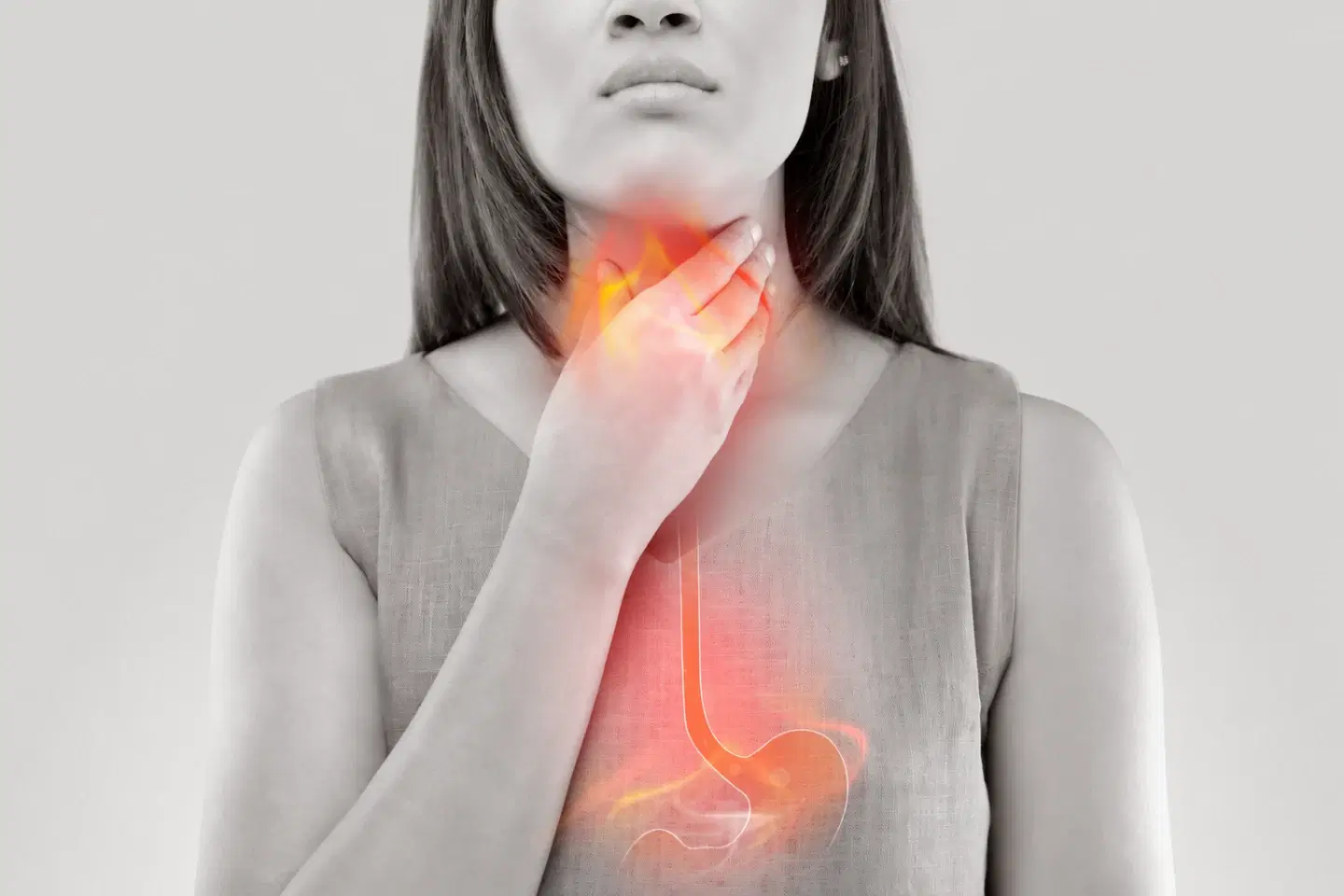
Millions of adults across India wake up with a familiar, fiery sensation sitting heavily in their chest. You had a late dinner after a gruelling commute. Maybe you enjoyed some rich paneer masala, a spicy biryani, or simply drank one too many cups of strong tea during a stressful afternoon at the office. Now, the acid creeps up your throat, leaving a bitter taste and a burning trail.
You pop a quick over-the-counter antacid. The burning stops. You move on with your day.
This routine seems normal. We often treat heartburn as a mild inconvenience. It is viewed as a small, acceptable tax we pay for enjoying our vibrant, spice-heavy culinary traditions and coping with fast-paced urban lifestyles. But chronic, unmanaged heartburn is a glaring warning light on your body's dashboard. Silencing that warning light with daily pills, without truly understanding the root physiological cause, can trigger a devastating domino effect throughout your entire system.
It starts with a simple burning in the food pipe. Over time, poor management ends up affecting your esophageal/ food pipe inner lining, your joints, your immune system, and your overall vitality. To stop this cycle, you need objective medical data. You cannot rely on guesswork. This comprehensive guide explores the deep connections between your digestion, your immune system, and why advanced diagnostics are non-negotiable for long-term wellness.
The Danger of the Quick Fix: When Acid Reflux is Misdiagnosed
Acid reflux, medically known as Gastroesophageal Reflux Disease (GERD), occurs when the lower esophageal sphincter (LES)—a muscular ring at the bottom of your food pipe—becomes weak or relaxes when it shouldn't. This allows highly acidic stomach contents to wash backward into the delicate tissues of the esophagus.
The immediate medical reflex is usually to prescribe powerful acid-blocking medications known as Proton Pump Inhibitors (PPIs). These medications are highly effective at what they do. They shut down the acid pumps in your stomach. The pain stops. The problem appears solved.
However, a significant percentage of patients who experience chest pain, chronic cough, or a feeling of a lump in the throat do not actually have excess acid. Many suffer from functional heartburn, hypersensitive esophageal nerves, or non-acidic bile reflux. If you take strong acid-blocking medicines for years without confirming the diagnosis, you silently destroy your stomach's natural chemical barrier.
We see this frequently in clinical practice. Patients endure months of distress without a proper diagnosis, leading to severe complications. If you are experiencing ongoing discomfort, it is highly recommended to read more about Repeated Stomach Pain: Hidden Causes You Shouldn’t Ignore to understand when simple symptoms mask complex functional disorders.
The Gut Microbiome: Your Body's Silent Control Center
Why is stomach acid so important? Gastric acid is not an evolutionary mistake. It is a vital, primary defense mechanism. With a highly acidic pH level resting between 1.5 and 3.5, your stomach acts as a sterilizing chamber. It neutralizes harmful bacteria, parasites, and pathogens that enter your body through the food you eat and the water you drink.
Furthermore, this extreme acidity is required to break down dense proteins and absorb essential minerals like calcium, magnesium, and vitamin B12.
When you artificially suppress your stomach acid for extended, unmonitored periods, you change the entire pH environment of your digestive tract. The sterilizing chamber breaks down. Bacteria from the mouth and environment, which normally would be destroyed in the stomach, survive and migrate downward. They set up colonies in the small intestine, a place that is supposed to be relatively sterile.
This bacterial imbalance (dysbiosis) damages the fragile mucosal lining of your gut. The cells lining your intestines are held together by "tight junctions." When exposed to bacterial toxins and chronic inflammation, these junctions loosen. The gut becomes permeable. Microscopic food particles, bacterial endotoxins, and waste products slip through the intestinal wall directly into your bloodstream.
This is the exact point where a simple digestive issue transforms into a systemic health crisis.
To support the repair of this delicate environment, dietary interventions are highly effective. For actionable nutritional strategies, watch Eat These Fantastic Foods for a Healthy Small Intestine! to understand how specific fibers and nutrients rebuild your internal ecosystem.
The Gut-Joint Axis: Explaining Autoimmune Confusion
How exactly do we connect a weak stomach valve and unmonitored antacid use to severe joint pain and autoimmune conditions? The answer lies in the complex communication network known as the gut-joint axis.
Think of your immune system like the traffic police at a massive, chaotic intersection in a bustling Indian city during rush hour. When the system functions correctly, signals change smoothly. Cars stop, pedestrians cross safely, and absolute order is maintained despite the high volume of activity.
But what happens if a sudden monsoon storm knocks out the power to the traffic lights? Chaos erupts. Cars crash into one another. Drivers lose their temper. The overwhelmed traffic officers start directing vehicles haphazardly, accidentally causing more collisions in their desperate attempt to restore order.
This chaotic scenario perfectly mirrors an autoimmune disease. When your gut becomes "leaky," foreign particles flood the bloodstream. Your immune system—the traffic police—detects these invaders and launches an aggressive inflammatory attack. Because the influx of toxins is constant, the immune system remains in a state of hyper-alertness. Eventually, it becomes exhausted and confused.
Through a process called "molecular mimicry," the confused immune system loses its ability to distinguish between harmful bacterial proteins and your body's own healthy tissues. It begins attacking your own cells. It targets the synovial fluid in your knees, the cartilage in your hands, or your thyroid gland. [Source: Journal of Immunology Research].
What started as a mismanaged case of heartburn has now escalated into systemic joint pain, chronic fatigue, or clinical autoimmune disorders like Rheumatoid Arthritis.
The Solution: Precision Medical Diagnostics
We must stop guessing. The era of trial-and-error medicine for gastrointestinal distress is over. Before you commit to long-term acid suppression therapy, and before you risk the integrity of your gut microbiome, you must secure objective data regarding what is actually happening inside your esophagus.
At specialized facilities equipped with advanced technology, like Bangalore Gastro Centre, specialists rely on definitive testing rather than assumption. If your symptoms are atypical—meaning you have a chronic cough, asthma that worsens at night, unexplained sore throats, or chest pain that mimics a heart attack—you need to map your acid exposure mathematically.
This is where advanced monitoring technologies become essential.
Deep Dive: The Diagnostic Gold Standard
Patients frequently ask us, What is pH monitoring exactly? To put it simply, it is a highly specialized diagnostic procedure designed to measure how often stomach acid enters the tube that leads from the mouth to the stomach, and how long that acid remains there.
A dedicated pH monitoring test is the only way to definitively prove whether your symptoms are caused by pathological acid reflux or something entirely different. Endoscopies are excellent for looking at physical damage, like ulcers or inflammation, but they only provide a static picture of a single moment in time. They do not tell the doctor how your digestive system functions throughout a normal, active day.
To achieve this dynamic view, gastroenterologists utilize a pH metry test. This procedure goes beyond simply looking at the tissues; it actively records the chemical environment of your esophagus while you eat, sleep, and work.
If you are confused about the diagnostic process and find yourself searching the internet for "What is pH monitoring," you are not alone. It is a sophisticated concept. Esophageal pH monitoring specifically looks at the acid exposure in the food pipe over an extended period, creating a comprehensive graph of your internal biochemistry.
How the Procedure Works
A pH metry test provides objective data that removes all guesswork from your treatment plan. The traditional and most comprehensive method is catheter-based testing.
During a standard pH metry test, a tiny, flexible, and highly sensitive wire (the catheter) is gently passed through your nose and guided down into your esophagus. The tip of this catheter contains a specialized sensor that detects hydrogen ion concentration (acidity). It is positioned precisely just above the lower esophageal sphincter.
The other end of this thin wire is connected to a small, portable recording device that you wear on your belt or carry over your shoulder. Once the device is secured, the real work begins.
The 24-Hour Reality Check
The beauty of 24 hour pH monitoring is that it captures your body in its natural state. You do not stay in the hospital. You go home. You go to work.
A comprehensive 24 hour pH monitoring study requires you to engage in your normal daily activities. If spicy curries usually trigger your symptoms, your doctor will likely tell you to eat them. If drinking coffee causes chest tightness, you should drink your coffee. The goal is to provoke your typical symptoms so the machine can record exactly what is happening internally at that precise second.
Throughout the 24 hour pH monitoring period, you will be asked to press specific buttons on your recording device. You will press a button when you start eating, when you finish eating, when you lie down to sleep, and most importantly, the exact moment you feel a symptom (like a cough, a burn, or a flutter in your chest).
With 24 hour pH monitoring, we can see exactly what happens while you sleep. Many patients experience silent reflux at night. They never feel the burn, but the acid micro-aspirates into their lungs, causing chronic respiratory issues.
Advanced Impedance Testing
Modern Esophageal pH monitoring often includes a technology called "Impedance." Why is this necessary? Because not all reflux is acidic.
Sometimes, the stomach contents washing back up into your throat are non-acidic (like bile or undigested food). A standard acid sensor will miss this completely. However, an Impedance-pH catheter detects the physical movement of any liquid or gas traveling up the esophagus, regardless of its acidity.
This combined approach is the absolute pinnacle of gastroenterological diagnostics. If your doctor suspects non-acid reflux, the accuracy of a pH monitoring test combined with impedance far exceeds any other available diagnostic tool. The guidelines for Esophageal pH monitoring dictate that this dual-testing method is essential for patients who fail to respond to standard antacid medications. [Source: American Journal of Gastroenterology].
Interpreting the Data: The DeMeester Score
After the test concludes, you return to the clinic to have the catheter removed. The data from the portable recorder is downloaded into a specialized computer program.
The data collected by the pH metry test is analyzed mathematically. Gastroenterologists look at several specific parameters:
- The total percentage of time the esophageal pH dropped below 4.0 (indicating high acidity).
- The total number of reflux episodes over the 24 hours.
- The number of episodes that lasted longer than 5 minutes.
- The longest single episode of reflux.
These numbers are calculated to generate a composite number known as the DeMeester Score. A DeMeester score greater than 14.72 officially confirms pathological GERD.
More importantly, the software calculates a "Symptom Association Probability." This tells the doctor if the exact moment you pressed the "I feel pain" button corresponds to a simultaneous drop in pH levels recorded by the sensor.
Without a pH metry test, your doctor is effectively flying blind. With it, they have a precise, targeted blueprint to formulate a treatment plan. This might mean adjusting the timing of your medication, switching to a different class of drugs, recommending dietary overhauls, or, in severe mechanical failures of the valve, suggesting anti-reflux surgery.
At centers of excellence like Bangalore Gastro Centre, this data-driven approach prevents patients from spending decades on medications they do not need.
Understanding Autoimmune Diseases, Gut Health, and Acid Reflux
As we understand more about how interconnected the human body is, patients are naturally asking deeper questions. It is no longer just about fixing a stomach ache; it is about protecting the entire biological system. Below, we address the most pressing questions regarding the gut-immune connection.
What triggers autoimmune diseases in the body?
Autoimmune diseases are highly complex conditions triggered by a combination of genetic predisposition and environmental factors. You may carry the genes for an autoimmune condition like Lupus, Hashimoto's Thyroiditis, or Rheumatoid Arthritis, but those genes often remain dormant until an environmental trigger "turns them on."
These triggers vary widely. They can include severe viral infections (like Epstein-Barr virus), chronic emotional stress, exposure to environmental toxins, and significantly, severe dietary imbalances. However, modern functional medicine heavily points toward gut dysbiosis as a primary systemic trigger. When the microbiome is severely disrupted—often through poor diet, chronic stress, or the overuse of antibiotics and acid-suppressing medications—the resulting systemic inflammation acts as the exact environmental trigger needed to awaken dormant autoimmune genes.
How does the gut play a role in systemic inflammation and joint pain?
The gastrointestinal tract houses approximately 70% to 80% of your entire immune system. This massive concentration of immune cells resides just beneath the single layer of cells that lines your gut.
When your gut lining becomes compromised (leaky gut), an influx of foreign material enters the bloodstream. One of the most inflammatory substances that can leak through is called Lipopolysaccharide (LPS), a structural component found in the outer membrane of certain gut bacteria. When LPS enters the blood, it triggers a massive, systemic inflammatory cascade.
The immune system dispatches inflammatory cytokines to hunt down these foreign bodies. These cytokines travel through the bloodstream, eventually depositing in highly vascularized areas like your joint capsules. This localized inflammation in the joints causes swelling, heat, stiffness, and severe pain. The origin of the pain isn't a joint injury; it is a chemical fire that started in the digestive tract.
Can misdiagnosed acid reflux contribute to autoimmune flare-ups?
Yes, indirectly, but the pathway is medically recognized. If a patient is misdiagnosed with severe GERD (when they actually have a functional disorder) and placed on heavy, long-term Proton Pump Inhibitors, their stomach acid is chronically suppressed.
As detailed earlier, this lack of acid allows pathogens to survive and alter the microbiome. The resulting SIBO and leaky gut create a constant, low-grade inflammatory state. For someone who already has an autoimmune condition, or carries the genes for one, this constant immune agitation will almost certainly cause an autoimmune flare-up.
By utilizing accurate diagnostics like a pH monitoring test, doctors can confidently stop unnecessary acid-suppressing medications, thereby allowing the stomach acid to return to normal levels. This restores the antibacterial barrier, helps heal the gut lining, and dramatically reduces the inflammatory burden on the immune system.
When should I see a specialist for these combined symptoms?
You should seek the expertise of a specialized gastroenterologist immediately if you experience any of the following "red flag" scenarios:
- You have been taking over-the-counter or prescribed antacids for more than four weeks without complete relief.
- You experience heartburn combined with new, unexplained joint pain, severe morning stiffness, or sudden skin rashes.
- You have difficulty swallowing, or feel like food is getting stuck in your chest.
- Your reflux symptoms are accompanied by unexplained weight loss or anemia.
- You have chronic throat clearing, persistent hoarseness, or asthma that only seems to bother you at night.
In these situations, standard general practice interventions are insufficient. You require a comprehensive evaluation. Understanding exactly What is pH monitoring and requesting this advanced diagnostic tool could be the turning point in your healthcare journey.
If you relate to these symptoms, consulting experts at facilities like Bangalore Gastro Centre ensures you receive targeted, data-backed medical care rather than generic, generalized treatments.
Taking Control of Your Digestive Destiny
Living with chronic digestive discomfort alters your personality, drains your energy, and limits your enjoyment of life's simple pleasures. But the hidden dangers of ignoring the root cause—or masking it with chronic medication—are far worse.
The health of your gut microbiome dictates the health of your immune system. Protecting that delicate internal ecosystem requires exact, precise medical knowledge.
Preparing for your pH metry test involves briefly stopping your current antacid medications under your doctor's supervision, ensuring the test captures your true baseline physiology. While wearing a catheter for 24 hours may sound slightly uncomfortable, it is a temporary, minor inconvenience that yields a lifetime of valuable health data.
Do not allow a confused immune system to dictate your future. Stop guessing what is happening inside your chest. Demand objective data, seek accurate diagnostics, and take proactive steps to heal your body from the inside out. Your digestion, your joints, and your long-term vitality depend on it.