

Neurogastroenterology: Understanding the Gut-Brain Connection
You are sitting in a high-stakes meeting, and suddenly, your stomach starts churning. Or perhaps you receive incredibly stressful news and immediately lose your appetite. Most of us brush these moments off as simple nerves or "butterflies in the stomach."
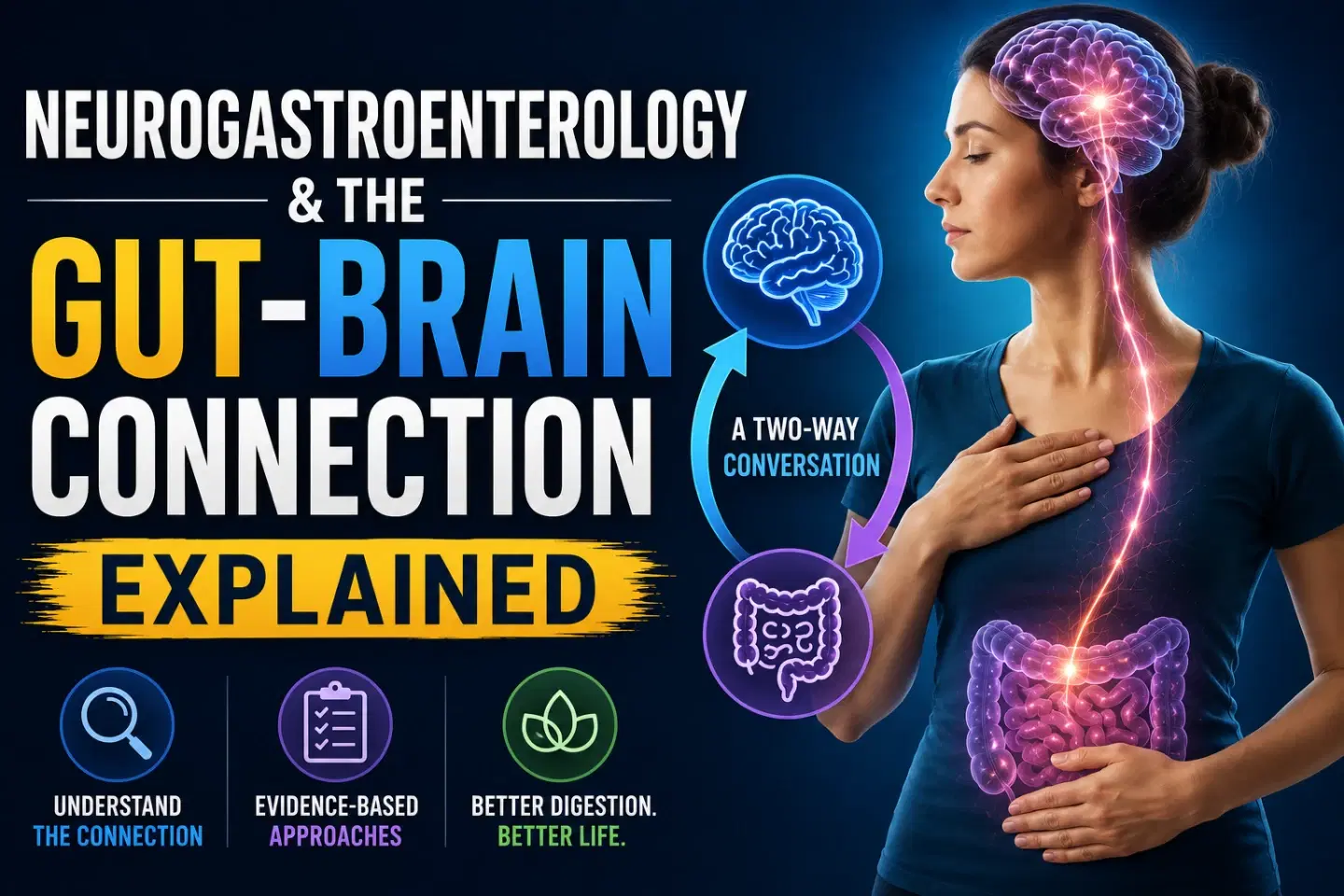
But it is not just nervousness—it is anatomy. This physical reaction is a manifestation of a complex biological highway inside your body. Your brain and your digestive system are locked in a constant, rapid-fire conversation. When this communication network operates smoothly, digestion happens without a second thought. However, when the signaling breaks down, it can lead to chronic, unexplained digestive distress.
For decades, modern medicine often treated the brain and the digestive tract as completely separate entities. Today, medical science recognizes that this divided approach is fundamentally flawed, giving rise to a highly specialized medical field: neurogastroenterology.
What is Neurogastroenterology?
Neurogastroenterology is a dedicated subspecialty of gastroenterology that focuses on disorders of gut–brain interaction (DGBI), which were previously referred to as functional gastrointestinal disorders.
A traditional gastroenterologist primarily focuses on structural and inflammatory diseases of the digestive tract, looking for visible damage like ulcers or polyps using endoscopies. But what happens when your stomach hurts every single day, yet your endoscopy shows a perfectly healthy stomach lining?
This is where a neurogastroenterologist steps in. They treat conditions characterized by chronic gastrointestinal symptoms without structural abnormalities on routine testing, as defined in the Rome IV criteria. These conditions include:
- Irritable bowel syndrome (IBS)
- Functional dyspepsia
- Functional constipation
The Enteric Nervous System and Gut–Brain Communication
To understand these disorders, we must look at the digestive tract's intrinsic neural network, known as the enteric nervous system (ENS). The ENS is an extensive network that directly regulates:
- Motility (how food moves through the system)
- Secretion of digestive fluids
- Local immune responses
The communication between your brain and gut is not a metaphor; it is a literal, bidirectional pathway. This signaling has been consistently demonstrated in human and animal experimental studies and occurs through:
- Autonomic nervous system pathways: Most notably, the vagus nerve, which acts as a major biological cable linking the two systems.
- Neuroendocrine signaling: Hormones and chemical messengers.
- Immune mediators: Signals sent via the body's immune pathways.
Treating Disorders of Gut–Brain Interaction
When the hardware (the structure of your organs) looks fine on a scan, but the software (the gut-brain communication) is glitching, targeted, evidence-based treatments are required.
Irritable Bowel Syndrome (IBS)
IBS is the most extensively studied disorder of gut–brain interaction. Medical research has proven the efficacy of several specific interventions:
- Low FODMAP Diet: This specific dietary protocol has been demonstrated to reduce global IBS symptoms compared with standard dietary advice.
- Gut-Directed Psychological Therapies: Interventions like Cognitive Behavioral Therapy (CBT) and gut-directed hypnotherapy have been shown to significantly improve symptom severity, quality of life, and psychological comorbidities.
- Neuromodulator Medications: Low doses of certain medications (such as tricyclic antidepressants and selective serotonin reuptake inhibitors) are used not for depression, but to calm the nerves of the gut. Studies demonstrate these improve visceral pain and global IBS symptom scores.
Functional Dyspepsia
Characterized by chronic pain, burning in the upper stomach, or early fullness, functional dyspepsia also responds to specific, step-wise treatment algorithms recommended by major gastroenterology societies. Studies have shown benefit in selected patients from:
- Proton pump inhibitors (PPIs)
- Prokinetic agents (to improve motility)
- Low-dose antidepressants (acting as neuromodulators)
Psychological Stress and Gastrointestinal Symptoms
It is a common misconception that functional GI disorders are "all in your head." However, the brain's state directly impacts the gut.
Randomized trials and longitudinal cohort studies clearly demonstrate that psychological stress worsens symptom severity in both IBS and functional dyspepsia. Because central nervous system modulation heavily influences gut function, stress-targeted interventions (like CBT and relaxation therapy) improve both gastrointestinal symptoms and health-related quality of life.
It is important to note, however, that while stress exacerbates these conditions, it is not the sole cause of them.
Objective Testing in Neurogastroenterology
The patient journey for someone with a DGBI is often frustrating, marked by standard tests that repeatedly come back "normal." In specialized facilities like Bangalore Gastro Centre, neurogastroenterologists utilize advanced, objective physiological tests when symptoms persist despite normal endoscopy or imaging.
The diagnostic accuracy and clinical utility of these tests are supported by prospective clinical studies and incorporated into clinical guidelines:
- High-Resolution Esophageal Manometry: Measures the exact strength and coordination of the muscles in the esophagus, essential for diagnosing swallowing disorders.
- 24-Hour pH Impedance Monitoring: Accurately measures exactly how much acid (and non-acid liquid) washes back up into the throat to diagnose complex reflux.
- Gastric Emptying Studies: Determines if the stomach is emptying too fast or too slow.
- Anorectal Manometry: Measures the coordination of the pelvic floor muscles, which is vital for patients dealing with chronic functional constipation.
Conclusion
The human body is an incredibly interconnected system. If you have been suffering from chronic digestive issues and standard tests have left you without answers, you may be dealing with a disorder of gut-brain interaction.
Do not accept that chronic pain is just something you have to live with. Understanding neurogastroenterology is the first step toward reclaiming your health. By utilizing objective physiological testing and evidence-based therapies, specialists can help restore the vital communication between your brain and your gut, offering significant, life-changing symptom relief.