


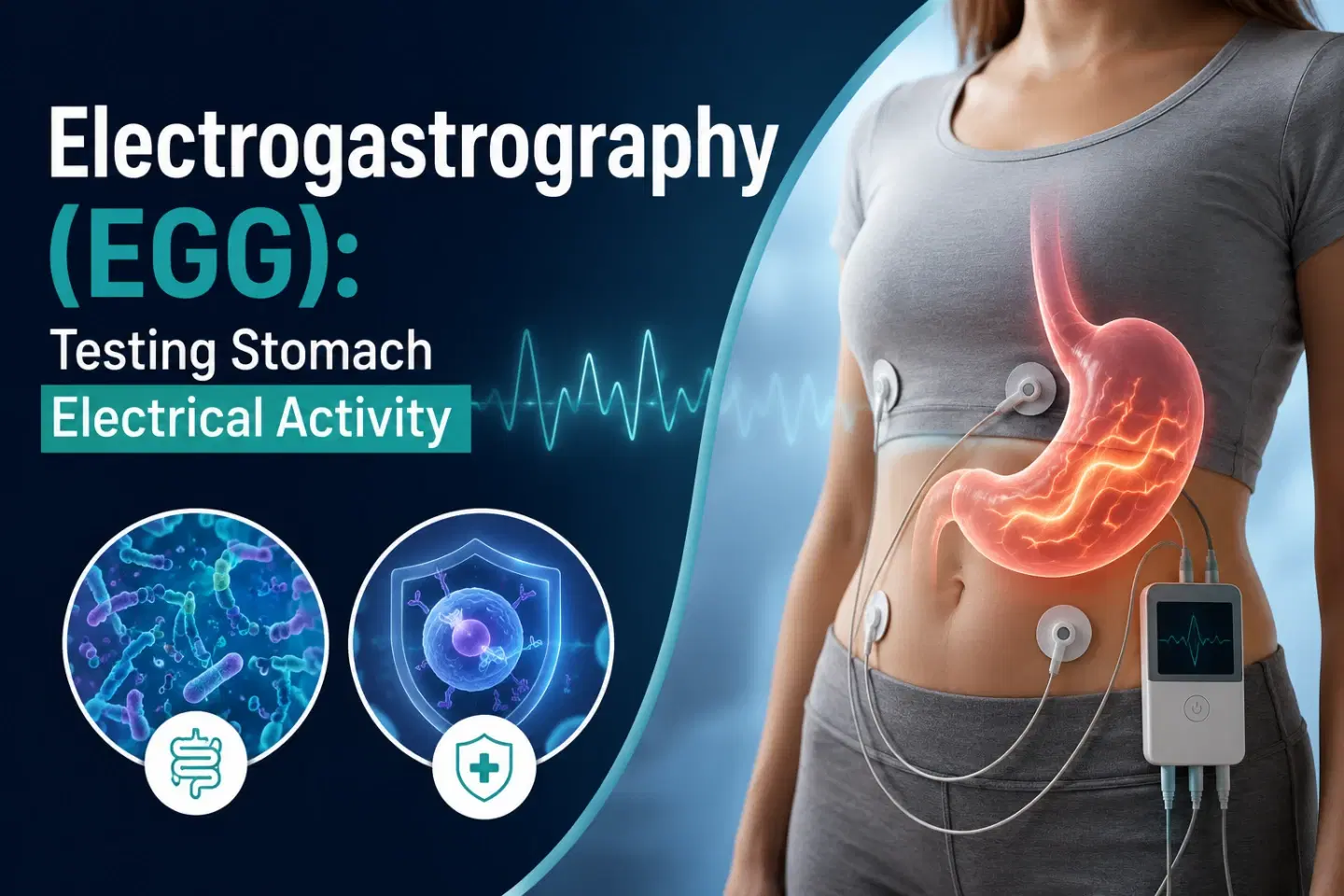
Electrogastrography (EGG): Testing Stomach Electrical Activity, Gut Microbiome, and Autoimmune Health
We frequently talk about the electrical signals of the heart. Most of us know someone who has had an ECG to check their cardiac rhythm. But what about the electrical signals in your stomach?
Yes, your stomach has a pacemaker. Just like the heart, your digestive system relies on a precise, rhythmic electrical current to function properly. When these signals misfire, digestion grinds to a halt. You might feel full after just two bites of a meal, experience relentless nausea, or suffer from severe bloating that makes your clothes feel tight by noon.
For millions of Indians, chronic digestive distress is dismissed as simple "acidity" or a reaction to heavy, spicy meals. Patients spend years taking over-the-counter antacids. They restrict their diets. They skip social gatherings. Yet, the underlying mechanical failure remains ignored. This is where advanced diagnostic tools step in.
If you are struggling with unexplained digestive paralysis, your doctor might recommend an Egg test medical evaluation. This non-invasive procedure measures the electrical activity of your stomach muscles, offering profound insights into the root cause of your discomfort.
In this comprehensive guide, we will explore everything you need to know about stomach electricity. We will examine the diagnostic process, explain the profound connection between sluggish digestion, your gut microbiome, and joint health, and answer your most pressing questions about systemic inflammation.
The Hidden Electricity in Your Digestion
To understand why your stomach might be failing you, we first need to look at how a healthy stomach operates.
Your digestive tract is a muscular tube. Moving food through this tube requires coordinated muscle contractions, a process scientifically termed peristalsis. The rhythm of these contractions is controlled by specialized cells located in the stomach wall known as the Interstitial Cells of Cajal (ICC). These cells act as the stomach's natural pacemakers.
In a healthy adult, these pacemaker cells generate an electrical wave exactly three times per minute (3 cycles per minute, or 3 cpm). This gentle, rhythmic pulse sweeps across the stomach tissue. It signals the muscles to churn the food, mix it with digestive acids, and slowly push the resulting mixture (chyme) down into the small intestine.
When this electrical rhythm is disrupted, the mechanical churning stops. The stomach might beat too slowly (bradygastria), too quickly (tachygastria), or in completely chaotic, irregular patterns.
What happens then? The food simply sits there.
This condition, often linked to a disorder called gastroparesis, leads to fermentation, excessive gas production, and intense nausea. To accurately diagnose this electrical misfiring, gastroenterologists utilize specific diagnostic tools. Understanding the EGG full form in medical terminology—Electrogastrography—is the first step toward finding relief.
What is Electrogastrography?
Patients often ask their doctors: What is egg test, and how does it differ from a regular endoscopy?
An endoscopy looks at the anatomy of your stomach. A doctor inserts a tube with a camera to visually check for ulcers, tumors, or physical blockages. However, an endoscopy cannot tell you if the stomach muscles are actually working. Your stomach might look perfectly healthy on the inside, yet be completely paralyzed mechanically.
An Electrogastrography test is entirely different. It evaluates function.
Much like an electrocardiogram (ECG) records heartbeats using stickers on the chest, an Egg test for stomach issues records digestive "beats" using stickers placed on your abdomen. It is a completely non-invasive, painless procedure that captures the myoelectrical signals generated by your stomach's pacemaker cells.
How is the Procedure Performed?
The thought of undergoing medical testing can provoke anxiety. Fortunately, understanding the Egg test medical procedure reveals a very straightforward, stress-free experience.
When you visit a specialized facility like Bangalore Gastro Centre, the medical team will guide you through the following steps:
- Fasting Preparation: You will be asked to arrive at the clinic with an empty stomach, typically fasting overnight for at least 8 hours.
- Skin Preparation: A technician will gently clean the skin on your upper abdomen to ensure good electrical contact. They may shave a small area of hair if necessary.
- Electrode Placement: Several sticky sensor pads (electrodes) are placed on your skin, directly over where your stomach sits.
- Baseline Recording (Fasting): You will lie quietly in a comfortable bed for about 30 to 45 minutes. During this time, the machine records your stomach's baseline electrical activity while empty.
- The Test Meal: You will then be asked to eat a standard test meal. In the Indian context, this might be something simple and easily standardizable, or a specific medical nutrient drink. The goal is to stimulate your stomach into action.
- Post-Meal Recording: After eating, you will lie back down. The sensors will record your stomach's electrical activity for another 45 to 60 minutes.
The physicians at Bangalore Gastro Centre will then analyze the resulting data. They look for the normal 3 cycles per minute rhythm. If the waves jump to 6 cycles per minute after eating, or drop to 1 cycle per minute, the diagnosis becomes clear. The electrical wiring of your gut is misfiring.
Conditions Diagnosed by Gastric Motility Testing
Why would a physician order this specific evaluation? Gastric motility testing is highly indicated for patients suffering from unexplained, chronic upper digestive symptoms.
1. Gastroparesis
This condition translates literally to "stomach paralysis." It is a severe disorder where the stomach takes far too long to empty its contents. Diabetes is a leading cause of gastroparesis in India, as chronic high blood sugar damages the vagus nerve (the nerve connecting the brain to the digestive tract). An Egg test for stomach emptying problems helps doctors confirm if the delayed emptying is due to an electrical failure in the stomach muscles.
2. Functional Dyspepsia
Many patients experience extreme pain, early fullness, and burning sensations, yet standard tests show absolutely no ulcers or inflammation. This is termed functional dyspepsia. An Electrogastrography test often reveals abnormal electrical rhythms in these patients, finally validating their pain and providing a clear path for targeted medication.
3. Chronic Unexplained Nausea and Vomiting
When a patient vomits frequently without a clear structural cause, evaluating the stomach's electrical grid is highly beneficial. Dysrhythmias often directly correlate with the severity of nausea.
It is vital not to ignore persistent symptoms. If you constantly suffer from abdominal discomfort, reading up on Repeated Stomach Pain: Hidden Causes You Shouldn’t Ignore is a smart next step to educate yourself on warning signs.
The Gut-Systemic Connection: When Slow Digestion Impacts the Whole Body
At this point, you might think an Egg test for stomach function is just about treating a tummy ache. It is far more profound than that. We must look at the human body as a highly connected ecosystem.
When your stomach loses its electrical rhythm, food empties too slowly. This delayed transit has a catastrophic cascading effect on your entire gastrointestinal tract, eventually impacting your immune system and your joints.
The Microbiome Shift
Your digestive tract houses trillions of bacteria, fungi, and viruses. This is your gut microbiome. In a healthy system, food moves swiftly from the stomach into the small intestine, and then into the large intestine. The flow keeps bacterial populations in check.
When stomach electricity fails (as identified by an Egg test medical exam), the stagnant food becomes a breeding ground for bacteria. The small intestine, which should be relatively clear of bacteria, suddenly experiences massive bacterial overgrowth. This condition is known clinically as Small Intestinal Bacterial Overgrowth (SIBO). [Source: American Journal of Gastroenterology].
These misplaced bacteria begin fermenting the stagnant carbohydrates in your gut. They produce massive amounts of hydrogen and methane gas. This causes the severe, painful bloating many patients experience. But the damage goes deeper.
Leaky Gut and Systemic Inflammation
The excessive bacteria and their toxic byproducts begin to damage the delicate mucosal lining of your intestines. The intestinal wall is designed to be a highly selective barrier. It should only allow perfectly digested, microscopic nutrients to enter your bloodstream, while keeping larger food proteins, toxins, and bacteria safely inside the gut tube to be excreted.
When the lining is damaged by bacterial overgrowth, the microscopic gates in the intestinal wall (tight junctions) become loose. This condition is scientifically termed increased intestinal permeability, commonly known as "leaky gut."
Suddenly, large, undigested food proteins and bacterial toxins leak directly into your bloodstream.
The Chaotic Intersection: Autoimmunity and Joint Health
How does your body react to these foreign particles floating in the blood? Your immune system attacks.
Think of a healthy immune system like a well-regulated traffic junction in an Indian metropolis like Mumbai or Bengaluru. Under normal circumstances, traffic police and working signals keep everything moving smoothly. Vehicles wait their turn. Pedestrians cross safely. Order prevails.
Now, imagine a severe monsoon storm knocks out the power to the traffic lights during peak rush hour. The traffic police are overwhelmed by a sudden flood of unexpected vehicles coming from the wrong directions. Complete chaos ensues. Auto-rickshaws, buses, and cars gridlock. Accidents happen.
Your immune system acts similarly when a leaky gut floods your bloodstream with unexpected, undigested proteins. It panics. It mounts a massive, aggressive inflammatory response to neutralize these "invaders."
Because these leaked proteins often structurally resemble the proteins that make up your own body tissue (a phenomenon called molecular mimicry), the confused, hyper-reactive immune system starts attacking your own cells. It targets the synovial fluid in your knees, your thyroid gland, or your skin.
This is the scientifically established link between poor gut motility, microbiome dysbiosis, and the triggering of autoimmune diseases like Rheumatoid Arthritis, Hashimoto's Thyroiditis, and Lupus. Healing the gut's electrical rhythm and restoring movement is often the first step in calming systemic autoimmune inflammation.
Nutrition, Motility, and Healing the Gut
Once Gastric motility testing confirms an issue, treatment involves medication to stimulate contractions (prokinetics), dietary modifications, and lifestyle changes.
In the Indian context, our diets are traditionally rich in complex carbohydrates, lentils (dals), and fibrous vegetables. While generally healthy, these foods can be incredibly difficult for a paralyzed stomach to break down. High-fiber foods like raw salads or heavy legumes require immense mechanical churning. If your stomach lacks the electrical power to churn, eating a large bowl of raw cabbage will cause severe distress.
Patients with impaired stomach electrical activity often need to switch to smaller, more frequent meals. Cooking vegetables thoroughly until they are mushy, blending foods into soups or purees, and reducing fat intake (since fat naturally slows stomach emptying) are highly effective strategies.
Incorporating natural Indian digestive aids can also support overall gut health. Consuming fresh buttermilk (chaas) infused with a tiny pinch of roasted cumin (jeera) provides hydration and gentle probiotics without overwhelming the stomach with heavy dairy fats. Ginger tea can act as a mild natural prokinetic, slightly encouraging stomach contractions.
To support the lower parts of your digestive tract while your stomach heals, focusing on easily absorbed nutrients is highly beneficial. For a comprehensive guide on specific foods that support intestinal healing without causing excess fermentation, Eat These Fantastic Foods for a Healthy Small Intestine! offers excellent, actionable dietary advice.
Deep-Dive FAQ on Motility, Microbiome, and Autoimmunity
Navigating chronic illness requires accurate information. Patients seeking an Egg test medical evaluation often have deep, complex questions regarding how their symptoms connect to wider systemic issues. Below, we address the most common inquiries regarding the gut-immune axis.
What is the exact relationship between an EGG test and autoimmune diseases?
An Electrogastrography test does not directly diagnose an autoimmune disease. Instead, it diagnoses the mechanical failure (gastric dysrhythmia) that often acts as the catalyst for autoimmune flare-ups. By confirming delayed stomach emptying, doctors can treat the root cause of the bacterial overgrowth that is creating the "leaky gut" and driving the autoimmune inflammatory response. Fixing the stomach's electrical rhythm helps close the leaky gut barrier, eventually calming the confused immune system.
How do I know if my joint pain is caused by my gut?
The connection between the gut and joints is known as the "gut-joint axis." If your joint stiffness, swelling, or rheumatoid arthritis flare-ups consistently coincide with periods of severe bloating, constipation, nausea, or abdominal pain, there is a strong likelihood that gut dysbiosis is contributing to your joint inflammation. Patients often notice that when they treat their Small Intestinal Bacterial Overgrowth (SIBO) or improve their stomach motility, their joint pain significantly decreases. [Source: Journal of Clinical Rheumatology].
What triggers an autoimmune disease to suddenly appear?
Autoimmune diseases require three factors to develop, often referred to as the "autoimmune triad."
- Genetic Predisposition: You must carry the genes for the disease.
- An Environmental Trigger: This could be a severe virus, extreme psychological stress, or exposure to toxins.
- Intestinal Permeability (Leaky Gut): Current medical consensus suggests that a leaky gut barrier is required to allow the environmental triggers to interact with the immune system deeply enough to turn on the genetic predisposition. Poor stomach motility is a massive contributor to developing this leaky gut.
Are there specific Indian dietary habits that worsen gastric motility issues?
Yes. The traditional Indian diet heavily features deep-fried foods (samosas, bhature, pakoras) and rich gravies laden with ghee or heavy cream (paneer butter masala, dal makhani). Fat is the hardest macronutrient for the stomach to process. It naturally signals the stomach to slow down emptying. For someone whose stomach is already experiencing an electrical failure, eating high-fat Indian meals will cause the food to sit in the stomach for hours, leading to severe reflux and fermentation. Transitioning to lighter, steamed meals like idli, clear broths, and well-cooked khichdi is highly recommended during recovery.
When should I see a specialist for gastric testing?
You should not accept daily nausea, severe post-meal bloating, or frequent vomiting as a normal part of life. If you have altered your diet, tried basic antacids, and still struggle with digestion for more than a few weeks, it is time to seek expert care. At specialized clinics like Bangalore Gastro Centre, a team of experienced gastroenterologists can look beyond standard endoscopies. By utilizing advanced diagnostics like an Egg test for stomach emptying, they can pinpoint the exact electrical or mechanical failure causing your distress.
Does the EGG test require anesthesia?
No. One of the greatest benefits of the Electrogastrography test is that it is completely non-invasive. You do not need sedation, anesthesia, or any needles. It is as safe and simple as getting an ECG for your heart. You simply lie back, have sensors placed on your abdomen, eat a small meal, and relax while the computer maps the electrical signals of your digestive tract.
Can restoring the stomach's electrical rhythm cure autoimmune disease?
It is vital to state that autoimmune diseases currently have no absolute "cure." However, achieving complete remission is highly possible. By identifying motility issues through an EGG full form in medical evaluation and aggressively treating the subsequent gut dysbiosis, patients can remove the constant inflammatory triggers flooding their bloodstream. This massive reduction in systemic inflammation allows the immune system to calm down, leading to significantly fewer autoimmune flare-ups, reduced joint pain, and a dramatically improved quality of life.
The Future of Digestive Diagnostics
The medical community is rapidly recognizing that the stomach is far more than just a bag of acid. It is a highly complex, electrically driven organ that serves as the gatekeeper for your entire physiological ecosystem.
For decades, patients with functional digestive disorders were told their pain was "all in their head" because standard structural tests like endoscopies and CT scans came back completely normal. The advent and refinement of Gastric motility testing have changed the landscape of gastroenterology entirely.
We can now map the invisible electrical currents that dictate your digestion. We can prove that the nausea is real, the delayed emptying is measurable, and the subsequent bacterial overgrowth is a direct result of mechanical failure.
Understanding What is egg test technology empowers you as a patient. It shifts the conversation from merely managing symptoms with daily pills to identifying and repairing the underlying functional defect.
If you or a loved one are experiencing the frustrating cycle of unexplainable nausea, severe bloating, early satiety, and the compounding effects of chronic joint pain and fatigue, do not settle for generic diagnoses. Your stomach's electrical grid might be misfiring, and it is entirely measurable.
Take proactive steps toward your health. Seek out specialized facilities equipped to map your digestive electrical activity. The experts at Bangalore Gastro Centre utilize these precise diagnostic tools to create highly targeted, individualized treatment plans.
By correcting the rhythm of your stomach, you are not just improving your digestion; you are protecting your microbiome, sealing your gut barrier, and calming your immune system. True health begins with a digestive system that moves in perfect, rhythmic harmony.